

Accra’s Verdict: Ghana Gambles Global Standing on a Bill Against Love
POLICY WIRE — Accra, Ghana — In an era supposedly advancing human rights, some battles seem stubbornly anachronistic, waged in halls of power more attuned to medieval dictates than modern liberalism....

POLICY WIRE — Accra, Ghana — In an era supposedly advancing human rights, some battles seem stubbornly anachronistic, waged in halls of power more attuned to medieval dictates than modern liberalism. This week, the very idea of love—or, at least, certain kinds of it—got a starkly definitive rebuke on West Africa’s Gold Coast.
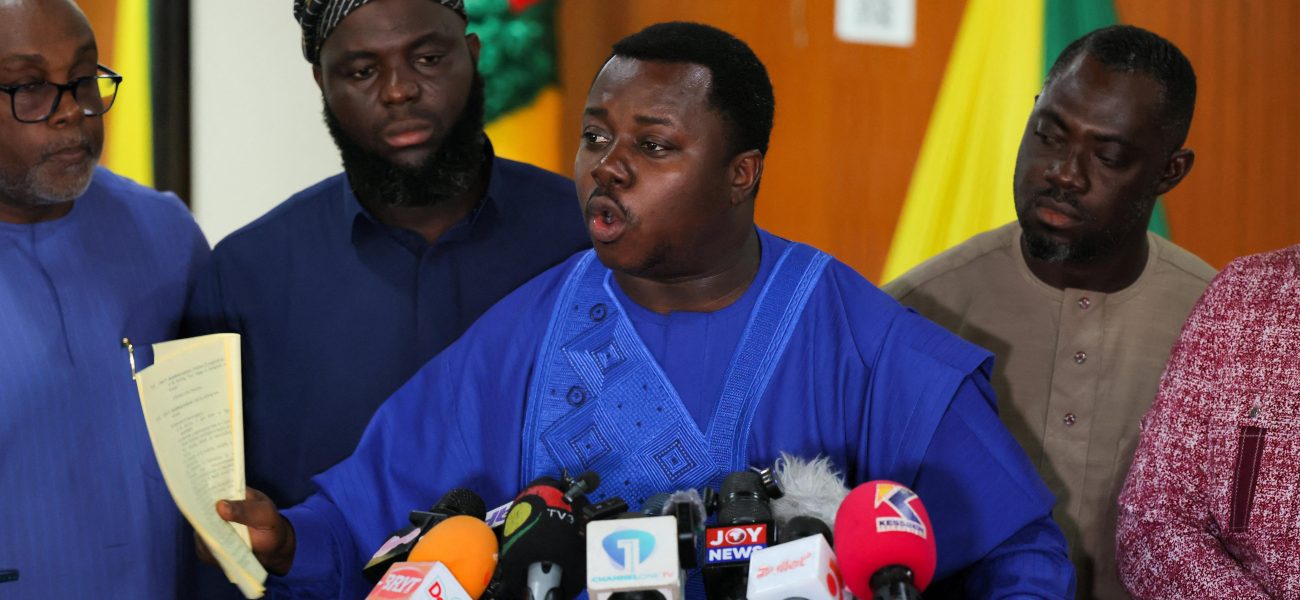
Ghana’s parliament passed an anti-LGBTQ+ bill, pushing the nation onto a deeply contentious path. This isn’t just about Ghana; it’s about a spreading legal stricture, an authoritarian undercurrent threatening rights won—or yet to be won—across the Global South. For anyone thinking social progress marches linearly, Accra just served a bitter reminder: it doesn’t. [QUOTE_PLACEHOLDER]
And boy, did they pass it with gusto. The Proper Human Sexual Rights and Ghanaian Family Values Bill, as it’s grandly titled, sailed through after years of contentious debate. Its provisions are pretty cut — and dry, criminalizing not only same-sex relationships but also promoting them. We’re talking about potential prison sentences—up to five years for merely identifying as LGBTQ+, and a decade for its advocacy. Imagine that, a crime just for existing. Supporters call it a defense of traditional Ghanaian values. Critics call it what it’s: a regression.
Because the consequences here are sprawling, not confined to Ghana’s borders. This isn’t a unique phenomenon. Such legislative efforts resonate deeply within the Muslim world, often paralleling efforts to reinforce conservative societal norms. Look at places like Pakistan, where informal social codes and interpretations of religious law often render LGBTQ+ individuals vulnerable, even in the absence of explicit, uniformly enforced state criminalization akin to this Ghanaian bill. The nuanced landscape of religious conservatism—be it Christian evangelicalism driving this Ghanaian push or interpretations of Islamic law in South Asia—illustrates a chilling solidarity in restricting personal freedoms. It’s a cross-cultural confluence of moral policing, often masked as preserving heritage.
The legislative fervor in Accra draws inspiration, unfortunately, from what some perceive as a moral struggle. Christian evangelical groups—influential here—have been key lobbyists. They’ve painted this as a cultural war against so-called Western decadence, ignoring the simple truth that human diversity doesn’t check its passport at borders. It’s an internal affair, yes, but its implications? They’re anything but.
But there’s a real political calculus at play. Ghana’s upcoming elections aren’t far off. Pushing such a popular (among certain demographics, anyway) bill sends a strong signal to a conservative electorate. It’s a vote-winner, or so many politicians here seem to believe. Never mind the international outcry or the economic blowback. Sometimes, short-term political gain trumps long-term national interest, especially when that interest involves maintaining an image of democratic enlightenment and attracting foreign investment. It’s the same playbook seen in various emerging democracies: rally the base, often at the expense of minority rights.
Consider the raw numbers for a moment: according to ILGA World’s State-Sponsored Homophobia report from 2023, 62 out of 193 UN member states still criminalize consensual same-sex sexual acts. Ghana’s recent move merely reinforces a stark reality within this troubling statistic, keeping it squarely in that less-than-enlightened column. It puts Ghana on a roster with countries less interested in human dignity — and more concerned with moral purity tests.
The debate in parliament wasn’t without its dramatic flourishes. Heated arguments, impassioned speeches from both sides (mostly one-sided in terms of ultimate outcome, mind you), all culminating in this decisive legislative act. For human rights advocates, it’s a dark day. For a country that once prided itself on being a beacon of stability and democracy in Africa, it’s a moment of serious reflection. Or, perhaps, self-deception.
What This Means
This isn’t just a parliamentary vote; it’s a gauntlet thrown down, with profound political — and economic implications. Politically, Ghana risks alienating key international partners. Western nations and organizations like the European Union—don’t forget the World Bank—often tie development aid and trade deals to human rights standards. While the language of ‘sovereignty’ will undoubtedly be invoked, the reality of global interdependence means that ignoring such widespread condemnation usually comes with a price tag. There’s a direct threat to foreign investment; multinational corporations, increasingly conscious of their ESG (Environmental, Social, Governance) profiles, may find Ghana a less attractive destination. The exodus of skilled professionals from affected communities, a form of intellectual brain drain, is also a serious, quiet threat.
Economically, tourism, particularly from more progressive nations, could suffer. Accra needs to remember its positioning in a competitive global market. A nation seen as regressive on human rights doesn’t exactly scream ‘business-friendly,’ let alone ‘tourist haven.’ It’s a self-inflicted wound, one that could deepen the country’s economic struggles, especially as it grapples with debt and inflation. the echoes of such legislation travel. Nations with similar demographics or shared cultural histories, like Malaysia or parts of Indonesia, observe these developments closely. They could be emboldened, or they could see the fallout — and exercise caution. The impact on regional cohesion in Africa itself—where other nations are moving towards decriminalization—also can’t be ignored.
Finally, there’s the long-term societal cost. Entrenched discrimination breeds fear, stunts innovation, — and corrodes the very fabric of civil society. The informal persecution of individuals based on their identity, now enshrined in law, creates a breeding ground for social instability and injustice. It’s a stark reminder that while the pursuit of justice for all is often presented as a Western ideal, it’s, in fact, a universal human yearning that, once denied, often has a way of asserting itself, sometimes quite disruptively. It’s not a question of ‘if’ but ‘when’ the pendulum swings back, and the damage wrought by this bill will demand rectification, likely at a considerable human and economic cost.
And because these cultural wars bleed across continents, remember the broader stakes: When one country tightens the screws on fundamental freedoms, it strengthens the hand of reactionaries everywhere—from the deeply complex social issues in India to power struggles within traditional institutions in China. This Ghanaian action isn’t an isolated incident; it’s part of a global mosaic of contested rights, demonstrating just how fragile liberties can be when popular opinion, religious conservatism, and political expediency converge.