


Europe’s Diplomatic Absurdity: Putin’s Schröder Gambit Unveils Deeper Fissures
POLICY WIRE — Brussels, Belgium — The European diplomatic theatre has, for months, staged its own recurring farce. Not with Punch and Judy, but with a familiar figure in the role of designated...

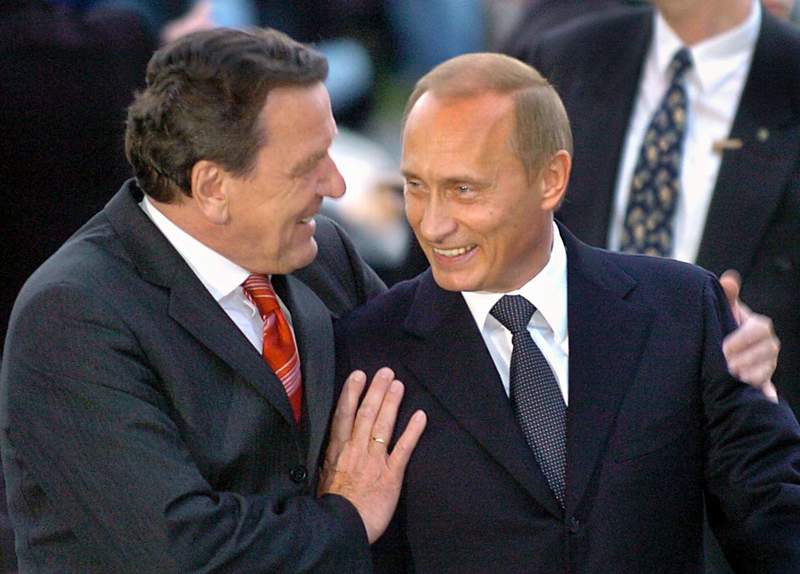
POLICY WIRE — Brussels, Belgium — The European diplomatic theatre has, for months, staged its own recurring farce. Not with Punch and Judy, but with a familiar figure in the role of designated peacemaker – Germanys erstwhile Chancellor Gerhard Schröder, a man increasingly seen in his homeland as a relic of a bygone, and perhaps naïve, era of Russian-German relations. And guess who keeps pulling his strings? None other than Vladimir Putin, who apparently just can’t quit this particular suggestion.
It’s a peculiar ritual, really. Like clockwork, Putin trots out his old associate, long ostracized by mainstream German politics, as a serious contender to mediate an end to the brutal war in Ukraine. This isn’t just about a former leader. This is about what a choice like that communicates to everyone watching, particularly when that choice is universally — and often vehemently — rejected by the very parties whose lives depend on honest brokerage. You can’t help but observe the dry, cynical wit behind the Kremlin’s persistence. [QUOTE_PLACEHOLDER]
Schröder, for his part, remains stubbornly unapologetic about his tight, well-remunerated connections to Russian state-owned energy behemoths like Gazprom and Rosneft. He lost his office, certainly, but not, it seems, his convictions—or his lucrative directorships. Critics back home see his stance as a deep betrayal, a stain on German integrity. And you’d think the deafening silence from Kyiv — and Brussels every time his name surfaces would give Moscow a clue.
But that’s the point, isn’t it? It’s not about effective mediation. It’s about perception. It’s a jab. A persistent, annoying fly buzzing in the collective ear of European capitals, a living reminder of Germany’s complicated past with Russia. And it’s a testament to the fact that Moscow thinks this might, somehow, sow seeds of division, forcing Europe to wrestle with its own compromised characters when it should be focused on unity. It’s a classic Kremlin maneuver – not just to advance a specific proposal, but to confuse the narrative, to introduce a disruptive element that keeps the focus off the actual war.
For nations outside the immediate conflict zone, watching this play out has its own implications. Consider the Muslim world, for instance, or South Asia, where diplomatic allegiances often shift like desert sands. Countries like Pakistan often find themselves navigating a precarious path between powerful global blocs, weighing Western condemnation against historic or strategic ties to nations like Russia. Putin’s insistence on Schröder – a man so deeply compromised in Western eyes – likely reinforces a perception that Western condemnations of Russia aren’t universally applied, or that diplomacy, for Moscow, is more about projection than substance. And when nations in, say, Islamabad, look for reliable mediators for their own regional tensions, this particular episode probably doesn’t fill them with confidence regarding European moral clarity.
It’s not just a European issue, it’s a global read of what Russia’s trying to accomplish with these signals. Putin is quite adept at playing a long game, cultivating relationships in places like India and across Central Asia, painting himself as an alternative to a West he views as hypocritical. The Schröder affair just gives him another piece for that global chess board.
And let’s be blunt: there’s a certain grim irony in a nation fighting for its very existence being offered a peace broker who’s essentially on the payroll of the aggressor. One survey, conducted by the Pew Research Center in 2023, found that a staggering 82% of Germans had an unfavorable view of Russia, with only 12% trusting Putin to do the right thing regarding global affairs. Yet, this former German Chancellor maintains his controversial connections. That’s a tough sell for genuine diplomacy. It’s like asking the fox to guard the hen house—after he’s already made off with half the flock.
But, Putin keeps going back to that well. His public endorsements of Schröder, often presented as genuine expressions of admiration and utility, are a constant, low-level provocation. He seems to be daring Europe to engage with this relic, or at least to waste diplomatic oxygen explaining why it won’t. It’s diplomatic trolling, plain — and simple, dressed up in the garb of statesmanship.
This whole situation makes you wonder about the state of global diplomacy. Does Russia genuinely believe Schröder could make a difference, or is this a calculated act of disrespect? Given the man’s deep financial ties and consistent defense of the Kremlin even after the full-scale invasion of Ukraine, it’s hard to imagine his objectivity is perceived positively anywhere outside of Putin’s inner circle.
His continued presence at high-profile events, even after most of his German privileges were stripped—for example, his lavishly funded Bundestag office was closed in May 2022 due to his persistent refusal to distance himself from Putin—illustrates a peculiar diplomatic limbo. He’s politically radioactive in Germany, yet still a favored son in Moscow. It makes you realize how many different realities coexist in international relations, especially when the stakes are so ridiculously high.
What This Means
This enduring push for Gerhard Schröder by the Kremlin isn’t just an awkward diplomatic dance; it’s a strategic messaging campaign. Politically, it signals Moscow’s deep-seated contempt for unified Western opposition and its readiness to exploit any internal fissures—particularly Germany’s historical and economic entanglement with Russia. It suggests Putin sees the conflict less as a moral imperative for Ukraine and more as a contest of wills where he can subtly test and divide his opponents. It’s a proxy argument, forcing Berlin to continually reaffirm its break from old paradigms, distracting from more pressing global questions. For countries outside the Western sphere, this maneuver might even lend credence to Moscow’s narrative that Western condemnations are selective, fostering an environment where non-aligned nations feel justified in maintaining a transactional distance from both blocs, complicating broader international cooperation against aggression. Economically, Schröder’s shadow looms large over the European energy sector, reminding us of the intertwined dependency that Russia skillfully leveraged for decades. Putin’s continued advocacy for Schröder is a veiled reminder of that leverage, perhaps hoping to stir anxieties about energy security—or lack thereof—in European capitals. It certainly doesn’t exactly inspire confidence in future, transparent diplomatic resolutions. It feels like Russia wants to keep a specific kind of wound festering, just to see what happens. The entire charade does a disservice to the real efforts of states trying to bring this conflict to an end.