


The Ghost of Gir: India’s Last Lions Cling On, Shaking Global Conservation Paradigms
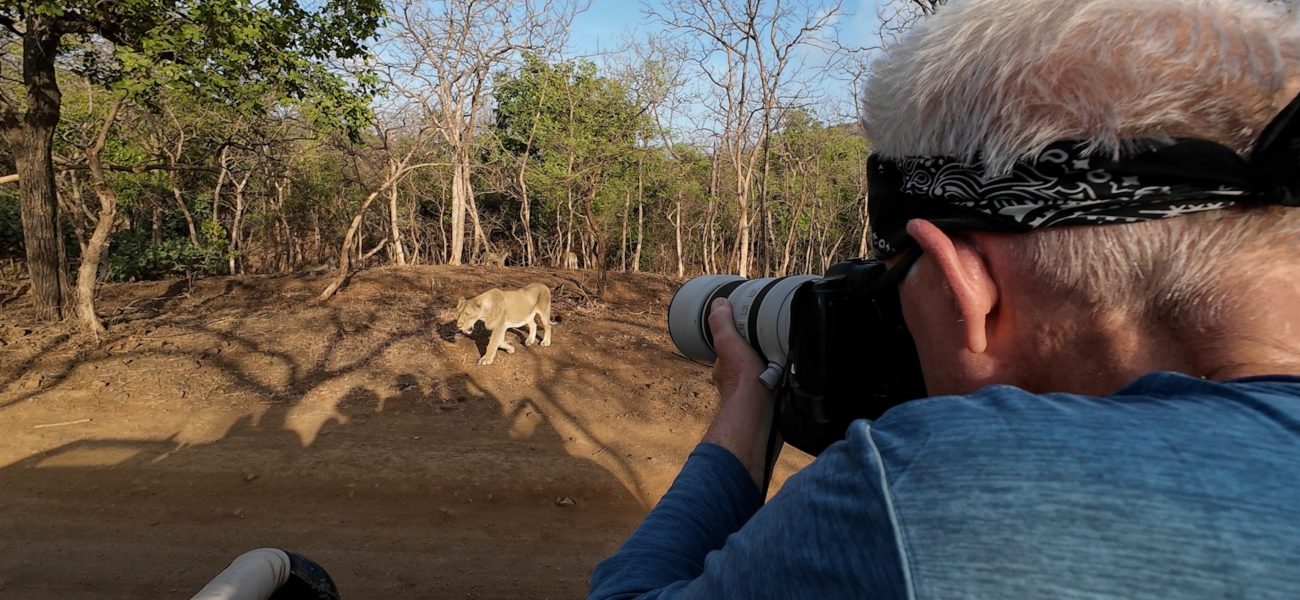
POLICY WIRE — Gandhinagar, India — Forget the obvious. It’s not just a photographer with a fancy camera in a jungle. This story—the story of India’s last remaining Asiatic lions—is a gritty parable...

POLICY WIRE — Gandhinagar, India — Forget the obvious. It’s not just a photographer with a fancy camera in a jungle. This story—the story of India’s last remaining Asiatic lions—is a gritty parable of political muscle, community tenacity, and an ecosystem squeezed taut by relentless human ambition. The fact they’re still there, prowling the dry scrub of Gujarat, frankly, it’s a biological miracle, and a pointed critique of armchair conservation.
For decades, the narrative has been stark: these kings of beasts, once roaming from the Middle East to Bengal, were teetering on oblivion. A century ago, maybe a couple dozen clung to life in a sliver of land, courtesy of a Nawab’s hunting preserve. Today? The numbers are up. But that rise isn’t simply a feel-good wildlife triumph. It’s a strategic triumph for India, a statement. And it’s messy, often quite inconvenient for the people living cheek-by-jowl with apex predators.
Ajay Singh, a veteran lensman for National Geographic, wasn’t just “tracking” lions. He was documenting a geopolitical tightrope walk. His lenses, a sort of silent surveillance, captured the friction: lions lounging near village wells, pride territories overlapping with burgeoning farmlands, the very real fear and pride in local eyes. It’s raw, you know? Not a neat nature documentary.
And because the lion has become a potent symbol—a brand, really—for the state of Gujarat, there’s immense political capital invested in its continued existence. “The Asiatic lion isn’t just an animal; it’s a living heritage, a symbol of what concentrated will and community engagement can achieve, even in a crowded nation. We aren’t just saving a species; we’re redefining what progress looks like,” declared India’s Union Minister for Environment, Forests and Climate Change, Bhupender Yadav, in a recent address. It’s a bold claim, but you see it playing out on the ground, in government coffers, — and local sentiment.
The story isn’t without its detractors, of course. Wildlife activists have long clamored for a second, separate home for the lions—a population entirely outside Gir Forest—to safeguard against disease or natural calamity. It makes sense, ecologically speaking. But relocation has been a political football for ages, a debate that’s seen Gujarat fiercely guard its exclusive custody of the world’s last Asiatic lions. Call it pride. Call it provincialism. But it’s definitely effective for drawing eyeballs, — and rupees, from eco-tourism. Gujarat’s Chief Minister, Bhupendra Patel, understands this implicitly. “Gujarat’s roar echoes across the subcontinent,” he recently mused, not without a hint of local boast. “We’ve shown the world that development — and conservation, they’re not always at odds. It’s about careful balance, yes, but also about deep respect for our natural endowments.”
This approach isn’t universally embraced, particularly among the global conservation community that tends to prioritize strict segregation of species from human activity. But India’s approach, a blend of protection within human-modified landscapes, offers a template for other densely populated nations, like Pakistan, grappling with similar wildlife-human interfaces in their diminishing natural spaces—consider the complex future of snow leopards or Indus River dolphins. It’s a reminder that conservation in the subcontinent often demands solutions that look less like pristine wilderness and more like managed coexistence.
Because ultimately, Gir’s survival narrative bucks traditional wisdom. Data from India’s forest department indicate the Asiatic lion population surged from 523 in 2015 to 674 in 2020. That’s a roughly 29% jump in five years, within what’s effectively an isolated pocket. It’s impressive, yes. But it also means those lions are bumping into more — and more people.
What This Means
The persistence of the Asiatic lion isn’t just a testament to Gujarat’s distinct blend of cultural pride and political expediency; it’s a blueprint—however imperfect—for how highly populous nations might tackle conservation going forward. India isn’t just protecting a species; it’s projecting an image. An image of a nation that, despite its massive development drives, retains a powerful connection to its wild heritage. This strategy could allow other South Asian nations, even those struggling with economic constraints, to formulate localized conservation plans that blend state protection with a community-centric model, rather than waiting for an elusive ‘pristine’ environment to materialize.
Economically, Gir’s lions generate significant tourism revenue for Gujarat, turning a conservation success into a measurable financial asset. But it also raises fundamental questions about habitat expansion and the genetic vulnerability of an isolated population—questions often swept under the rug by nationalist fervor. This particular ‘underdog’s roar’ in Gujarat, not unlike the regional spectacles we see elsewhere (read about Gujarat’s history-chasing here), suggests that environmental battles are rarely just about nature; they’re fiercely political, economically loaded, and deeply human. And sometimes, you’ve just got to make it work, whatever the experts tell you.