


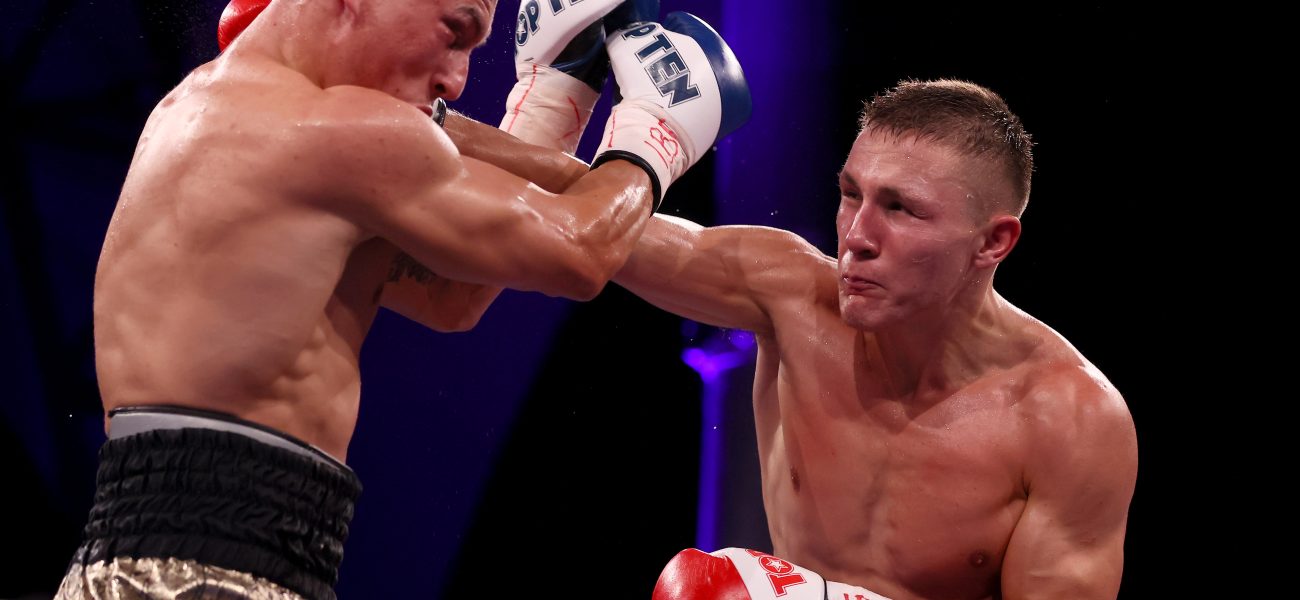
Boxing’s Purgatory: The Price of Patience in the IBF’s Mandatory Maze
POLICY WIRE — Berlin, Germany — Sometimes, simply doing your job earns you little more than a lengthy benching. Michael Eifert, a light heavyweight from Germany, learned this the hard way, spending...

POLICY WIRE — Berlin, Germany — Sometimes, simply doing your job earns you little more than a lengthy benching. Michael Eifert, a light heavyweight from Germany, learned this the hard way, spending what felt like an eternity on boxing’s sidelines after securing his mandatory shot at a world title. His ‘reward’ for a hard-fought victory? Three years of frustration and inactivity—a stark reflection of a system that often prioritizes market forces over athletic achievement. It wasn’t quite what he’d signed up for when he outpointed Jean Pascal in March 2023.
Eifert’s story isn’t one of swift triumph, but of enduring a bizarre form of professional purgatory. His single fight since that eliminator, a quick warm-up in August 2024, did little to soothe the 21 straight months of sidelining he’d endured. But make no mistake, Eifert isn’t entirely a helpless victim in this melodrama. He did accept a pair of step-aside packages, allowing boxing’s marquee matchups between Dmitry Bivol and Artur Beterbiev to unfold. And who wouldn’t, really? The alternative, as the narrative suggests, involved a potential ‘small-scale world title fight’—the kind that makes promoters yawn and audiences switch channels. There was no value to doing that. This financial calculus explains much of what we witness in global sports today.
Because, really, what choice did he possess? Had Eifert opted against stepping aside, the IBF’s belt would’ve likely been vacated, leaving him to contend for a title few would deem credible. So he collected his checks, patiently watching the bigger fish vie for an undisputed crown. But then, as fate would have it, Bivol’s injury further extended his wait, making an ordered interim bout with Conor Wallace an impossibility. It’s an exasperating dance of financial expediency — and unexpected misfortune. The clock ticks, fortunes are made elsewhere, and the deserving are left to contemplate the intricate mechanics of their own obscurity.
Eifert’s predicament is a perfect illustration—a poster child, perhaps—for the IBF’s much-maligned mandatory system. It echoes the protracted saga of Bakhram Murtazaliev, who spent over four years as the IBF’s mandatory for Jermell Charlo, stepping aside repeatedly to enable multiple unification bouts. Murtazaliev, hailing from Dagestan in the predominantly Muslim North Caucasus region of Russia, represents many unheralded talents from developing or non-traditional boxing regions who find themselves caught in this very same grinder. Their patience, or perhaps their pragmatism, eventually paid off, with Murtazaliev securing and winning his world title fight, having accumulated ‘millions in his bank account for agreeing to postpone the opportunity time and again’.
This ‘Murtazaliev blueprint’ is rapidly becoming standard practice for contenders in divisions lorded over by major-draw fighters. Champions, predictably, won’t jeopardize bigger paydays against less recognized opponents. And honestly, who can blame them in a sport driven by pay-per-view numbers — and media visibility? It takes a savvy manager, or perhaps just blind luck, for a fighter like Eifert, who wasn’t necessarily at the top of the IBF’s original list for a final eliminator (that honor went to others who politely declined the opportunity), to even find himself in this position. In fact, he only ascended the ranks because Joshua Buatsi, Anthony Yarde, and Gilberto “Zurdo” Ramirez all passed on the Pascal fight, leaving the spot open for the man holding ‘one of the IBF’s trinket titles at this time’.
So now, against all expectations, Eifert finally gets his grand opportunity on Saturday. He faces a truly elite fighter in Bivol, fresh off injury. This matchup is precisely why a strategic gambit fails to disrupt established power in sports like boxing; the hierarchy has a way of maintaining itself. And though the odds are stacked — some bookmakers have Eifert as much as a 10-to-1 underdog, according to industry reports — the narrative itself is compelling. His style is workmanlike; a ‘basic European-style boxer with a high guard who stands upright, has a little bounce, and throws mostly straight punches.’ His true advantage? ‘His engine. He will be throwing punches consistently for 12 rounds.’ A relentless plodder, essentially. But he isn’t considered a genuine threat to Bivol, making him, quite candidly, the ideal warm-up opponent for a returning champion.
For a sport often romanticized as a meritocracy, Eifert’s journey highlights its brutal commercial realities. Born in Bautzen, Germany, in 1997, he developed his craft over ‘more than 100 amateur bouts’, even winning the German U21 championships. He switched to the professional ranks in 2018, amassing a solid 6-0 record against ‘journeyman opposition’ before his first true test, a loss he later avenged. Yet, despite years of hard work and earning his stripes through various youth titles, his ranking was described by many as ‘questionable’. The underlying truth remains: this fight isn’t just about two men in a ring; it’s about a deeply entrenched economic system that rewards consolidation and celebrity over the quiet, dogged determination of those who play by the rules.
What This Means
Eifert’s protracted wait and the subsequent bout aren’t just a sports story; they’re a microcosm of power dynamics observable across global institutions and markets. In the boxing world, as in broader geopolitical arenas, ‘established powers’ often dictate the terms, creating structures that, while seemingly meritocratic, inherently favor the commercially dominant. For unheralded athletes, particularly those from regions with less economic clout or historical sporting prominence — like many aspiring boxers across the Muslim world or developing South Asian nations — gaining a fair shot can feel like navigating an obstacle course designed for maximum frustration. Their athletic prowess is secondary to their marketability — and geopolitical context. This situation effectively turns global sporting bodies into kingmakers, where adherence to process, rather than raw talent, sometimes ensures economic survival. It’s a bitter pill to swallow for purists, but an undeniable reality for those caught within its gears. Ultimately, for Michael Eifert, Saturday isn’t just about winning a belt; it’s about the brutal alchemy of loss and opportunity within a system that values patience – or payment – above all else.