


Seattle’s Walled Paradox: When Progressive Ideals Meet Concrete Realities
POLICY WIRE — Seattle, USA — It’s a truth etched into the foundations of cities older than nations: when public safety erodes, residents build walls. Not figurative ones, mind you, but...

POLICY WIRE — Seattle, USA — It’s a truth etched into the foundations of cities older than nations: when public safety erodes, residents build walls. Not figurative ones, mind you, but honest-to-goodness physical barriers, designed to keep out what the state seemingly can’t—or won’t—contain. And in Seattle, that truth is now painted with a grim irony, one that highlights the yawning chasm between political rhetoric and the gritty, unglamorous scramble for survival on urban streets.
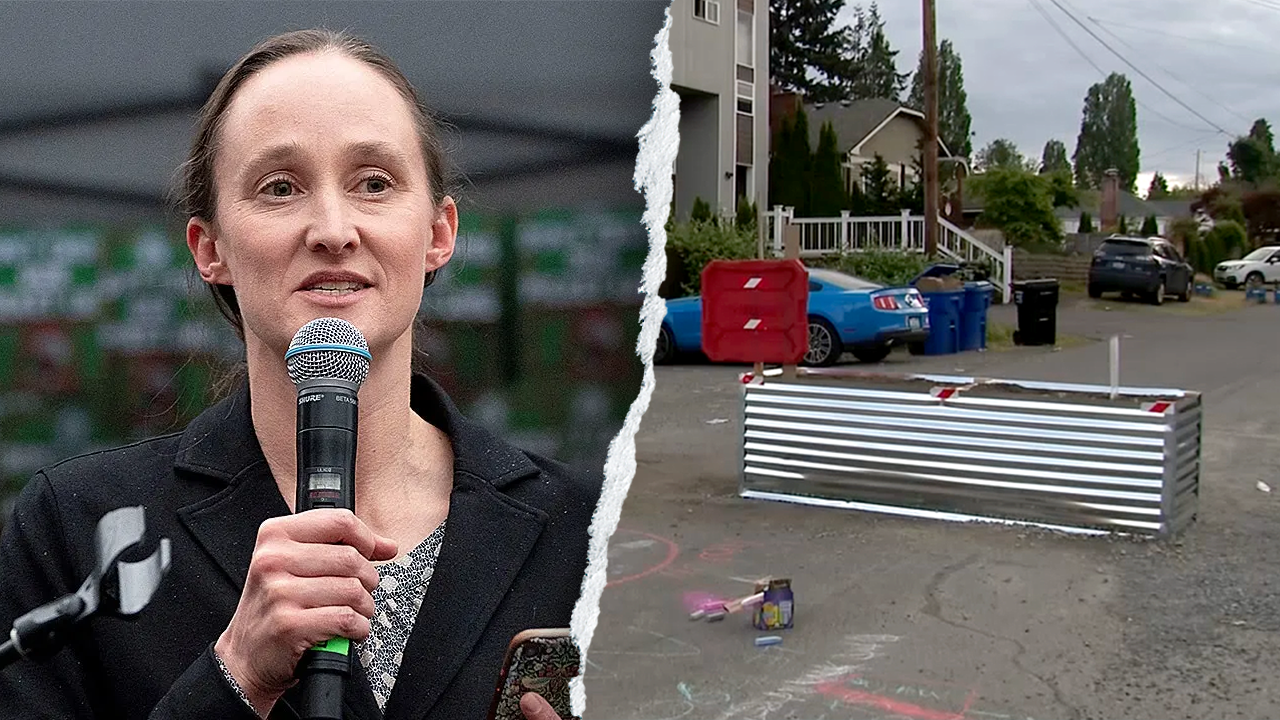
Because while the Emerald City boasts a self-declared socialist mayor, championing policies intended to uplift and equalize, its citizens are doing something rather more primordial: retreating behind steel, brick, and concrete. It’s a defense mechanism, pure and simple, but it speaks volumes about trust—or the glaring lack thereof—in official channels. The sound of hammers, the sight of new gates and fences isn’t a melody of civic progress; it’s a dirge for public confidence. [QUOTE_PLACEHOLDER]
It’s an inconvenient truth for any administration, let alone one steeped in a progressive philosophy that often views such measures as symptoms of inequality, not solutions. But people are locking down. They’re reinforcing their perimeters, bolting their doors tighter than ever before. Some small businesses and homeowners aren’t just reacting; they’re despairing, pouring precious savings into defenses because the alternative—an unprotected storefront or a vulnerable home—is unthinkable.
This isn’t about mere broken windows, is it? We’re talking about something deeper. Public records from the Seattle Police Department show calls for shots fired in the city climbed by an alarming 26% from 2020 to 2021. That’s not abstract policy debate; that’s fear hitting close to home for actual people.
But the true irony cuts sharper still. A socialist mayor, an individual committed to communal welfare and often advocating for the dismantling of societal barriers, finds her city’s landscape becoming increasingly fragmented, segmenting itself not by design, but by necessity. These aren’t the utopian planned communities envisioned by some theorists; they’re desperate attempts at individual resilience, fueled by a perceived abandonment from the collective security apparatus. It’s like watching an urban experiment where the theoretical framework is buckling under the weight of empirical street-level reality.
It also reminds you of situations in places far afield—the gated communities blossoming in megacities like Karachi or Lahore, where the affluent build high walls and employ private security as a de facto social contract. In these South Asian hubs, the state’s inability to guarantee universal security often leads to a tiered system: those who can afford protection get it, those who can’t remain exposed. But here, in a first-world metropolis that supposedly values equity above all else, residents are mimicking that same stratification, not always by choice, but out of grim self-preservation. It isn’t a good look for a city trying to set an example of progressive governance. And it’s not something you’d expect to see replicate itself across continents and economic paradigms with such striking fidelity.
This isn’t about blaming individuals for wanting to feel safe. No, this is about asking tough questions of the leadership, of the underlying policy matrix. When the social compact begins to fray, when the communal response to insecurity becomes individualized, you’ve got to ask if the basic functions of government are being met. The city’s inhabitants are, in essence, creating micro-states of self-defense, tiny fortified enclaves within a larger jurisdiction. They’ve decided to take matters into their own hands, — and it’s a direct consequence of feeling abandoned.
It creates a perception, fairly or unfairly, that the rhetoric around community and collective well-being isn’t translating into tangible safety. What good is grand ideological vision when your residents are literally barricading themselves inside? They’re tired of talk, it seems. They just want to feel secure walking to the store, or sleeping in their beds. It’s a sentiment as old as civilization itself, but one that sometimes gets lost in the rarefied air of policy debates.
What This Means
This phenomenon in Seattle isn’t an isolated anecdote; it’s a significant indicator of escalating tensions between contemporary progressive governance models and the practical, immediate demands of urban life. The widespread move towards personal fortifications signifies a profound crisis of public trust, signaling that official strategies for crime reduction and social welfare might not be resonating—or delivering—on the ground.
Politically, this poses an existential dilemma for the city’s leadership. It doesn’t just mean a dip in approval ratings; it questions the very applicability of their ideology when confronted with basic law and order issues. For a socialist administration, which often criticizes private solutions for public problems, the emergence of widespread, privately-funded security measures is a stinging rebuke. It suggests a policy blind spot where theoretical commitments supersede actionable public safety frameworks. Economically, this DIY security boom diverts individual and small business capital from investment and growth into defensive expenses. It also impacts property values in less protected areas, widening disparities. The city might also face brain drain as professionals prioritize safer urban environments, potentially impacting Seattle’s tech-heavy economy. such internal fracturing creates fractured societal mosaics, mirroring patterns of distrust seen globally where public infrastructure fails to meet citizen needs, prompting ad-hoc solutions.
It suggests that a singular focus on root causes, while theoretically sound, might be inadequate if it doesn’t concurrently address immediate safety concerns. A government can’t ignore visible, pressing symptoms indefinitely, no matter how earnestly it tries to cure the underlying disease. The optics here aren’t just bad; they illustrate a critical disconnect. Citizens want relief now, and if they aren’t getting it from their government, they’ll seek it out, however crudely, on their own dime. And that’s a political challenge no manifesto can easily talk its way out of, especially as similar pressures manifest in other urban centers and national capitals grappling with shifts in power and public sentiment.