


Strategic Gambit Fails to Disrupt Established Power: A Microcosm of Global Rivalry in Sports
POLICY WIRE — San Antonio, USA — It wasn’t the deafening roar of a crowd or a moment of athletic brilliance that truly captured the endgame. Nope, it was a defiant, almost theatrical, clap. Alex...

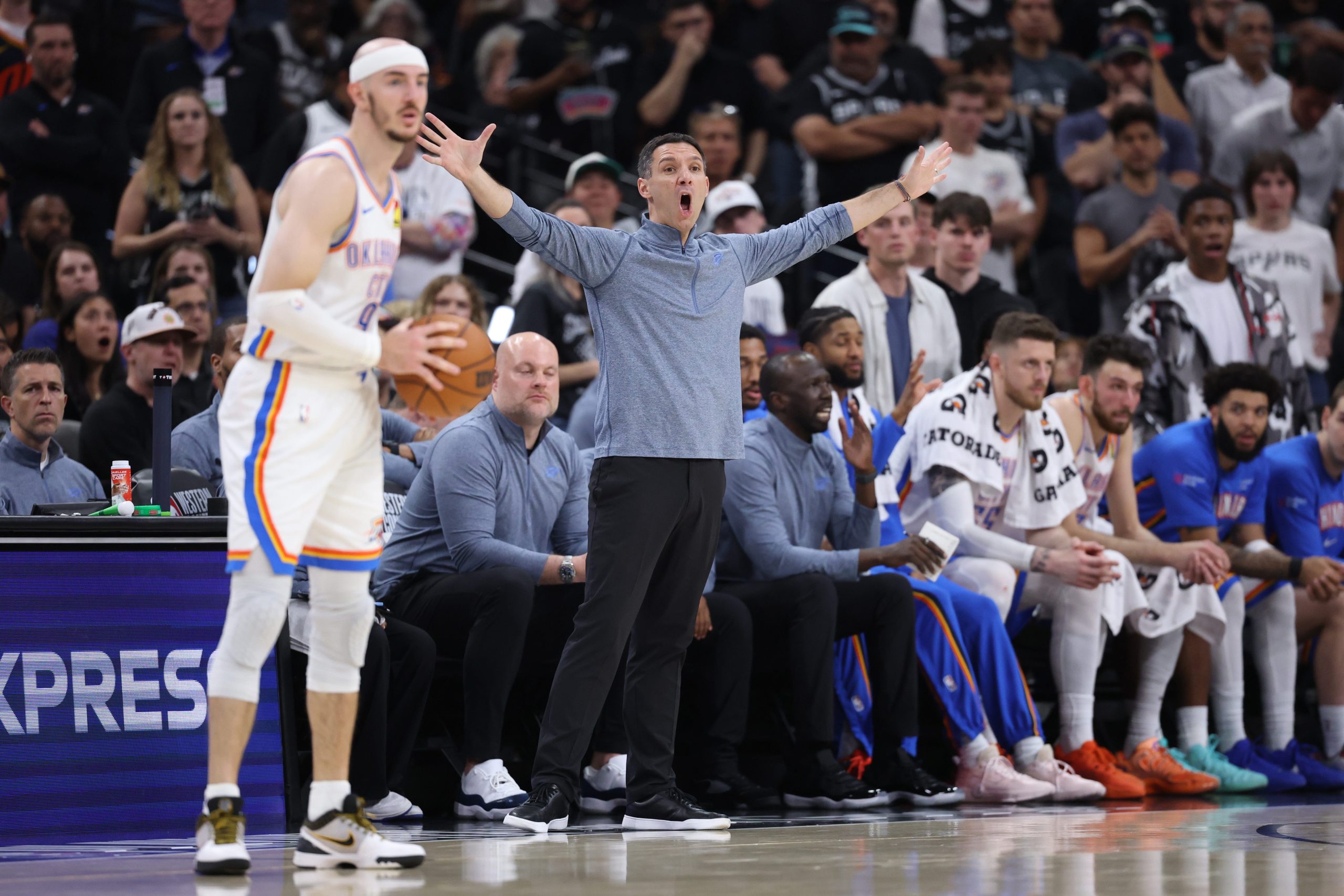
POLICY WIRE — San Antonio, USA — It wasn’t the deafening roar of a crowd or a moment of athletic brilliance that truly captured the endgame. Nope, it was a defiant, almost theatrical, clap. Alex Caruso, trudging off the Frost Bank Center hardwood, delivered it. Just a punctuation mark on another performance that seemed to follow an unfortunately familiar script for the Oklahoma City Thunder. That peculiar ritual—the walk off court, past the noise, into the locker room’s quiet shame—it’s become a strange fixture for this franchise.
It’s a pattern, you see. One that whispers not of tactical shortcomings in isolation, but of a deeper, perhaps institutional, inability to close when the stakes reach fever pitch. And we’re talking high stakes. Policy, geopolitics, even development projects in struggling nations? They’ve got their own Game 6s. And sometimes, you just can’t seem to nail down the final move.
Thursday night delivered the latest iteration of this bizarre recurring phenomenon: a brutal 118-91 shellacking by the San Antonio Spurs. Not just a loss, mind you, but a proper dismantling. A complete non-show, as analysts put it, reminiscent of last year’s stumble against the Pacers in the NBA Finals. And before that, a similar stumble against the Nuggets. These aren’t isolated incidents, they’re systemic. According to reports from the Oklahoman, this current iteration of the Thunder is now 0-4 in Games 6s – with the last three being crucial closeout opportunities. That’s not a blip; that’s data.
Because winning in this league? It’s not just about talent, is it? It’s about grit. It’s about not flinching when the pressure ratchets up, when everything’s on the line. And the Thunder? They flinched. Hard. The Spurs, with their backs literally against the wall, started with a ferocity that seemed to catch the Thunder off-guard. Coach Mark Daigneault burned a timeout less than ninety seconds into the contest, bleeding already. The Spurs pushed their lead to as many as 28 points, never once relinquishing control across all 48 minutes of play. That’s domination.
The post-mortem commentary, as always, is a study in self-reflection — and forward-looking determination. Caruso called it straight, telling reporters, “It’s a double-edged sword. You’ve gotta put it behind you and clear the mind and get ready to compete again, but also learn from what you did wrong and try to figure out how you can be better.” But where does one even begin to ‘figure out how you can be better’ when the problem keeps manifesting in precisely the same context?
But there’s a flicker of grim hope. A sort of bizarre precedent. These past Game 6 clunkers? They’ve actually been harbingers of Game 7 victories. That’s a curious psychological quirk, isn’t it? As Kenrich Williams observed, “The other team is just super desperate. They know their season is on the line. There’s some areas we can clean up, especially in Game 6s, just knowing they’re gonna come out with a different level of intensity and energy.” Cleaning up these areas? Seems easier said than done when it’s become a decadelong hex, for this team anyway. What it really shows is that even highly structured, professionally managed entities can suffer from ingrained, self-defeating habits.
Coach Daigneault encapsulated the sheer difficulty, the political nature of victory itself, when he said, [QUOTE_PLACEHOLDER] He went on, almost defensively, “I don’t know that it was necessarily anything we did wrong. I thought we were ready to play. I felt confident going into the game.” This isn’t just about strategy; it’s about the intangible psychological baggage. Shai Gilgeous-Alexander, usually their anchor, produced one of his worst performances, with a meager 15 points on 18 shots. A game he usually watches from the bench, comfortable in victory, was instead an on-court slog to an eventual defeat. And he knows the stakes. “We’ve got to go out there and be better, and if we’re not better our season will be over,” he warned.
What This Means
This persistent, almost ritualistic, Game 6 implosion by the Thunder isn’t just a sports anomaly; it’s a striking parallel to strategic gambits that fail to disrupt established power. Think about it: a well-prepared team, poised for victory, repeatedly falters at a specific, critical juncture. This phenomenon offers a valuable, if uncomfortable, case study in systemic weakness, illustrating how ingrained patterns can undermine even the most robust plans. It’s a cautionary tale for governance, too. Imagine a nation, say, Pakistan or Egypt, embarking on an ambitious economic reform program. They might succeed in several initial phases – ‘Game 1’ through ‘Game 5’ victories, if you will – making progress on fiscal policy, infrastructure development, and international trade deals. But then comes ‘Game 6’: perhaps a crucial legislative vote, a deeply entrenched corruption challenge, or an unforeseen regional crisis. Like the Thunder, despite previous successes — and apparent readiness, they repeatedly hit a wall. Old habits, deep-seated resistance, or a collective psychological barrier—a ‘curse’ if you’re cynical—emerges, stalling momentum, sparking public skepticism, and sometimes unraveling all the hard-won gains. The cost isn’t just a playoff game; it’s investor confidence, citizen trust, — and developmental progress. Breaking such a cycle requires more than just better individual performance; it demands a radical reassessment of internal culture and psychological fortitude. For policy-makers, this isn’t just a basketball team’s problem; it’s a recurring nightmare for anyone attempting sustained strategic implementation in complex, high-stakes environments.