

Memory’s Last Stand: Epstein Victim Memorial Vanishes, Again, in New Mexico Dust-Up
POLICY WIRE — SAN RAFAEL RANCH, N.M. — The high desert wind here whispers strange truths. It carries the ghosts of promises unkept and the stench of monstrous crimes, long after the perpetrator...

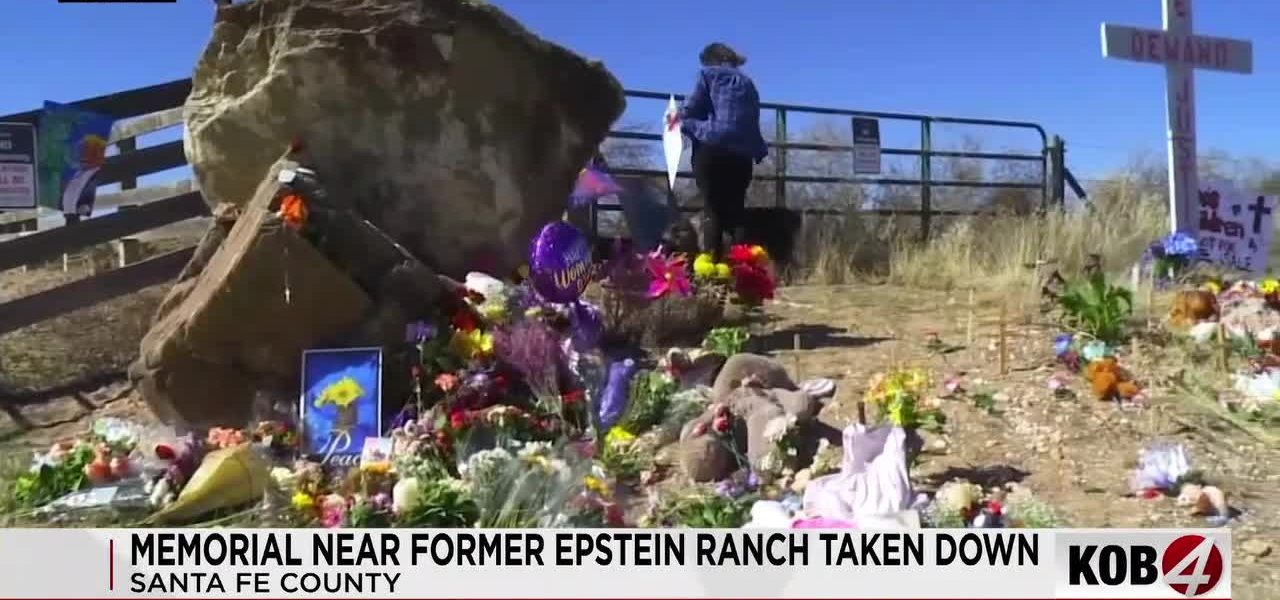
POLICY WIRE — SAN RAFAEL RANCH, N.M. — The high desert wind here whispers strange truths. It carries the ghosts of promises unkept and the stench of monstrous crimes, long after the perpetrator shuffled off this mortal coil. But some memories, some fights, they just refuse to lie down. Case in point: a simple, gut-wrenching memorial for Jeffrey Epstein’s victims outside his infamous Zorro Ranch has, yet again, been unceremoniously ripped from the earth.
It wasn’t just a few signs this time. It wasn’t some flimsy banner you’d expect the wind to claim. No, this was an intentional, aggressive erasure. Locals had worked tirelessly, you know, to give the tribute some gravitas, some lasting power. Organizers actually secured the proper blessings, too—getting approval just a couple of months back to make their tribute, well, more permanent. But, because some shadows apparently still can’t stand the light, someone came along — and made it vanish.
Lisa Christopherson, she’s one of those folks who refuses to let memory fade. She’s been at this fight for years. You’d think the public would be united in condemning the sheer evil tied to that place. But some dark force, maybe just a bunch of folks with too much time — and too little empathy, keeps pushing back. Christopherson says she and others spent years keeping dolls, crosses and signs up outside what was known as Zorro Ranch so victims of Jeffrey Epstein know they’re seen and heard. This most recent disappearing act? It’s left her understandably furious.
“Somebody knows, somebody, I mean, because it’s a lot,” Christopherson told local reporters, — and it’s plain as day she’s right. This wasn’t some casual toss-away job. “It was five big huge crosses, they were cemented into the ground like several feet down, so somebody had to dig them up. Obviously, they didn’t leave them there, so somebody took all the stuff.” It’s a lot of work for a misdemeanor, if you ask me. What’s the motive, huh? To keep the dirt under the rug where it’s?
Her group, known as the Zorro Watchers (talk about guts), had played it by the book. They’d worked with the state Department of Transportation to make sure the memorial was in a public area. Sunday morning, the memorial was there. By Monday afternoon? Poof. Just gone. The audacity of it, it’s really something.
State Representative Tara Lujan, a Democrat from New Mexico, she’s not just shaking her head either. She’s talking law. Apparently, whoever did this could be looking at charges under a New Mexico law specifically crafted to protect `descansos` – roadside memorials often marking a place of death, sacred spots in the community’s collective memory. It’s a culturally important law here. And Lujan didn’t mince words. “For the desecration of what we saw there, and the repeated desecration, there are laws in New Mexico that protect the descansos, and this is clear to see that this is a repeated offense, and it is a misdemeanor, and perhaps we need to make that a more severe charge.” It’s a bold statement, isn’t it? She wants this thing to have teeth.
This struggle over a patch of ground in rural New Mexico, a fight for the public acknowledgment of immense suffering against forces that prefer convenient forgetting, resonates far beyond state lines. It mirrors battles waged in places like Pakistan or across the wider Muslim world, where communities constantly grapple with memorializing victims of injustice or state-sanctioned violence. Think about the mothers of missing persons in Balochistan, for example, whose annual protests and impromptu memorials in Karachi often face pressure from authorities, a silent tug-of-war over who gets to narrate history and who’s allowed to grieve publicly. The deliberate erasure of these New Mexico crosses speaks to a universal desire – and a universal threat – to control the narrative, to dictate what’s remembered and what’s banished to oblivion. The refusal to let the victims have even a quiet, dignified space for remembrance, it’s not just rude; it’s an attempt to quash accountability. It’s an echo of deeper systemic rot.
📄 POLICY WIRE WHITEPAPER PUBLISHED: PAKISTAN'S NATIONAL SECURITY POLICY PRIORITIES
👉 READ BY CLICKING HEREThe sheer number of child sexual abuse victims is staggering, a dark shadow stretching across societies worldwide. In 2021 alone, the National Center for Missing and Exploited Children (NCMEC) reported receiving over 69 million reports of suspected child sexual abuse material (CSAM) from tech companies, a chilling indicator of the scope of this global scourge. This context makes the Zorro Ranch memorial more than just local news; it’s a tiny, desperate cry for recognition within an ocean of pain, a constant reminder that these crimes, and these victims, can’t be swept away.
But the Zorro Watchers? They’re not giving up. Not a chance. Christopherson says the fight over the memorial goes back years. And because they’re tenacious, plans are already in the works for yet more permanent fixtures. “We want to have a memorial bench and a historical marker, so we’re pursuing that,” Christopherson shared. They’re even planning another vigil this coming Saturday at 11 a.m. The resolve is palpable. You just can’t keep a good conscience down, I guess.
What This Means
This recurring act of memorial removal near Epstein’s former lair isn’t just petty vandalism; it’s a sharp political statement. It indicates a persistent, perhaps well-funded, effort to sanitize the physical landscape of a place intrinsically tied to abhorrent crimes. The repeated targeting of this specific site, despite public outrage and explicit legal protection like New Mexico’s `descansos` law, suggests that the forces preferring silence hold significant influence. It’s a localized microcosm of a much larger struggle: the public’s fight for truth and acknowledgment against the institutional power that benefits from concealment. The fact that the organizers had even gained state approval to make it permanent underscores the deliberate nature of this transgression and suggests someone isn’t interested in playing by any rules.
Economically, such brazen acts don’t immediately translate to dollars and cents, but they speak to a more insidious cost: the erosion of public trust and the psychological toll on victims and advocates. It implies a ‘clean-up operation’ where powerful interests don’t want physical markers reminding potential tourists, investors, or local residents of the property’s dark past. For local authorities, it represents a political hot potato. If they fail to apprehend and prosecute the culprits, it can signal a weakness in upholding basic laws, and worse, a perceived acquiescence to powerful, unnamed individuals or groups who wish to see Epstein’s crimes disappear from collective memory. For similar struggles abroad, as detailed in Silent Suffocation: US-Iran Spat Chokes Asia’s Remittance Artery, controlling public narrative and the markers of historical grievances remains a constant power play. Expect Lujan’s office, and potentially other state entities, to face increased pressure to ensure this sort of desecration ceases. This isn’t just about cement crosses; it’s about whose memory gets to endure — and whose gets buried.