

Ethiopia’s Fractured Mosaic: When Ancient Grievances Spill Into Modern Anarchy
POLICY WIRE — Addis Ababa, Ethiopia — Forget the dusty allure of Lalibela’s rock-hewn churches or the rhythmic hum of ancient trade routes. Because right now, the story brewing in Ethiopia isn’t...

POLICY WIRE — Addis Ababa, Ethiopia — Forget the dusty allure of Lalibela’s rock-hewn churches or the rhythmic hum of ancient trade routes. Because right now, the story brewing in Ethiopia isn’t about its glorious past; it’s about a messy, often violent present where ancient grievances — and a particularly modern brand of identity politics — have turned swathes of the country into a tinderbox. What you see on glossy travel brochures isn’t the whole picture, not even close.
It’s not just a squabble. It’s a high-stakes, multi-front struggle playing out across a landscape as diverse as its people. Ethiopia, a nation long viewed through the lens of humanitarian crisis or promising economic growth, finds itself trapped in a cycle of internecine conflict. Its federal system, designed ostensibly to empower its myriad ethnic groups (we’re talking over 80 here), often serves instead as a legal framework for localized feuds to escalate into broader, state-level antagonisms. It’s a real paradox, isn’t it?
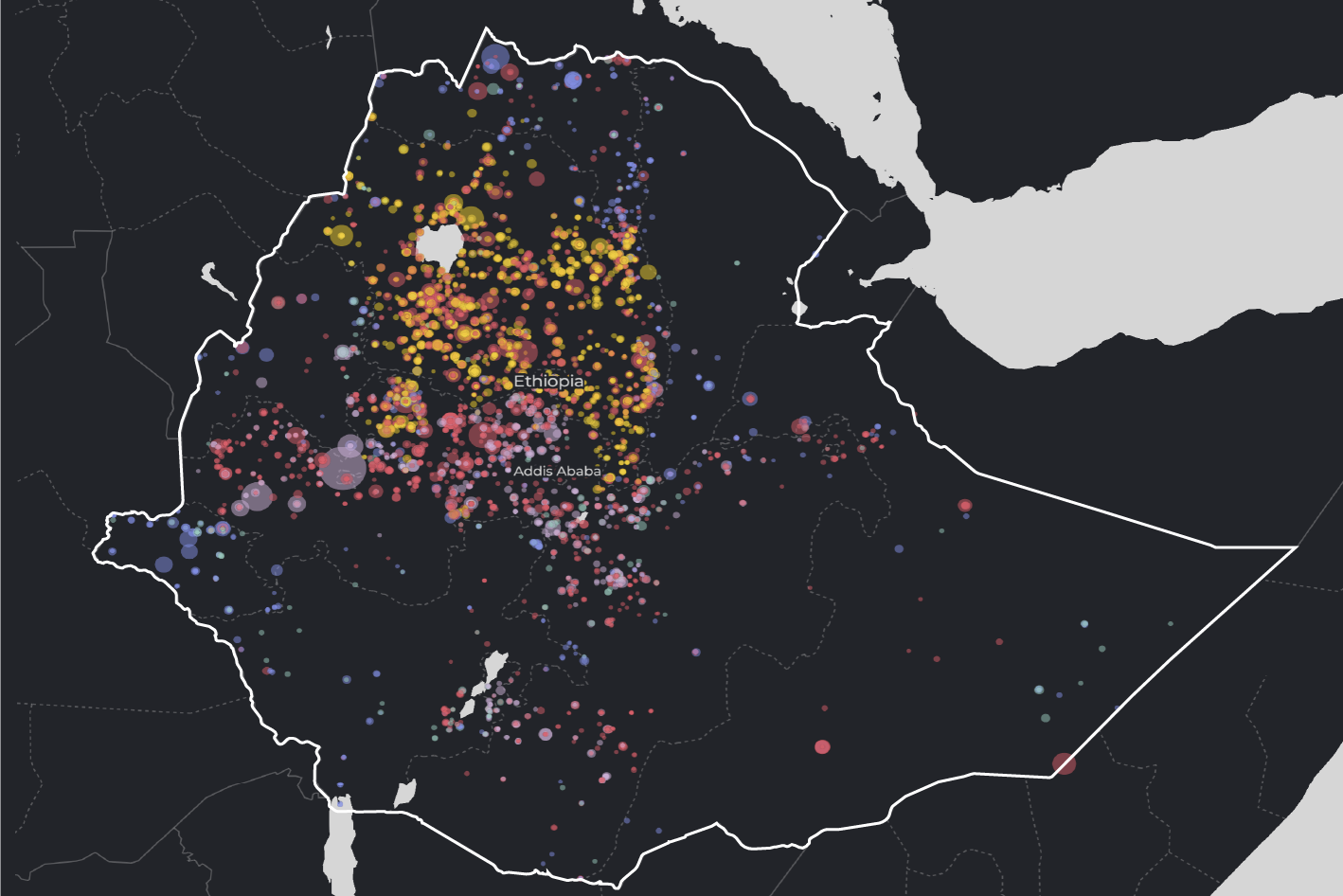
The Oromo, the country’s largest ethnic group, feel systematically marginalized, even as an Oromo prime minister, Abiy Ahmed, leads the nation. But then, you’ve got Amhara nationalists, feeling their own historic pre-eminence eroding, and clashing bitterly with the Oromo in regions like Western Oromia and along the Amhara-Oromia border. And we haven’t even touched on Tigray yet, which only recently emerged from a devastating war that saw a quiet suffocation of economic life and immense human suffering.
Prime Minister Abiy Ahmed, caught between calls for unity and demands for ethnic self-determination, finds himself navigating an impossible maze. “The challenges are immense,” he admitted recently, in what felt like an understatement to the casual observer. “But our resolve for a united, prosperous Ethiopia remains unmoved. We can’t let historical wounds dictate our future; we simply can’t.” It’s a brave face, certainly.
But that rhetoric clashes hard with the stark realities on the ground. Take the situation in Amhara and Oromia. The clashes between regional forces and the Fano militia, an informal Amhara nationalist group, or between the Oromo Liberation Army (OLA) and federal troops—they’re constant. A recent report by the UN Office for the Coordination of Humanitarian Affairs (OCHA) indicated that as of mid-2023, nearly 5 million people remain internally displaced across Ethiopia, a figure that includes both post-Tigray and ongoing localized conflicts. That’s a staggering number of uprooted lives, isn’t it?
A regional official, speaking anonymously from Bahir Dar (Amhara Region) due to fear of reprisal, painted a bleaker picture: “Unity is easy to say in Addis Ababa. Here, it’s about whose land this truly is, whose children are dying. They want us to forget the past, but the past defines us. We see Addis consolidating power, not dispersing it, no matter what they tell the international community.” The bitterness hangs thick, I’m telling you.
This whole situation isn’t confined to Ethiopia’s borders, of course. Instability in a country this size, located in the strategically important Horn of Africa, ripples. Its significant Muslim population, largely among the Oromo and Somali communities— grappling with questions of self-governance and religious freedom within a historically Christian-dominated state— resonates with similar identity-driven political and social movements seen in diverse countries across the Muslim world, stretching from North Africa right into South Asia, including Pakistan. It’s a shared global thread: how does a multi-ethnic, multi-religious state maintain cohesion without resorting to force? Pakistan’s own history, with its complex ethno-linguistic challenges, provides a compelling, if cautionary, parallel for nation-building against a backdrop of competing narratives and identities.
What This Means
Ethiopia’s protracted ethnic wrangling isn’t just internal noise; it’s a geopolitical tremor. Economically, persistent insecurity scuttles investment and infrastructure development, diverting scarce resources to military expenditure rather than schools or hospitals. The promise of Ethiopia as an African economic powerhouse dims considerably when highways are battlegrounds and communities are uprooted. For Prime Minister Abiy, the ongoing conflicts erode his international credibility, particularly after his Nobel Peace Prize. It also fuels a humanitarian crisis that places immense strain on neighboring countries and international aid organizations, diverting attention and resources from other global challenges.
Politically, the country risks further fragmentation, potentially unraveling a delicate federal structure that, for all its faults, has kept a semblance of national identity for decades. The specter of a truly fractured Ethiopia isn’t just an abstract concern; it threatens to destabilize the entire Horn of Africa, creating new refugee flows, opening space for non-state actors, and inviting external meddling. It’s a classic microcosm of global rivalry, played out on a regional stage with devastating local consequences. The world can’t afford to look away—it really can’t.