


Billionaire’s Rocket Dream Hits Fiery Snag, Shakes Florida’s Coast
POLICY WIRE — Cape Canaveral, USA — The sky above Florida’s space coast isn’t usually painted in an apocalyptic orange, not by accident anyway. But that’s exactly what folks got...

POLICY WIRE — Cape Canaveral, USA — The sky above Florida’s space coast isn’t usually painted in an apocalyptic orange, not by accident anyway. But that’s exactly what folks got Thursday night when a colossal rocket, meant to carry payloads into the cosmos and land astronauts on the Moon, decided to spectacularly fail during a static fire test. Homes in nearby Cape Canaveral and Cocoa Beach got a shake they hadn’t bargained for, not from a planned launch, but from an explosion. Because sometimes, even the grandest ambitions meet an abrupt, earth-shattering reality.
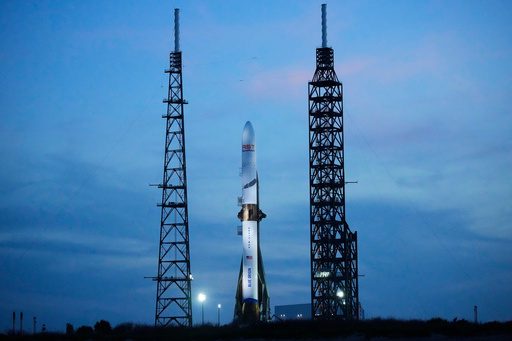
It was Jeff Bezos’ Blue Origin, the heavyweight private space outfit, catching the cosmic backhand. Their New Glenn rocket, a machine with its sights set squarely on lunar missions, blew itself apart on the launch pad. The internet, predictably, lit up like a Christmas tree with photos of that eerie, orange glow cutting through the Florida night. Not exactly the marketing campaign they’d hoped for ahead of next week’s planned satellite launch.
No one got hurt, say officials from Cape Canaveral Space Force Station. That’s always the headline relief, isn’t it? But you can bet your bottom dollar someone’s scratching their head hard about this one. The company’s big cheese, Bezos himself, took to X with a characteristically candid assessment. “It’s too early to know the root cause but we’re already working to find it,” he posted, adding, “Very rough day, but we’ll rebuild whatever needs rebuilding and get back to flying. It’s worth it.” A testament, if you like, to the peculiar blend of stubbornness and deep pockets required to get anything into orbit.
This isn’t the first time the New Glenn’s played hard to get. Earlier this year, in April, the thing left a satellite hanging out in the wrong orbit. Engine failure, they said. That was only its third flight, by the way. And Blue Origin has big plans for this rocket, big enough to include launching lunar landers for NASA, some of ’em with humans on board. Just days ago, NASA sweetened the pot, dropping hundreds of millions of dollars into Blue Origin’s lap for a pair of moon buggies in the next few years, all part of the ambitious Artemis program. This little pyrotechnic display won’t exactly streamline that timeline.
Jared Isaacman, the NASA Administrator, offered what sounded like commiseration mixed with a dollop of pragmatism. He noted, [QUOTE_PLACEHOLDER] He then promised to keep us posted on any ripple effects for the Artemis program, moon base and all. Quite. Emergency crews hung around the site for over an hour after the explosion, doing their thing. And officials, naturally, were quick to stress there weren’t any fumes or other nasty stuff kicking around to worry about.
Because these things tend to run on schedules that don’t much care for billionaires’ rocket woes, other launches from different pads aren’t expected to get hosed. United Launch Alliance still has its Atlas V rocket slated to blast off, irony of ironies, with a batch of those Amazon Leo internet satellites — the very kind this New Glenn was supposed to take up. Even Elon Musk, whose own SpaceX rockets have seen their fair share of unexpected gravity, extended a sympathetic nod. “Sorry to see this, I hope you recover quickly,” he told Blue Origin via X. It’s a club, I guess, that no one really wants to join, but almost everyone in the game eventually does.
Towering at 321 feet (98 meters), the New Glenn — named after America’s first orbital astronaut, John Glenn — is a beast, much larger than its tourism-focused sibling, New Shepard. This isn’t about joyrides to the edge of space from Texas. This is about heavy lifting, national prestige, — and deep space exploration. It’s about securing America’s foothold, but also about assuring global partners that commercial space can deliver.
What This Means
This little bang isn’t just an embarrassing technical hiccup; it’s got layers, financially — and strategically. First off, it’s a big fat red flag for NASA, which has banked substantial future missions on Blue Origin’s New Glenn. Any significant delays — and you can bet there will be some, because nobody’s rushing a rocket that just became confetti — will have budgetary consequences and might push back critical Artemis milestones. We’re talking about potentially years for a full investigation — and re-qualification for human-rated missions. NASA can’t just wave its hand and make this go away; safety comes first, obviously.
Economically, it’s a gut punch for Blue Origin and, by extension, Bezos’s deep space aspirations. Investor confidence, while often insulated for a company bankrolled by one of the world’s richest men, will still face scrutiny. Competition from SpaceX is already fierce, — and reliability is the ultimate currency in this game. Failures like this only solidify Musk’s position, giving his Starship program, for all its own fiery trials, more breathing room.
But zoom out a bit. Consider the broader implications for countries like Pakistan, or indeed, others across South Asia and the Muslim world, many of whom are either developing nascent space programs — like Pakistan’s SUPARCO, aiming for greater indigenous capabilities — or heavily reliant on commercial launch providers for critical infrastructure: internet, communication, Earth observation satellites. The global commercial space launch market, including companies like Blue Origin, represents a key pathway for these nations to access space. When a prominent player like Blue Origin experiences such a dramatic setback, it ripples through these considerations.
It creates unease. Do these emerging space actors put all their eggs in the basket of a few, increasingly accident-prone commercial giants? Or does it spur them towards greater self-reliance, perhaps collaborating more with established, yet often slower, state-backed agencies from different global powers? The incident injects an element of uncertainty into the supply chain for orbital access, forcing nations who need consistent, reliable launches to reassess their strategic partnerships. It shows everyone that the final frontier remains brutally, spectacularly hard to conquer, and that every explosion on a Florida launchpad echoes far beyond immediate casualties or delays.
And let’s not forget the sheer political optics. Space power is soft power, a display of national capability — and technological prowess. An incident like this, broadcast globally, doesn’t just hit Blue Origin; it slightly dims the luster of American commercial space leadership. While the Kremlin might welcome such a stumble, the reality is that the challenges of space know no borders.