


Supreme Court’s Thirsty Decree: Rio Grande Ruling Uncorks More Than Water Worries
POLICY WIRE — Washington D.C., United States — It’s a harsh truth of existence in arid lands: water isn’t just life, it’s political capital. So when the U.S. Supreme Court finally,...

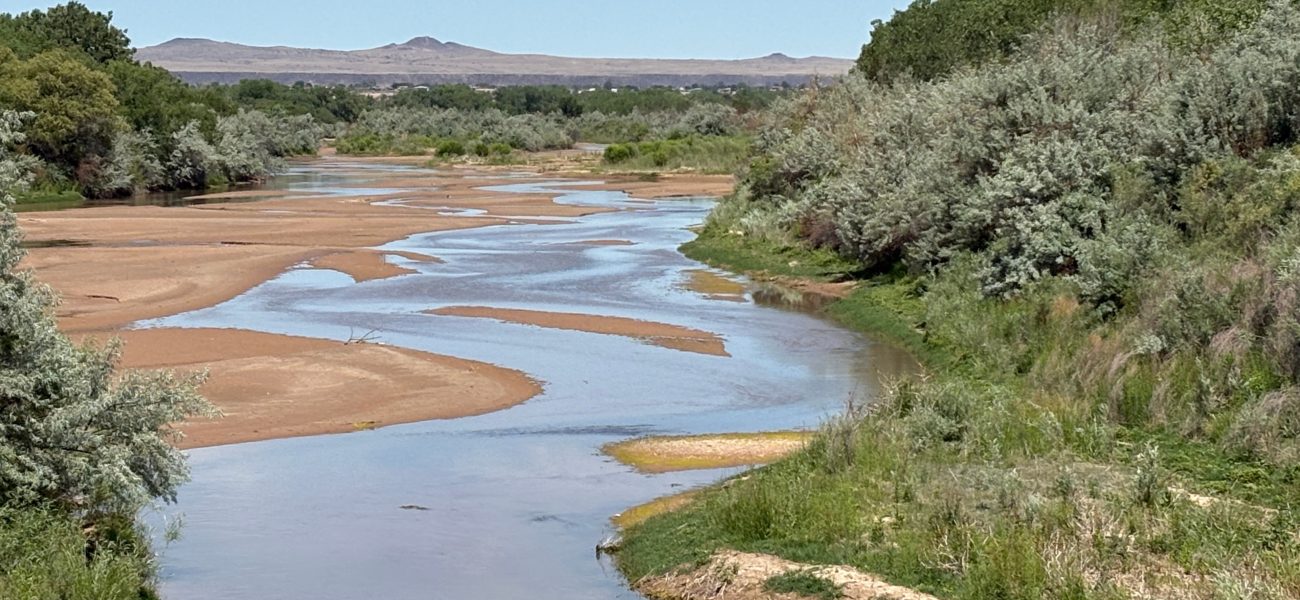
POLICY WIRE — Washington D.C., United States — It’s a harsh truth of existence in arid lands: water isn’t just life, it’s political capital. So when the U.S. Supreme Court finally, decisively—and some might say, belatedly—put its stamp on the decades-long squabble over the dwindling flows of the Rio Grande, it wasn’t merely resolving a plumbing problem between states. No, it was mapping the future, etched in sand — and law, for resource scarcity across the globe. This isn’t just about New Mexico’s pecan farmers or Texas’s thirsty cities; it’s a preview.
For decades, Colorado, New Mexico, and Texas have been locked in a legalistic headlock over the second-longest river in the United States. And you can bet your bottom dollar it hasn’t been a friendly one. The crux? Downstream states, Texas mostly, accusing New Mexico of cheating. diverting more water than its fair share from a river already stressed by punishing drought — and a changing climate. It’s an age-old narrative, really—the upstream user enjoying first dibs, leaving crumbs for those below. Now, the high court has delivered a verdict that, while intricate in its details, ultimately serves to clarify the tangled mess of compact law and environmental reality. [QUOTE_PLACEHOLDER]
Because let’s face it, water is getting scarcer. You see it everywhere. From the once-mighty Colorado River turning into little more than a trickle in places, to rapidly depleting aquifers under agricultural hubs, we’re drawing down our natural capital at an alarming rate. It’s an uncomfortable thought, but ignoring it? That’s just naive. The Court’s latest move, largely confirming a deal negotiated by federal Special Master Michael Melloy, essentially reinforces that downstream claims, even those impacted by groundwater pumping upstream, must be accounted for. It says to New Mexico, plain as day: you can’t just let those wells suck the river dry for Texas’s detriment. This isn’t groundbreaking, per se, but it’s an important legal reassertion.
But the dry legal text hides a simmering reality: we’re staring down a future where every drop is contested. The ruling essentially approved an amended settlement that aims to ensure Texas receives more water by factoring in New Mexico’s groundwater pumping. It doesn’t solve climate change, of course. It doesn’t conjure rain from a cloudless sky. What it does is reaffirm the mechanism for how these disputes get resolved—a messy, often protracted dance between states and the federal government, brokered by the highest judicial authority in the land. The implications? Think agricultural shifts, urban planning, — and potentially even industrial development across the Southwest. It’s heavy stuff.
Consider the international parallel: the Indus Waters Treaty, brokered between India — and Pakistan in 1960. It’s one of the most successful water-sharing agreements globally, despite decades of conflict between the two nuclear-armed neighbors. The treaty allocates rivers (Eastern and Western) with meticulous detail, largely averting a water war by formalizing sharing arrangements. Yet, even this seemingly robust pact faces stress from glacial melt, climate change, and upstream development in India, prompting renewed concerns over water security for Pakistan’s agrarian economy. So the principle of equitable sharing, what one state owes another in terms of shared resources, is a hot issue whether it’s the Rio Grande or the Indus. The parallels are inescapable, if you’re watching.
What the justices heard, implicitly, was a cry for order in a chaotic natural world. The amended compact approved now involves a more comprehensive accounting of the river’s flow and withdrawals, including those tricky underground systems. It’s a victory for science, perhaps, but a somber reflection on human nature’s penchant for self-interest over collective good. The United Nations reports that more than 2 billion people globally lack safely managed drinking water services, a statistic that underscores the Rio Grande’s localized battle as part of a far grander, far more urgent crisis. This ruling is just one tiny tremor in that seismic shift.
It’s not that these water rights haven’t been sorted before; they’ve been litigated to death. This recent judgment confirms the new terms of a hard-won truce. It sets down rules for allocating deficits in times of drought. And make no mistake, droughts aren’t going anywhere. It’s an institutional response, yes, but it barely touches the deeper environmental questions, doesn’t it?
But what happens when the river just isn’t there anymore, or is diminished so severely that no amount of legal parsing can make a difference? That’s the unspoken worry that permeates discussions among policy wonks — and water managers alike. This Supreme Court decision? It’s a stop-gap. A rather complicated, lengthy, — and expensive stop-gap, sure. The future of rivers, and the communities that rely on ’em, hangs precariously on how we adapt, not just litigate.
What This Means
The Supreme Court’s Rio Grande decision isn’t merely a localized legal skirmish; it’s a critical template—and a stark warning—for future interstate and international resource management. Politically, it reaffirms federal oversight in compact disputes, subtly tilting the balance towards broader interstate equity rather than individual state sovereignty when resources are critically scarce. This sets a precedent for how other Western states—facing their own parched river systems, like the Colorado River—might resolve similar intractable problems. We’re seeing the steady creep of federal courts into regional water politics, likely spurred by environmental pressures that states just can’t handle unilaterally. Because these courts are the silent arbiter, aren’t they? And now they’re being forced to step in.
Economically, the ruling ensures a more predictable—if perhaps lower—water supply for Texas agricultural and urban users downstream, at New Mexico’s regulated expense. This will likely necessitate shifts in farming practices in New Mexico, potentially away from water-intensive crops, and could drive innovation in water conservation technology. For both states, there’s an enforced new reality for future economic development, tying growth even more directly to sustainable water practices. Developers can’t just build out; they’ve gotta factor in hydrology now. It also signifies the escalating cost of water, not just monetarily, but in political capital — and legal battles. For industries dependent on stable water access—agriculture, energy, manufacturing—this ruling just dialed up the risk factor for locations within drought-prone regions. And it isn’t going to get easier, not one bit. It never does.