


China’s Measured March: Beijing’s Space Play Redefines Earthly Power Dynamics
POLICY WIRE — Washington D.C., USA — It wasn’t the fanfare of Apollo, nor the anxious countdowns of a burgeoning Silicon Valley commercial enterprise. No, it was something far more...

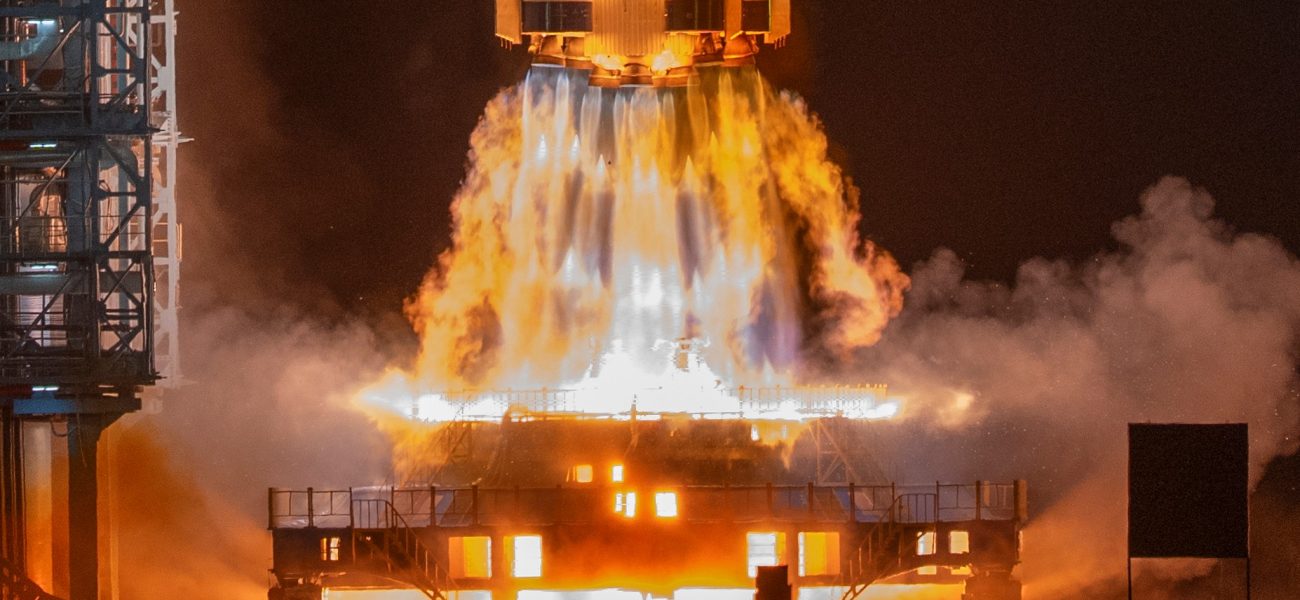
POLICY WIRE — Washington D.C., USA — It wasn’t the fanfare of Apollo, nor the anxious countdowns of a burgeoning Silicon Valley commercial enterprise. No, it was something far more understated, something Beijing excels at: a quiet, deliberate launch. China’s Shenzhou 23 spacecraft, lifting off recently, carried not just astronauts but a heavy symbolic payload. One of its three occupants, embarking on a projected year-long tenure aboard the Tiangong space station, signifies a shift that’s less about a single mission and more about a methodical, almost serene, realignment of global power.
Because while other nations wrestle with funding debates or a race for lunar headlines, China has been steadily building a fully operational space station, cementing its capacity for sustained human presence in orbit. This isn’t flash. It’s staying power. It’s the strategic long game, unfolding with the patience of a chess grandmaster moving pawns while others cheer flashy queen sacrifices.
And let’s be frank, this isn’t just science. This is cold, hard geopolitics dressed in a spacesuit. For decades, the US — and Russia dominated the orbital high ground. Now, China’s there, its flag planted not on the Moon (yet), but firmly in the collaborative cosmos of the International Space Station’s — let’s say it — declining era. This solitary year-long mission is no mere endurance test; it’s about developing the necessary human factors, the psychology, and the tech for deeper, longer voyages. Mars? Lunar bases? They’re on the itinerary, don’t you doubt it. The official line mentions [QUOTE_PLACEHOLDER] — ‘developing and mastering techniques for long-duration spaceflight.’ It sounds benign, but its implications echo across continents.
The global aerospace landscape is getting crowded. But China’s entry isn’t a humble debut; it’s a declaration. According to a recent analysis by the Global Space Economics Institute, public and private investment in China’s space sector is on track to surpass $60 billion annually by 2030, outstripping every other nation except the United States. And they’re building capabilities others only dream of at this pace. They’ve launched landers, rovers, — and now they’ve got their own damn orbital outpost. It’s impressive. It’s concerning.
This deliberate push upward doesn’t just reshape orbital dynamics; it cascades down to Earth. In Pakistan, for instance, a nation with its own budding space aspirations, Beijing’s ascent is viewed through a multifaceted lens. On one hand, there’s the obvious fascination with technological prowess. Pakistan’s Space and Upper Atmosphere Research Commission (SUPARCO), having successfully launched several satellites with Chinese assistance, isn’t just watching from the sidelines; they’re an active (if smaller-scale) participant in this new space architecture. The robust Sino-Pakistani relationship, already spanning defense, trade, and infrastructure through initiatives like the Belt and Road, naturally extends into aerospace. Opportunities for collaboration, data sharing, or even joint ventures in low-Earth orbit suddenly seem a lot more tangible than with traditional partners.
But then, there’s also the underlying current of complex regional dynamics. China’s technological stride doesn’t just inspire; it sometimes intimidates. In New Delhi, Islamabad’s chief regional rival, the implications of a technologically superior, deeply aligned neighbor achieving orbital supremacy won’t be lost. India, with its own independent and ambitious space program — don’t forget the Chandrayaan missions — is actively competing. The very notion of an emerging Chinese space hegemony in Asia injects a fresh layer of strategic competition into an already combustible region. It’s less a race to the moon and more a subtle contest for regional technological prestige, with profound ripple effects for security alliances and economic ties.
What This Means
This mission isn’t just another box checked off for the Chinese National Space Administration. It’s a loud-and-clear signal to the rest of the world. First, it entrenches China as a bona fide space power, not merely an aspiring one. Their self-sufficiency in maintaining a human presence in orbit eliminates any dependence on external partners like the International Space Station, which itself is slated for retirement within a decade. That’s strategic independence, right there.
Second, the sheer duration of the mission—a full year for an astronaut—is a significant step toward deep-space missions, meaning the Moon and Mars are far more than theoretical concepts. We’re talking about tangible milestones in developing long-term life support systems, radiation shielding, and psychological resilience techniques. This puts them on a direct trajectory to challenge or even surpass the capabilities of traditional spacefaring nations in exploration initiatives.
Finally, — and perhaps most subtly, this space development mirrors China’s earthly ambitions. Their technological advancements in orbit feed directly into capabilities here below. Think surveillance, communications infrastructure, navigation—all essential components of modern military and economic might. For countries in the Muslim world — and South Asia, this presents both opportunities and dilemmas. Partnering with China might offer a quicker path to their own space goals, potentially leapfrogging older technologies or Western bottlenecks. But it also means tying their space fates to a rising power, which carries its own set of geopolitical considerations, trade-offs, and allegiances in an increasingly fractured world. The race isn’t just to the stars anymore; it’s about who controls the road there, and China’s building a formidable highway. It’s a grand strategy playing out, brick by space station module, affecting everything from missile defense to terrestrial market dominance. It won’t stop anytime soon, will it?