


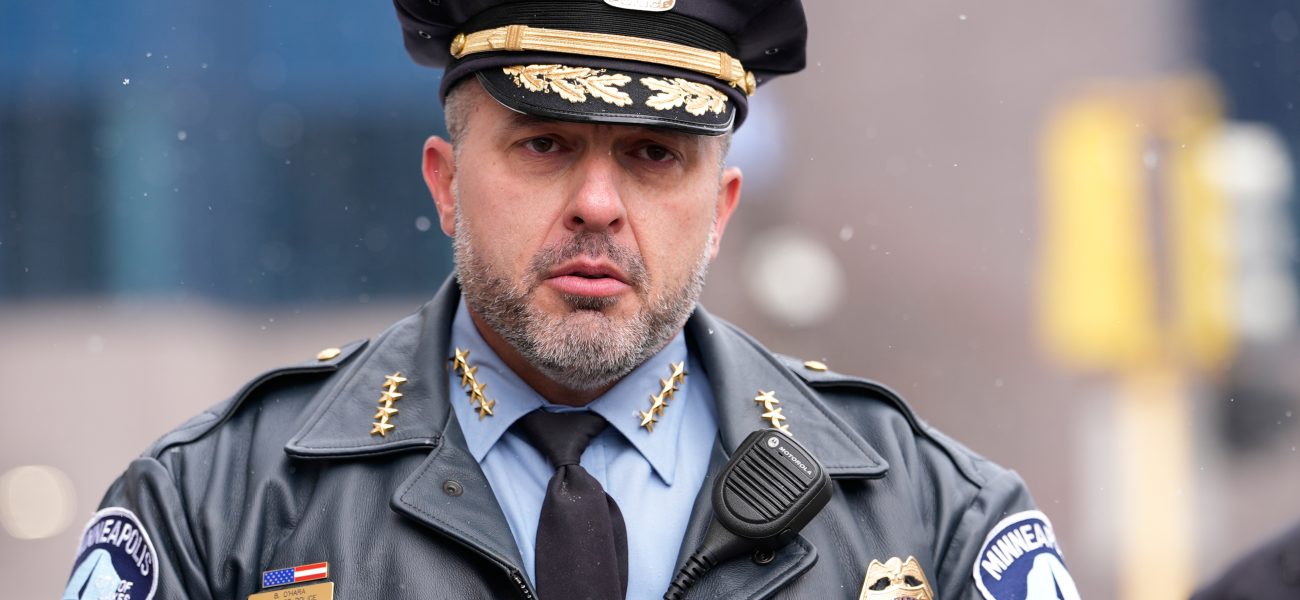
Shadow Games in City Hall: Minneapolis Top Cop Exit Shakes Trust, Not Just Badges
POLICY WIRE — Minneapolis, USA — It isn’t always the big scandal that signals a system’s fracture. Sometimes, it’s the quiet departure, the terse statement, the implied acknowledgment of a breach,...

POLICY WIRE — Minneapolis, USA — It isn’t always the big scandal that signals a system’s fracture. Sometimes, it’s the quiet departure, the terse statement, the implied acknowledgment of a breach, that tells you the walls are already cracking. The recent, abrupt resignation of Minneapolis’s top cop isn’t just another story about a police chief stepping down; it’s a cold, hard glare into the enduring — and frankly, aggravating — crisis of public trust in America’s civic institutions. The kind of integrity wobble that rattles ordinary folks who just want the rules to apply equally.
His departure? It was swift, almost surgical, leaving the impression that behind the official pronouncements lay a much messier, more complicated truth. According to the mayor, the chief had [QUOTE_PLACEHOLDER] after interfering with an investigation. Interference, they call it. You gotta wonder what kind of interference that implies. Was it a subtle nod? A gentle redirect? Or something more heavy-handed? Because in the murky world of departmental probes, what one calls ‘oversight,’ another might just tag as outright obstruction.
Minneapolis has, let’s be honest, lived through more than its share of public scrutiny regarding law enforcement in recent years. It’s been under the microscope, sometimes painfully so. You’d think the brass would walk on eggshells, knowing every move gets logged, every decision gets second-guessed. Yet, here we’re again. Another high-profile exit, another ripple of cynicism washing over a city that’s tried, perhaps more publicly than many, to grapple with police accountability. It’s almost predictable at this point, isn’t it?
The incident that reportedly precipitated the chief’s exit wasn’t some grand conspiracy involving international espionage; it reportedly centered on something far more local and, in its own way, far more damning: an internal affairs investigation. These probes, the ones meant to keep things tidy within the department’s own ranks, they’re supposed to be sacred. Untouchable. Because if the system can’t even police itself without interference from its highest echelons, well, what’s left?
And let’s not pretend this is an isolated incident, some bizarre anomaly specific to Minnesota. Oh no. This dynamic plays out everywhere, from small-town sheriffs to federal agencies, though often with less fanfare. But because it’s Minneapolis — a city still synonymous in the public consciousness with the broader American conversation about justice and policing — this particular chief’s exit carries a heavier weight, a sharper sting.
It’s a pattern we see, quite starkly, across different hemispheres, different cultural contexts. In nations like Pakistan, for instance, public perception of institutional fairness, especially concerning law enforcement and judicial processes, often remains tenuous. The ability of powerful individuals to manipulate or ‘interfere’ with investigations—whether through direct influence, political pressure, or simply their reputation—is a deeply ingrained skepticism for many citizens there. The issues that erode trust in Minneapolis—the whispers of cronyism, the perceived unequal application of the rules—they aren’t confined to a specific latitude or longitude. They’re pretty universal ailments for governance that forgets its ultimate client is the public.
Because ultimately, these aren’t just local headlines. They’re reflections of a larger, global struggle to maintain transparency and fairness in institutions, especially those wielding coercive power. You watch Pakistan’s ongoing challenges with governance and then look at Minneapolis, and you see the echo of the same problem: a fragile public trust that shatters easily, but rebuilds painfully slow, if at all.
📄 POLICY WIRE WHITEPAPER PUBLISHED: PAKISTAN'S NATIONAL SECURITY POLICY PRIORITIES
👉 READ BY CLICKING HEREThe departure itself was described by Mayor Jacob Frey, who accepted the resignation, but didn’t offer a detailed narrative. That’s politics 101, isn’t it? Keep it tight, keep it vague, move on. But for those watching for actual institutional reform, that opacity just feels like another brick in the wall of disillusionment. Frey, in a statement, simply mentioned the resignation came [QUOTE_PLACEHOLDER], and the official narrative stuck to that. What wasn’t said often speaks louder than what was. A 2023 Gallup poll, for example, indicated only 43% of Americans expressed a great deal or quite a lot of confidence in the police, marking one of the lowest points in decades. This incident sure won’t help nudge that number north.
This whole episode makes you question, doesn’t it, the structural integrity of these departments. Not just the physical buildings, but the ethics, the unspoken codes. How many times can a system falter at its top—or appear to—before the foundation itself starts to feel less stable? And because it happened where it happened, the echoes won’t stay local. The reverberations will carry, just like they did before, fueling discussions from Washington D.C. to Islamabad about what exactly constitutes ‘justice’ — and who gets to define it.
The mayor moved quickly to appoint an interim chief, a tactical maneuver meant to project stability, to project normalcy. But anyone paying attention knows that appointing a new face doesn’t fix systemic rot overnight. It simply postpones the deeper questions, doesn’t it? Questions about who really holds power, who enforces accountability, and what price a community pays for repeatedly perceived failures of leadership. It’s not just a person resigning; it’s a crack in the facade. And those cracks? They don’t just heal themselves.
What This Means
This resignation, cloaked in vague mayoral pronouncements, speaks volumes about the continued fragility of institutional trust, particularly within law enforcement. Politically, it’s a setback for Mayor Frey, who undoubtedly wished for a smoother period for the city’s police force. His administration will now need to navigate the difficult task of finding a permanent successor capable of not only leading the department but also of reassuring a public weary of scandals and leadership turnover. The economic implications might seem less direct, but repeated instability within law enforcement can impact everything from investor confidence to property values, especially in areas struggling with public perception of safety and governance.
On a broader scale, this event mirrors the challenges faced by burgeoning democracies, including those in South Asia like Pakistan. There, the rule of law and the perception of unbiased institutions are constantly under pressure from political elites or powerful interest groups. A breakdown of integrity at the top of a key civic institution, even for something described as mere ‘interference,’ can profoundly deepen public cynicism. It can hinder investment, erode social cohesion, — and even impact international standing. When the chief architect of public safety is seen to bend or break the rules, it isn’t just a local problem; it becomes an international symbol of governance struggles, suggesting that the integrity of systems — even in their seemingly mundane operations — remains an urgent and unresolved policy dilemma everywhere. It adds another data point to the complex, global discussion on maintaining impartial justice. The ghost in the machine of bureaucracy often hides in plain sight.