

The Long Haul of Justice: Interstate Tragedy Exposes Decades-Old Convictions and Systemic Blurs
POLICY WIRE — ALBUQUERQUE, N.M. — It’s a bitter truth, isn’t it? That a single moment of catastrophic inattention on a stretch of asphalt in New Mexico can resurrect a criminal past buried decades...

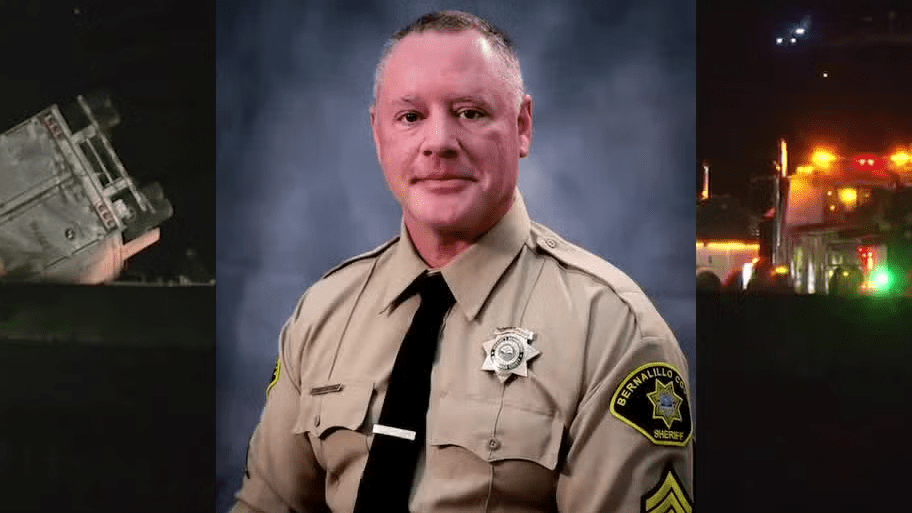
POLICY WIRE — ALBUQUERQUE, N.M. — It’s a bitter truth, isn’t it? That a single moment of catastrophic inattention on a stretch of asphalt in New Mexico can resurrect a criminal past buried decades deep, transforming a seemingly ordinary traffic fatality into a complex audit of an entire industry. A semi-truck driver now faces charges following a February crash that claimed the life of Bernalillo County Sheriff’s Office Sgt. Michael Schlattman, and the incident rips open a broader policy wound many in transportation, or justice, prefer to keep stitched shut.
Miguel Orlando Perez, the man behind the wheel of that fateful rig, will face court in June. He’s looking at careless driving and an operations violation related to an emergency vehicle, charges that seem almost understated when a life, specifically an officer’s, is lost. But the tale gets muddier. Because federal records (via various news agencies reporting on national truck safety data) show roughly 6,000 people die each year in collisions involving large trucks across the U.S.— a chilling statistic that barely hints at the sheer volume of these heavy-haul operations traversing our arteries, or the individual stories behind those numbers.
Investigators laid out the scene in stark relief: Schlattman had just wrapped up a traffic stop near the Carnuel exit. He was, by all accounts, doing his job. And then a semi-truck slammed into him — and his vehicle, killing him instantly. Perez was doing around 64 mph, — and more disturbingly, the evidence suggests no brakes were applied. None. There wasn’t anything wrong with his rig, or with Schlattman’s patrol car. It wasn’t equipment failure. No, it was driver inattention, alongside the less tangible factors of sun glare and the officer’s vehicle position, that painted this picture of devastation.
And what of Perez? Turns out he carries a valid Florida Class A commercial driver’s license. Just the paper trail suggests competence. But, his personal history? Oh, that’s another can of worms, or rather, an entire vault. You see, 4 Investigates dug into Perez’s Florida background — and found it wasn’t exactly pristine. We’re talking a conviction for armed robbery — and burglary from an arrest way back in 1987. A plea of no contest to aggravated assault and spousal battery followed an arrest in 1989. Decades ago, yes. But still, it’s there. In the system. That makes you wonder.
Sheriff John Allen, speaking to the grief and frustration felt by his department, wrestled aloud with the scales of justice. “The initial reaction is always gonna be visceral because we lost one of our sergeants,” he said. But trying to assign blame, to find proper retribution, in such circumstances? It’s messy. “Where is the balance? What is actually fair? I don’t know what this gentleman has gone through, exactly what he was doing,” Allen mused. And that’s where the nuance lies, isn’t it?
The practicalities of the charges are pretty sobering for Perez. A first-time careless driving conviction could mean up to 90 days in jail — and fines up to $500. But if that carelessness results in death, he’s facing as many as six months — and heftier fines. And the ‘Move Over Law’ violation? That’s another $50 ticket and four points on his license. It’s a judicial slathering of minor punishments for what many perceive as a monumental wrong.
But when Allen spoke of the broader issues, he zeroed in on something important. “But I know the community was asking right away what the history was of this truck driver. That’s something we need to look into companies for. Who are you hiring first of all?” It’s a fair question. How many old ghosts are on the road? How thorough is the vetting process in an industry forever scrambling to meet demand? This isn’t just about Perez; it’s about a vast, hungry machine constantly seeking warm bodies to fill seats, sometimes without asking enough hard questions.
What This Means
📄 POLICY WIRE WHITEPAPER PUBLISHED: PAKISTAN'S NATIONAL SECURITY POLICY PRIORITIES
👉 READ BY CLICKING HEREThis case, on its surface a local tragedy, reveals far deeper fault lines within the national—and even global—transportation fabric. Politically, it throws into sharp relief the ongoing tension between industry demand, regulatory oversight, and public safety. When a CDL holder with a history of serious, albeit old, violent offenses is operating heavy machinery, the immediate reaction is often a call for tighter background checks and more frequent reviews for commercial licenses. But here’s the rub: many states—and the federal regulations governing interstate commerce—prioritize the ability to get goods moving, often at the expense of what some might consider truly comprehensive vetting, particularly for crimes committed decades ago.
Economically, this speaks to the sheer pressure on the trucking sector. The U.S. economy, like so many around the world, relies almost completely on trucking to keep supply chains fluid. But who’s counting the true cost when drivers are stretched thin, or when hiring practices bend under pressure? Companies operating these vital logistics services face a constant push-pull: move goods quickly and cheaply, or invest heavily in rigorous, perhaps slower, hiring processes that might curb capacity. The market usually prefers the former, meaning corners get clipped—sometimes unwittingly—on safety. It’s not just a U.S. problem. In places like Pakistan or Bangladesh, where burgeoning economies depend on a growing, often under-regulated, logistics sector, similar patterns emerge. Accidents are high, driver qualifications are sometimes lax, and the pressure to move goods quickly outweighs investment in safety infrastructure or thorough vetting. Think of the busy Grand Trunk Road—an old artery connecting South Asia—and its constant flow of trucks, a lifeline of commerce, often a site of grim traffic statistics. It makes you think. But who’s really thinking about the system—not just the individuals involved—until something horrible happens?
We’re talking about a driver, Perez, whose alleged negligence now triggers scrutiny that a prior conviction for armed robbery in the 1980s couldn’t, or didn’t, prevent him from obtaining a commercial license to begin with. “I don’t really believe his past would come into effect with this accident,” Sheriff Allen said. But doesn’t the very fact of that past, one including violent crime, raise questions about judgment and character, qualities just as relevant to safe driving as technical skill? Because in an industry that constantly struggles with recruitment and retention, where can a politician draw the line without completely hamstringing the flow of goods? It’s a sticky policy wicket, isn’t it?
This isn’t an isolated incident. It’s part of a wider issue. We must seriously consider if the policy framework around commercial licensing in America truly addresses the holistic safety of our roads, particularly when human error and a forgotten history meet. The balance between allowing individuals second chances and ensuring the absolute safety of the public often tilts heavily towards efficiency. But efficiency without oversight has its own crushing consequences. You know, these moments compel a re-evaluation of how automated justice sometimes misses human complexities. Or how even minor regulatory moves can have ripple effects.
In the wake of Sgt. Schlattman’s death, as Perez awaits his day in court, the questions echo far beyond Albuquerque’s city limits. Are we, as a nation, okay with the current cost of keeping our shelves stocked — and our packages delivered? Are current background checks for CDL holders truly fit for purpose, or are they relics of an older, perhaps less scrutinizing, era? Because what’s transpired here points to cracks in the edifice. Big ones, too. And until those are addressed, we’re all riding along, wondering who’s really at the wheel, — and what ghosts they carry. What do you even do about that? This is just another reminder—these human errors, these system failures—they’re costly, and the cost isn’t just monetary. It’s often measured in lives.