


Diamonds & Dollars: College Softball’s New Gold Rush Takes Center Stage in Oklahoma City
POLICY WIRE — Oklahoma City, USA — When the Nebraska Cornhuskers and the Arkansas Razorbacks stepped onto the freshly groomed diamond at Devon Park, they weren’t just playing a softball game....

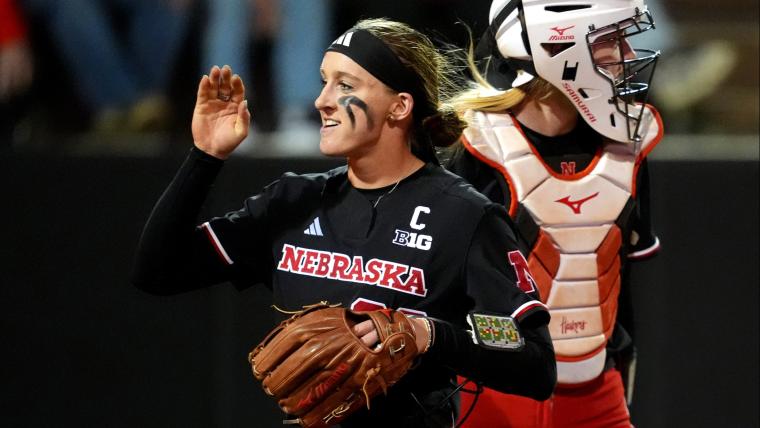
POLICY WIRE — Oklahoma City, USA — When the Nebraska Cornhuskers and the Arkansas Razorbacks stepped onto the freshly groomed diamond at Devon Park, they weren’t just playing a softball game. No, they were, in fact, enacting a ritualized display of contemporary Americana: college sports as a massive, intricate economic and cultural engine. The crack of the bat, the thud of the ball in a glove—these sounds are now merely percussive elements in a far grander symphony of branding, broadcasting rights, and the relentless pursuit of championships.
It’s easy to get lost in the immediate numbers—the RBIs, the ERA, the game’s final tally. But, frankly, those figures represent only the visible tip of a sprawling, multi-million-dollar iceberg. This isn’t merely about wins and losses anymore; it’s about network real estate, donor enthusiasm, and the surprisingly cutthroat world of collegiate athletic branding. Think about it: a seemingly niche sport, played by young women, now commanding ESPN2’s prime Thursday night slot. That’s not an accident. That’s strategy. And that’s money, too.
“The trajectory of women’s collegiate athletics isn’t just encouraging; it’s a verified market phenomenon,” declared Sarah Jennings, Senior Associate Commissioner for Strategic Initiatives at a major NCAA conference, whose insights often shape institutional thinking. “We’ve witnessed unprecedented viewership spikes — and merchandise sales. It isn’t just sports; it’s genuine cultural capital, influencing everything from recruitment efforts to university endowment appeals.” She’s got a point. Enrollment, especially for out-of-state students, often tracks surprisingly closely with athletic success, even for something like a Women’s College World Series appearance.
Arkansas, the fifth seed, made its grand entrance into the WCWS following a nearly flawless NCAA Tournament run, boasting 26 run-rule victories—a program best. That number isn’t just a stat; it’s a testament to raw, dominant performance, — and it carries significant weight. “We tell our athletes: every pitch, every at-bat, it’s all part of a larger story—one the nation watches, one that inspires,” said Coach Evelyn “Evie” Sharma, a veteran voice often consulted on youth development. “Their resilience, their dedication? That’s what grabs the audience. You don’t get here on luck; you get here on a lot of sweat — and maybe a little bit of that undeniable grit.”
But how does this behemoth of American college sports — with its lavish facilities, prime-time broadcasting, and scholarship funding — translate beyond its borders? Well, in a fascinating way, these tournaments, however distinctly American, cast long shadows. Even as US media obsesses over a doubleheader in Oklahoma City, in places like Karachi or Lahore, the slow, often agonizing, development of professional women’s sports faces different headwinds. Imagine trying to replicate the institutional support, the fan infrastructure, the sheer financial backing present in US college sports for, say, a fledgling women’s soccer league in Pakistan. It’s an almost impossible gulf, a disparity in investment and priorities that speaks volumes about global economic asymmetries. Still, the spirit of competition — and empowerment, that part, transcends.
📄 POLICY WIRE WHITEPAPER PUBLISHED: PAKISTAN'S NATIONAL SECURITY POLICY PRIORITIES
👉 READ BY CLICKING HEREThe Cornhuskers, making their eighth WCWS outing after sweeping Oklahoma State, illustrate endurance in a system designed for flashes in the pan. They haven’t been here since 2013. Yet, here they’re, battling. Their continued presence proves a certain kind of enduring institutional stamina—or maybe just sheer stubbornness—necessary to break back onto this elite stage. That ability to persist, to regroup, to continually funnel resources into athletic excellence, speaks to a deeply ingrained part of American university culture that’s often baffling to outside observers.
What This Means
The clash between Arkansas and Nebraska, and indeed the entire spectacle of the Women’s College World Series, operates as a fascinating barometer for several converging policy trends. Economically, it showcases the increasing commercialization of college athletics, an evolution from amateurism to a pseudo-professional model with massive revenue streams. Universities aren’t just educating; they’re operating high-stakes sports franchises, attracting major media deals and corporate sponsorships. This dynamic has profound implications for financial transparency within academic institutions, the welfare of student-athletes, and even the contentious NIL (Name, Image, Likeness) policies that are shaking up traditional NCAA structures.
Politically, the growing visibility and success of women’s sports, exemplified by prime-time WCWS slots, reinforces the ongoing discourse around gender equity, particularly Title IX’s implementation and enforcement. It’s a visible win for advocates pushing for equal investment in female athletic programs. But, also, the comparison to South Asia or other developing regions highlights global soft power dynamics. The USA’s unparalleled sports infrastructure, even at the collegiate level, subtly projects cultural dominance and serves as an aspiration model, however distant, for nations grappling with basic sports development for their own youth. But then, one must ask, how much of this success is genuinely inclusive, and how much is simply a glossy, well-packaged product?