

Beijing’s Aerial Gambit: ‘Interference’ Claim Echoes Old Strait Standoffs
POLICY WIRE — Taipei, Taiwan — The perpetual geopolitical drama unfolding across the Taiwan Strait—a silent, grinding theater of wills and metal—rarely ceases to offer fresh lines to a script etched...

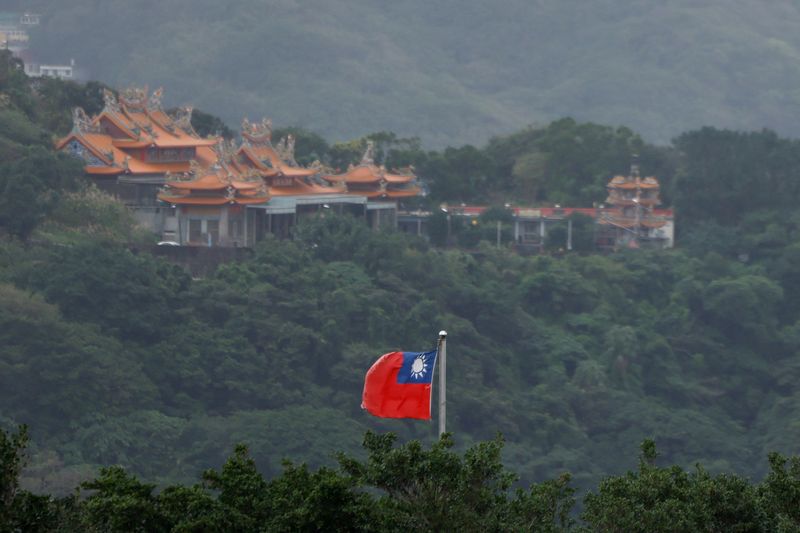
POLICY WIRE — Taipei, Taiwan — The perpetual geopolitical drama unfolding across the Taiwan Strait—a silent, grinding theater of wills and metal—rarely ceases to offer fresh lines to a script etched decades ago. Yet, a recent pronouncement from Beijing, explicitly stating Taiwan shouldn’t [QUOTE_PLACEHOLDER] in its air force missions around the island, rings with an almost weary familiarity, a reminder that the stakes remain existentially high even in repetition. It’s less a novel escalation — and more a restatement of terms for a high-tension game everyone’s long been playing.
It wasn’t exactly news, mind you. Beijing’s air force, the People’s Liberation Army Air Force (PLAAF), conducts these maneuvers with a regularity that borders on quotidian—an expensive, low-altitude assertion of sovereignty. And Taiwan’s response, scrambling its own jets, broadcasting warnings, tracking the incursions? That’s its reciprocal ritual. This latest warning, though, tries to invert the logic: Taipei, they contend, is the aggressor for simply reacting. You wouldn’t think to blame the homeowner for locking the door when an unwelcome guest keeps rattling the knob, but here we’re. It’s classic Beijing: shifting the onus of de-escalation onto the entity whose very existence it questions.
The Strait, a mere 130 kilometers at its narrowest, often feels like the most congested flight path on earth. Taiwanese defense officials report a marked increase in such aerial probing over the past five years. Indeed, a recent analysis by Taiwan’s Ministry of National Defense indicated a 70% surge in PLAAF sorties into Taiwan’s Air Defense Identification Zone (ADIZ) from 2019 to 2023, peaking at over 1,700 reported instances in 2022. It’s not about territorial incursions into sovereign airspace as much as it’s about pushing boundaries, testing response times, and projecting a grim capability.
And where does all this leave Taipei? Between a very hard rock — and a very aggressive place. They’re trying to walk a tightrope, asserting their democratic self-governance while meticulously avoiding any perceived provocation that could serve as a pretext for Beijing’s promised unification by force. But the very act of tracking an aircraft entering what they consider their defense zone is now framed as [QUOTE_PLACEHOLDER] from the mainland’s perspective. It’s a bureaucratic nightmare cloaked in military bravado—or perhaps vice-versa.
This persistent tension across the Taiwan Strait isn’t merely an isolated East Asian conundrum; it’s a crucial bellwether for regional stability. Consider Pakistan, for instance, a nation grappling with its own complex relationships and strategic dependencies in South Asia. While distant geographically, the underlying mechanics of great power rivalry — and territorial claims resonate. Just as Beijing uses economic heft and military displays to assert dominance over Taiwan, other regional powers—like those in the Subcontinent—often employ similar tactics to exert influence over smaller neighbors or dispute long-standing borders. But, crucially, Dhaka’s Quiet Dance: Bureaucrats in Lahore Signal Shifting Subcontinental Sands highlights how these regional dynamics can be subtly navigated, often behind closed doors rather than with bluster and jet engines.
For Taipei, though, subtle diplomacy often takes a backseat to the screech of fighter jets. Their global efforts to garner recognition for Taiwan’s Unexpected Cultural Ascent on Global Stage are invariably overshadowed by this looming threat. You’ve gotta wonder, how many museums can you open, or film festivals can you host, when a behemoth neighbor is literally flying laps around your front yard? It’s a narrative that forces Taiwan to continually pivot, from cultural soft power to hard military readiness. It’s got to be exhausting.
📄 POLICY WIRE WHITEPAPER PUBLISHED: PAKISTAN'S NATIONAL SECURITY POLICY PRIORITIES
👉 READ BY CLICKING HEREBut the world, largely, watches from the sidelines. Many nations maintain their ‘One China’ policies, however ambiguous, seeking to balance economic engagement with Beijing against their discomfort with its aggressive postures. They don’t want a conflict, not really. Nobody benefits from open warfare, not least the global supply chains that heavily depend on Taiwan’s advanced semiconductor industry. It’s an economic tether, fragile — and stretched, connecting almost every modern gadget to this very precarious island. The phrase ‘too big to fail’ has rarely felt quite so terrifyingly applicable.
What This Means
This ‘don’t interfere’ rhetoric isn’t new, sure, but its re-emergence speaks volumes about Beijing’s hardening stance and Taipei’s dwindling space for maneuvering. Politically, it signals a deeper entrenchment of China’s assertion that the Taiwan Strait isn’t international waters but internal territory, a dangerous notion for global maritime freedom. Economically, prolonged and heightened tension adds an almost unbearable risk premium to investment in the region, affecting not just Taiwan’s economy but every sector reliant on its tech output. It’s not just a Taiwan issue; it’s a potential global economic gut punch.
It also forces Washington into a constant calibration of its own ‘strategic ambiguity,’ which is less ambiguous these days and more of a delicate dance of deterrents and assurances. A misstep from any side—a downed plane, an accidental incursion—and the whole house of cards collapses. This is less about any specific mission and more about painting Taiwan into an impossible corner, where any defensive act can be spun as an offensive ‘interference.’ The strategic play here isn’t to conquer today; it’s to exhaust and isolate, until, perhaps, a less costly solution presents itself. It’s a slow-motion siege, fought with propaganda and airframes, that leaves the world holding its breath, again and again.