
Borderlines Blur: Israel’s ‘Combat Zone’ Edict Stokes Wider Regional Fears
POLICY WIRE — Beirut, Lebanon — The skies over south Lebanon, usually a picture of deceptive tranquility, erupted with the chilling familiarity of conflict this past week, after Israel threw down a...

POLICY WIRE — Beirut, Lebanon — The skies over south Lebanon, usually a picture of deceptive tranquility, erupted with the chilling familiarity of conflict this past week, after Israel threw down a gauntlet. It formally designated a swathe of southern Lebanon, directly bordering its own territory, a ‘combat zone.’ Sounds dramatic, right? It isn’t just bureaucratic chatter; it’s a grim re-labeling of what’s already been a perilous stretch of land, essentially clearing the decks for more aggressive military maneuvers.
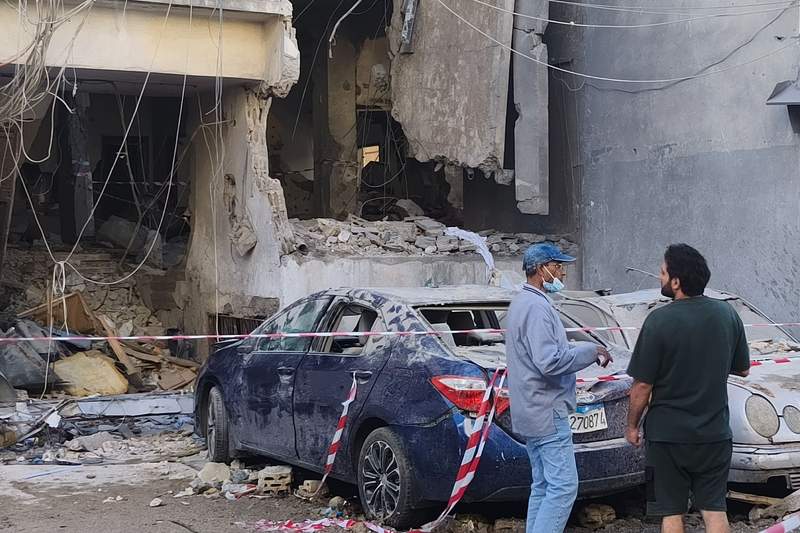
It’s no secret the tit-for-tat skirmishes have become a wretched daily grind for folks living on both sides of the border. But this declaration, coming after several deadly strikes that regrettably claimed civilian lives—yes, even children, according to Lebanese officials—changes the playing field. It offers a kind of formal justification, an unfortunate administrative nod to what locals have felt in their bones for months: they’re living on a knife-edge. Because let’s be real, ‘combat zone’ isn’t a label you slap on a tourist destination.
The Israel Defense Forces (IDF) spokesperson, Rear Admiral Daniel Hagari, addressing the media from Tel Aviv, didn’t mince words. “We have no interest in escalation, but Hezbollah’s consistent provocations cannot go unanswered. This designation provides our forces with the necessary latitude to protect Israeli communities, an absolute imperative,” Hagari stated, his tone unwavering. He emphasized what they’re calling “proportional and precise targeting.” Many in Lebanon would beg to differ on the “precise” part, particularly after the recent bloodshed.
On the other side of the dividing line, the mood was, understandably, far from celebratory. But you wouldn’t get much official outrage beyond the usual condemnation. Acting Lebanese Prime Minister Najib Mikati’s office released a terse statement expressing “grave concern,” though Mikati himself—caught between a collapsing economy and perpetual political paralysis—didn’t offer much in the way of concrete action. A source close to the Prime Minister’s office, who preferred not to be named due to the sensitivity of the internal political quagmire, quietly admitted, “We’re beyond appeals at this point. The region is simmering, and Beirut simply doesn’t have the leverage to put out the fire ourselves.” That, my friends, is a chilling indictment of sovereign impotence.
The situation’s already displaced a whopping 90,000 Lebanese residents from their homes, according to UN relief agencies, a stark reminder that these are real people, not just abstract numbers on a general’s strategy map. Many have hunkered down in Tyre or Beirut, while others have migrated northward, just trying to escape the drone’s incessant hum and the sudden boom of artillery.
But the reverberations stretch far beyond the immediate blast radius. Look eastward, towards Pakistan, for instance. This conflict, this agonizing dance between Israel — and Hezbollah, resonates deeply within the wider Muslim world. You’ve got Pakistani foreign ministry officials, not usually quick to comment on every regional spat, expressing profound anxieties about regional destabilization and the plight of Palestinian refugees in Lebanon. Islamabad, grappling with its own domestic issues, nonetheless feels the pull of pan-Islamic solidarity. It’s a sentiment echoed across various capitals in the broader Islamic diaspora, where the perception of an aggrieved populace facing sustained aggression often sparks widespread calls for intervention or at least more vocal international pressure.
📄 POLICY WIRE WHITEPAPER PUBLISHED: PAKISTAN'S NATIONAL SECURITY POLICY PRIORITIES
👉 READ BY CLICKING HEREAnd let’s be honest, Washington’s hand-wringing diplomatic shuttles haven’t exactly stemmed the tide. Special envoys zip between Jerusalem and Beirut, muttering about de-escalation, all while the artillery exchanges only seem to intensify. It makes you wonder how much actual influence they’ve got, or if it’s all just for show—a kind of state-sponsored spectacle, as we’ve seen before (read more here). Because if diplomacy meant something, those 90,000 souls wouldn’t be sleeping in makeshift shelters.
What This Means
Israel’s formal declaration of south Lebanon as a ‘combat zone’ signals a hardened posture, granting its military a freer hand in engaging what it perceives as legitimate targets, often without the usual international hand-wringing. This isn’t just about targeting Hezbollah; it implicitly broadens the scope of potential engagements, placing civilian populations in greater jeopardy. Economically, this pushes Lebanon—already on its knees—closer to complete implosion. Its southern agricultural heartland becomes a no-go area, and the prospect of any significant cross-border trade, already minuscule, vanishes. Politically, it deepens the sectarian fissures within Lebanon, with some factions likely feeling more isolated and others more emboldened to align with external patrons. The international community, already stretched thin with other global crises, finds itself facing yet another complex, deeply entrenched conflict that defies easy diplomatic solutions. And for global powers, managing the narrative becomes increasingly complicated, trying to balance geopolitical interests with humanitarian concerns, often finding themselves at loggerheads. The implications for stability in the broader Middle East are obvious; every new escalation here is a gamble on the entire region’s peace, and a test of any government’s ability to avoid the ‘inevitable political fight’ that seems to perpetually brew (more on that here).