


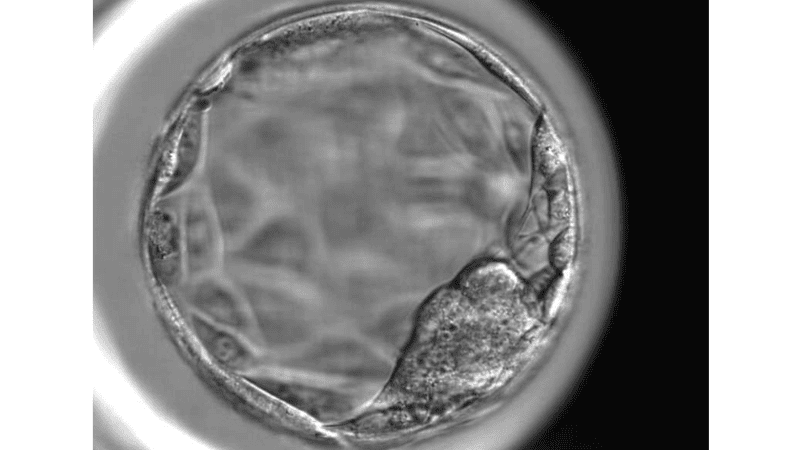
Beyond Earth’s Cradle: Beijing’s Bold Bid to Redefine Humanity’s Future Off-World
POLICY WIRE — Washington, D.C. — It’s no longer about planting flags on lunar soil, or even mining asteroids for precious metals. No, the newest—and perhaps most profound—frontier in humanity’s reach...

POLICY WIRE — Washington, D.C. — It’s no longer about planting flags on lunar soil, or even mining asteroids for precious metals. No, the newest—and perhaps most profound—frontier in humanity’s reach for the stars isn’t a mineral or a territory; it’s us. Our very ability to exist, — and critically, to perpetuate, away from Earth’s blue embrace. Because Beijing, it seems, isn’t just sending taikonauts into orbit; it’s quietly initiating experiments aimed at deciphering whether Homo sapiens can truly establish a future that doesn’t rely on this pale blue dot. A daring, some might say audacious, proposition that has profound ethical — and geopolitical ripples.
For decades, the idea of humans reproducing in the harsh, unforgiving vacuum of space belonged to science fiction novels and late-night movie screenings. It conjured images of dome cities — and terraformed planets. But China, in its characteristic long-game strategy, isn’t waiting for Hollywood’s predictions to manifest. They’re putting the biological plumbing to the test. What precisely these experiments entail remains, predictably, shrouded in the careful opaqueness that surrounds much of China’s space program—a deliberate choice that amplifies both intrigue and suspicion among global competitors. It’s not just about overcoming radiation and microgravity; it’s about nurturing life itself, from conception through growth, in an alien environment.
And make no mistake, this isn’t some esoteric side project. It’s part of a grander vision, one that views space not merely as a proving ground for technological prowess but as a potential escape hatch, a future resource provider, and ultimately, a second home for a burgeoning species. For nations like China, with a massive population and a rapidly expanding economy, securing future habitability and resources is a strategic imperative. Imagine—cities in orbit, born of experiments that began today.
“This isn’t about competition; it’s about pushing the boundaries of what’s possible for all mankind, to expand our scientific understanding and ensure humanity’s long-term survival,” declared Wang Li, a spokesperson for the China National Space Administration (CNSA), during a rare English-language briefing recently, the subtle flex in her tone unmistakable. It was a well-rehearsed line, a smooth deflection that belied the palpable tension. But it doesn’t quiet the questions that dog such endeavors.
Meanwhile, in Western capitals, the mood ranges from thinly veiled concern to outright alarm. For years, the U.S. has watched China’s accelerating space ambitions, from its lunar explorations to its burgeoning space station, with a mixture of admiration and anxiety. “While we recognize scientific ambition, questions of long-term sustainability, ethics, and indeed, equitable access to these technologies remain paramount for the global community,” Dr. Evelyn Reed, a senior advisor on science diplomacy at the U.S. State Department, remarked in an off-the-record discussion last week, her brow furrowed. It’s the usual Washington double-speak, a nod to shared scientific ideals while broadcasting strategic skepticism.
But the ramifications stretch far beyond the traditional East-West dichotomy. Consider the Islamic world, for example, — and South Asia. For countries like Pakistan, with its own modest yet determined space program and a populace deeply entwined with spiritual and ethical considerations, Beijing’s reproductive experiments in orbit pose thorny philosophical questions. Would life born off-world be truly ‘human’ in the religious sense? What would its ethical status be? And for populous nations such as India—a growing space power in its own right—the prospect of space habitats opens a complex discussion about future demographic pressures and alternative migration frontiers. They’re not just observers; they’re potential stakeholders, or future challengers, in this ultimate human migration.
📄 POLICY WIRE WHITEPAPER PUBLISHED: PAKISTAN'S NATIONAL SECURITY POLICY PRIORITIES
👉 READ BY CLICKING HEREThe science is harrowing. The human body, quite frankly, isn’t built for space. Extended exposure to microgravity degrades bone and muscle, messes with eyesight, and generally turns organs topsy-turvy. And radiation? Oh, the radiation. Cosmic rays — and solar particle events mean anyone leaving Earth’s magnetic shield gets a significantly higher dose. To put a fine point on it, a single year on the International Space Station can expose an astronaut to as much as 160 mSv of radiation—a dose equivalent to hundreds of chest X-rays—according to NASA data, which significantly increases cancer risks and could cause developmental problems in any embryo. And that’s inside Earth’s protective field. Beyond it? Far, far worse. They’re trying to figure out how to shield against that, how to engineer a new ‘normal’ for human biology.
What This Means
This isn’t merely about bragging rights for the next ‘space race’ winner. Beijing’s quiet push to unlock off-world human reproduction marks a radical geopolitical inflection point. Politically, it signals a deeper commitment to space colonization as a national imperative, solidifying China’s role not just as a technological power, but as a potential arbiter of humanity’s expansion into the cosmos. Any nation that can demonstrably enable multi-generational living off-planet gains immense leverage in future discussions about lunar settlements, asteroid mining, and deep-space missions. It’s a game-changer for the power balance on Earth—and beyond.
Economically, this is the ultimate long-term play. If successful, it unlocks an entirely new industrial complex: sustainable off-world habitats, closed-loop life support systems, resource extraction, and a brand-new frontier for capitalism. We’re talking trillions, maybe quadrillions, of dollars. But it also raises thorny questions of ownership. Who claims sovereignty over territory—and even lives—born outside Earth’s jurisdiction? The current Outer Space Treaty, ratified in the Cold War era, feels hopelessly inadequate to address these coming realities. The ethical morass alone—questions of eugenics in engineered environments, reproductive rights in space—could generate international crises that make today’s terrestrial squabbles seem quaint. This isn’t just about babies in space; it’s about carving out the very foundations of future human societies.