


North Carolina’s Quiet Diamonds: High School Softball Finals and the State’s Untold Story
POLICY WIRE — Durham, NC — It’s hardly the marquee political skirmish, no bruising legislative session or contentious state house vote grabbing instant headlines. Yet, deep in the heart of North...

POLICY WIRE — Durham, NC — It’s hardly the marquee political skirmish, no bruising legislative session or contentious state house vote grabbing instant headlines. Yet, deep in the heart of North Carolina, something profoundly foundational is unfolding. Across the neatly manicured fields of Duke and UNC Greensboro, a battle for state supremacy—the NCHSAA high school softball championships—is playing out with an intensity that often eclipses far more televised spectacles.
For casual observers, it’s just high school sports. For the athletes, it’s the culmination of years of relentless effort. But for those watching the silent gears of state identity grind, it’s a telling portrait of North Carolina itself—a place where community pride and tenacious grit often operate below the national radar, largely unbroadcast, reliant instead on niche streaming services and local enthusiasm. You’d think the drama, the pure athleticism, would warrant more mainstream attention. But no, not quite.
Consider the recent shift: the NCHSAA—North Carolina High School Athletic Association—opted to double its classifications, creating eight distinct tiers for competition. It’s a move designed, ostensibly, for fairness and competitive balance, yet it inherently splinters attention even further. Imagine trying to track eight separate championships! Two reigning champions, West Wilkes (last year’s 2A victor, now gunning for 3A) and South Caldwell (a 4A titan, now in the 6A hunt), illustrate the brutal meritocracy at play. They don’t just win; they adapt, they conquer new challenges.
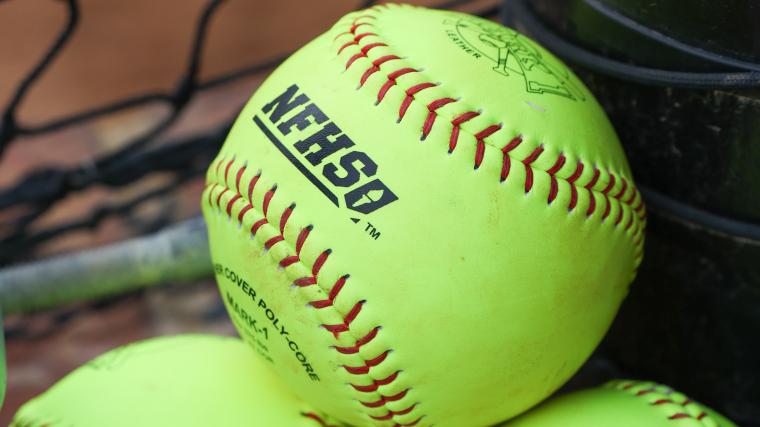
The jewel in this multi-tiered crown? The 7A final, where Weddington, boasting an pristine 25-0 record and a MaxPreps national ranking of 15th, stares down D.H. Conley (25-2, ranked 17th). It’s an elite clash, a high-caliber contest that would, in other sports-crazed nations, command prime-time television. Here? It’s largely relegated to the NFHS Network, a pay-to-play digital platform that offers an annual pass at $6.67 a month or a steeper $13.99 monthly option. Don’t get me wrong, it’s access, yes, but it isn’t universal access. It raises a question, doesn’t it, about the value proposition of developing homegrown talent versus broadcasting it widely.
“These championships aren’t just games; they’re incubators for resilience and teamwork, skills our young people will carry forward into every aspect of their lives,” mused Catherine Truitt, the state’s Superintendent of Public Instruction (noting her previous career in corporate and nonprofit leadership). “We’re witnessing the future of North Carolina taking shape on these fields.” And she’s not wrong, you know. But it feels like a silent forging.
📄 POLICY WIRE WHITEPAPER PUBLISHED: PAKISTAN'S NATIONAL SECURITY POLICY PRIORITIES
👉 READ BY CLICKING HEREA recent economic impact study (sourced via the North Carolina Department of Commerce) revealed that high school athletic events contribute upward of $100 million annually to local economies across the state—a considerable boon often overlooked in broader policy discussions. It’s not just about the hot dogs and sodas; it’s about hotel stays, fuel consumption, and the ripple effect on small businesses in host towns. That’s real money, bolstering community fabrics. “When we host events like this, our local businesses see an immediate uplift, supporting jobs and bringing our communities together,” stated North Carolina State Representative Brenda Smith (D-Greensboro), a known advocate for rural economic development. “It’s a clear demonstration of how local sports serve as a vital economic engine, a silent driver of prosperity.”
These best-of-three series are structured to deliver maximum tension. Games 1, 2, and a potential Game 3 stretching into the weekend—some taking place at Duke for 1A, 2A, 5A, and 6A, others at UNC Greensboro for 3A, 4A, 7A, and 8A. It’s an organizational feat, really, to manage so many high-stakes contests simultaneously. But even with all that logistical muscle, the larger audience remains segmented, specialized. The raw energy, the dramatic upsets, they’re happening. You just might have to pay extra to see them.
What This Means
This decentralized, digitally gated approach to North Carolina’s high school championships isn’t just about athletic broadcasting; it reflects a broader policy dilemma. The state prioritizes robust grassroots competition, but struggles to translate that investment into widespread public access. It creates a subtle digital divide, where cheering parents and affluent fans get front-row virtual seats, while others might rely on social media snippets or secondhand accounts. This scenario plays out in various forms globally. In countries like Pakistan, for instance, where infrastructure for grassroots sports development is still emerging, the challenge often isn’t just access, but fundamental resource allocation and widespread promotion of women’s athletics—a fight that American states, while advanced, haven’t entirely ‘won’ either. Both contexts underscore the quiet policy battles around visibility and investment in youth development, often shielded from the broader glare. According to the National Federation of State High School Associations (NFHS) 2022-2023 participation survey, North Carolina boasts over 120,000 high school athletes across all sports—a colossal human investment that deserves a bigger platform. The future talent, the future leaders, they’re all there, swinging for the fences, largely for those who know where—and how—to look.