

The Price of Allegiance: Hoffenheim’s Homegrown Talent Shifts to Paderborn, Stirring Quiet Debates on Loyalty and Labor
POLICY WIRE — Berlin, Germany — Sometimes, the quietest tremors in the sporting world rattle a louder, more uncomfortable truth about labor mobility, economic incentives, and what exactly “homegrown”...

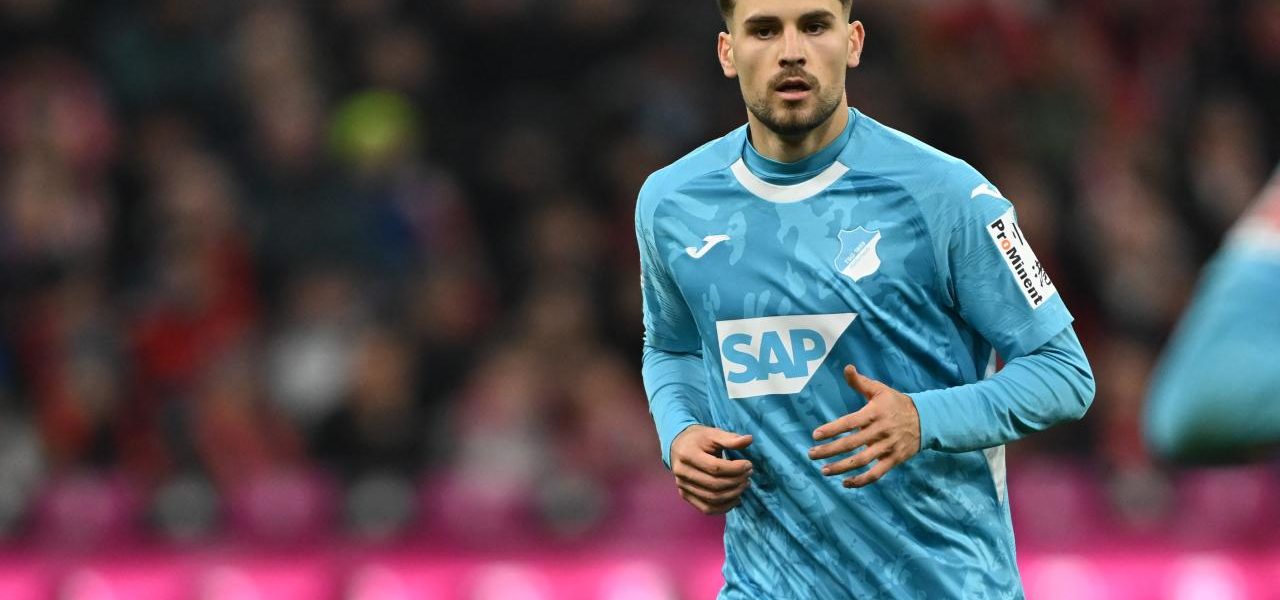
POLICY WIRE — Berlin, Germany — Sometimes, the quietest tremors in the sporting world rattle a louder, more uncomfortable truth about labor mobility, economic incentives, and what exactly “homegrown” even means in an increasingly commodified global arena. Luka Đurić, 22, the kind of local prodigy sporting directors like to wax lyrical about at shareholder meetings, has packed his bags. He’s swapping TSG Hoffenheim, his boyhood club where he’s played since before he could tie his own cleats, for the somewhat less glamorous—though certainly ambitious—confines of SC Paderborn.
It’s not a blockbuster move, not one to command front-page splashes outside of regional sports dailies. But look closer. It represents a subtle, grinding mechanism of the professional game: the moment where sentimentality clashes hard against cold, economic ambition. Hoffenheim, they’ll tell you, gave him a stage. Đurić, one assumes, gave them his formative years, his youthful dreams—his entire competitive adolescence, really. And now he’s gone. It’s a tale as old as football itself, yes, but its echoes stretch further than just a player changing shirts.
Sporting director Frank Kramer, who offered the requisite solemn praise upon Đurić’s exit, stated the usual — or maybe, the necessary. “Luka has written a unique story at TSG Hoffenheim – from the youngest age group all the way to the Bundesliga. He’ll always remain a true Hoffenheim lad.” It’s a clean break, a cordial divorce, but one senses the unspoken. But for all the talk of ‘lads’ — and ‘stories,’ this isn’t just about narratives. This is about contracts. It’s about opportunity costs. And it’s about making a living in a fiercely competitive environment.
And so, Đurić, after making his top-flight debut against Bayern Munich no less—a truly aspirational benchmark for any young German footballer—is off to a club only just promoted to the 3. Liga. It’s a step back from the bright lights of the Bundesliga, certainly, but potentially a step forward for guaranteed pitch time, for proving oneself consistently. Perhaps Paderborn offered a more persuasive playing proposition, or simply a clearer path. “Luka represents exactly the type of determined talent we want in Paderborn,” enthused Florian Kröger, Paderborn’s Head of Sport Development, in a statement surely prepared well in advance. “His journey, his grit—that’s what builds success, and we’re eager to harness that fire here.” That ‘fire,’ naturally, comes with a salary attached, with expectations bundled in. Because that’s how it works.
This kind of player churn is, in fact, baked into the European footballing ecosystem. It’s a conveyor belt. Talents are nurtured, paraded, — and then, often, transferred. Studies consistently show that less than 0.5% of youth academy players in Europe ultimately make a career in the top professional leagues. Đurić defied those odds to reach the Bundesliga, if briefly. But the market, in its relentless wisdom, nudged him elsewhere. For countless young boys across continents, including aspiring athletes in Lahore or Dhaka, watching European football isn’t just entertainment—it’s a vision, a dream of social mobility, an imagined pathway to escape circumstances. Đurić’s move, while minor in grand scheme, highlights the stark realities of navigating that dream: it’s not enough to be good; you’ve got to find the right seat, at the right time, in a high-stakes game of musical chairs.
📄 POLICY WIRE WHITEPAPER PUBLISHED: PAKISTAN'S NATIONAL SECURITY POLICY PRIORITIES
👉 READ BY CLICKING HEREWhat This Means
This transaction, modest as it appears, distills the prevailing dynamics of talent development and economic strategy in modern sports. For Hoffenheim, it signals their continued commitment to monetizing their acclaimed youth academy, a model often hailed but rarely interrogated for its implications on player loyalty. You grow them, you debut them, you—often—sell them. It’s a supply chain for human potential. For Paderborn, it’s a calculated gamble on a player deemed slightly surplus to requirements at a bigger club, but who retains the fundamental quality and hunger essential for climbing the competitive ladder.
The ‘homegrown’ narrative, while appealing, often obscures the transient nature of professional athletic careers. These athletes are economic assets as much as community heroes. Their decisions aren’t solely based on affection for a badge; they’re informed by career trajectory, financial prospects, and the raw pursuit of playing time. Policy-wise, this means any investment into sports infrastructure, into youth academies from Sinsheim to Karachi, must reckon with this reality: the goal isn’t always eternal fealty. It’s often to produce marketable talent, ready to move when a better offer — for club or player — presents itself. And that’s not just football. It’s labor. Plain and simple. This fluidity is a feature, not a bug, of the global sports economy. Any journalist claiming otherwise isn’t paying close enough attention.