


The Price of Talent: Eagles’ Brown, Patriots’ Stalemate Echoes Global Economics
POLICY WIRE — Philadelphia, Pennsylvania — Another season draws near, and with it, the familiar hum of anticipation on the American gridiron. But beneath the chants and corporate...

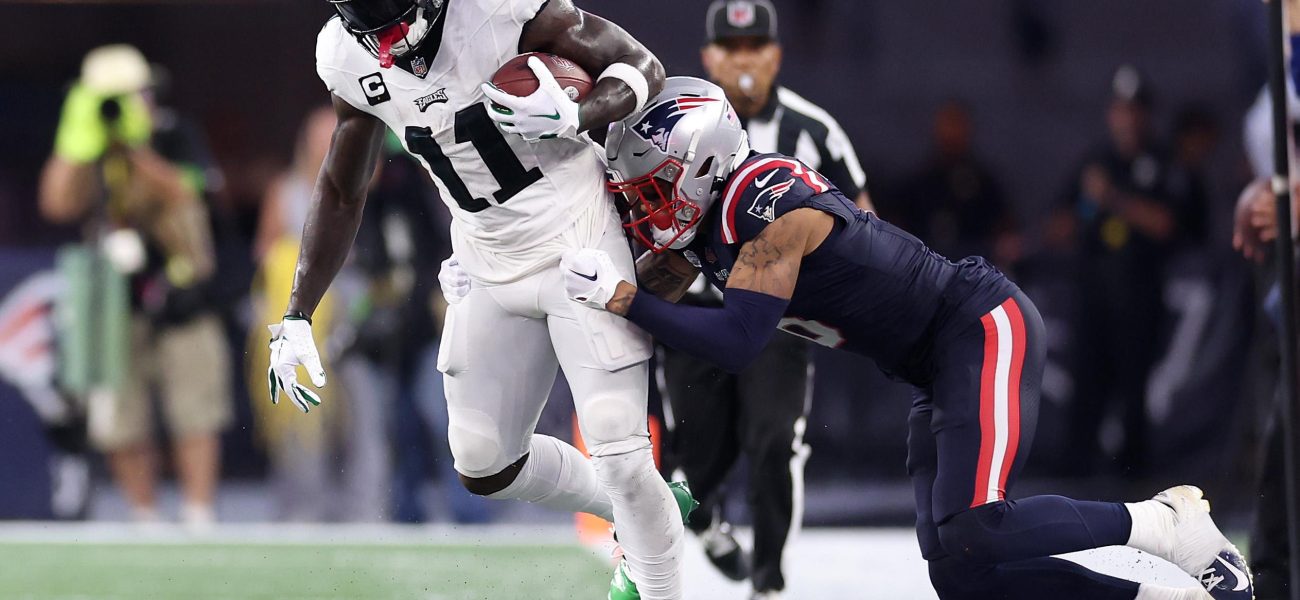
POLICY WIRE — Philadelphia, Pennsylvania — Another season draws near, and with it, the familiar hum of anticipation on the American gridiron. But beneath the chants and corporate sponsorships, a more profound drama unfolds: the ruthless algebra of professional sports, where allegiance is measured in cap space and the finest talent remains a fungible asset. Star wide receiver A.J. Brown, Philadelphia’s prolific pass-catcher, currently finds himself not on the field but on the trade block. And the implications—economic, political, human—are telling.
It’s not about the game anymore, not really. It’s about a cold calculus of assets — and liabilities. Brown, a genuine game-wrecker, is a commodity. And the market, as they say, decides. Right now, it’s sputtering. Negotiations between the Philadelphia Eagles and the New England Patriots, reportedly Brown’s most likely suitor, are stalled. According to NFL insider Ian Rapoport, the two sides aren’t, shall we say, particularly close. "I just don’t know that it’s like snap your fingers and the deal is done," Rapoport remarked recently, a rare glimpse into the glacial pace of high-stakes corporate horse-trading.
The sticking point? Philadelphia demands a 2027 first-round draft pick. A heavy price, yes. But they know Brown’s worth. New England, notorious for its fiscal prudence—and perhaps a healthy skepticism toward spending future capital for present glory—isn’t biting. Not yet, anyway. The talk of a 2028 pick as a possible compromise signals a protracted battle, reminiscent of geopolitical stalemates where neither side wishes to appear weak. Loyalty’s tenuous grip on players, in a business that moves faster than ever, is plain to see.
But the players, the very men whose futures hang in the balance, must maintain an outward face of detachment. Quarterback Jalen Hurts, whose on-field chemistry with Brown was undeniable, offers the expected platitudes. "Nothing’s changed. … We’re really good," Hurts asserted, dismissing whispers of personal friction. "I saw how beautiful the pictures came out at his wedding. I’m very happy for him — and his wife and his family." A masterclass in corporate PR, really. What else is he going to say? A direct criticism would invite chaos. Running back Saquon Barkley, freshly acquired and navigating this sudden maelstrom, echoed the company line with practiced resignation: "I’m a big fan of A.J. Brown. One of my really good friends, one of my favorite teammates I’ve ever been around. Just respect him as a man. But this is a business. It’s the NFL." Because, in this business, no one is indispensable. The show, they insist, must go on. Even when key actors are replaced.
And replace them, the Eagles have. The organization moved swiftly in the off-season, acquiring several wide receivers through the draft — and free agency. It’s a proactive hedge, signaling an inevitable farewell to Brown. It’s an interesting strategy, one that reflects a willingness to reconfigure on the fly—a flexibility sometimes lacking in more rigid, centrally planned economies.
📄 POLICY WIRE WHITEPAPER PUBLISHED: PAKISTAN'S NATIONAL SECURITY POLICY PRIORITIES
👉 READ BY CLICKING HEREWhat This Means
This gridiron drama, seemingly confined to a sport, mirrors larger global patterns of labor mobility, economic leverage, and the cold reality of asset management. Professional athletes are, for all intents and purposes, highly skilled labor units, their contracts intricate financial instruments. The Eagles’ desire to offload Brown post-June 1st isn’t about team cohesion; it’s about cap relief. Waiting allows bonus proration from Brown’s future contract years to shift onto the 2027 cap instead of the immediate 2026 cap, a maneuver that could save Philadelphia $27,161,609 in 2026 cap charges, according to NFLPA data. That’s a sum not to be trifled with. It makes clear that sports franchises operate like any other multi-million-dollar entity, optimizing their ledgers with ruthless precision. It’s the harsh reality of the gilded cage of professional sports, where even superstars become line items.
Consider the international parallels. Nations like Pakistan, for instance, frequently grapple with a "brain drain," where skilled professionals seek greener pastures abroad due to economic incentives. It’s a constant struggle to retain domestic talent against the allure of better contracts, more stable environments, or simply, more opportunities in more robust markets. That’s Brown in a nutshell: an elite talent evaluating his worth in a highly competitive global labor market (even if that market is only North America for the NFL). For organizations, whether an NFL team or a nascent economy, managing these assets is a perpetual tightrope walk. You must balance the cost of retaining top talent against the cost of letting them go—and finding viable, cost-effective replacements. It’s a political decision cloaked in economic rationale, playing out not just on the fields of Gillette Stadium but in boardrooms across continents. This negotiation isn’t just about football; it’s about power, money, and the cold-hearted decisions required to win, in sport and in statecraft.