


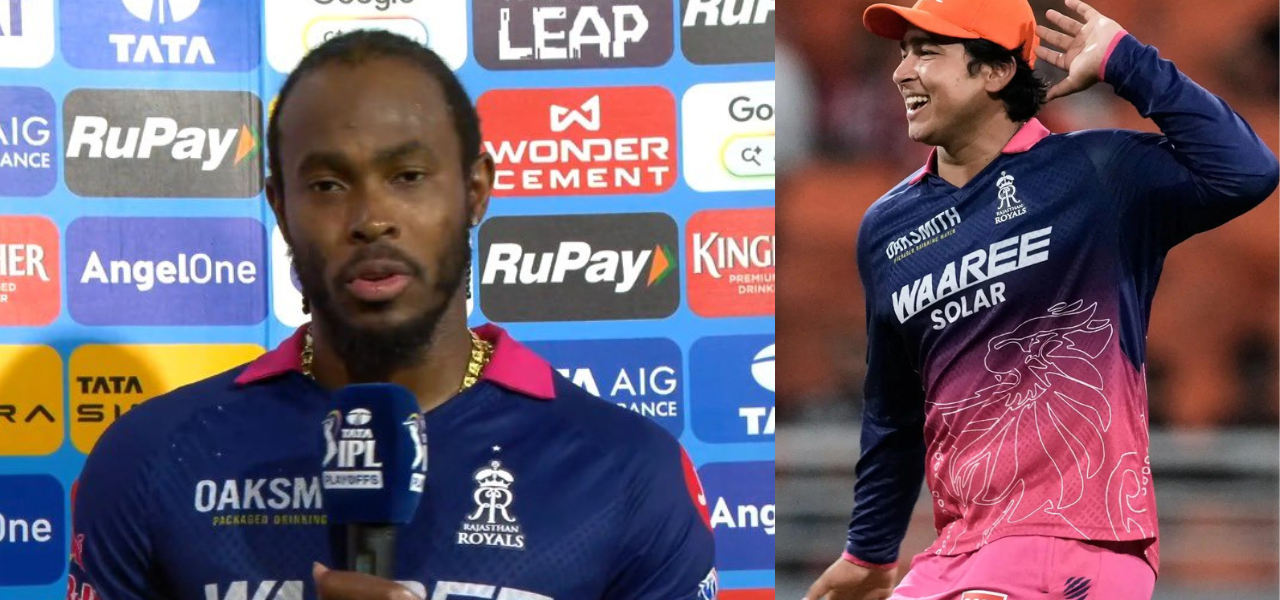
The Strategic Silence: Jofra Archer’s Evasion, Youth Talent, and Cricket’s Big Business
POLICY WIRE — Mumbai, India — In the glittering, high-octane theater of the Indian Premier League (IPL), where every delivery, every boundary, and every word from a star player is parsed, Jofra...

POLICY WIRE — Mumbai, India — In the glittering, high-octane theater of the Indian Premier League (IPL), where every delivery, every boundary, and every word from a star player is parsed, Jofra Archer offered a refreshing, if highly calculated, vacuum of information. Pressed on his bowling tactics against Rajasthan Royals’ audacious young phenom, Vaibhav Sooryavanshi, Archer delivered a masterclass in deflection. It wasn’t just a witty remark; it was a carefully deployed strategic silence in a league brimming with overt displays of talent and ambition.
Following Rajasthan Royals’ dominant romp over Sunrisers Hyderabad in a pivotal IPL Eliminator clash — a victory paved in equal measure by Sooryavanshi’s pyrotechnics and Archer’s ruthless precision — the English fast bowler found himself on the receiving end of a very pointed question. The 15-year-old Sooryavanshi had, moments earlier, dismantled the SRH bowling line-up, smashing a staggering 97 runs off merely 29 balls, an innings that included a dozen colossal sixes. Pat Cummins — and company simply had no answers. So, naturally, how does one bowl to such a talent, especially when that talent trains alongside you?
Archer, with that characteristic understated smirk, dismissed the inquiry. He’d reveal his secrets, he said, “after the IPL ends.” It’s a comment that sounds casual, almost jovial. But think about it for a second. It’s really anything but. It’s a message to the league, to competing franchises, to analysts, and perhaps most pertinently, to Sooryavanshi’s own burgeoning market value: his weaknesses aren’t for public consumption. Not yet. “The more runs he scores, the more runs we have to defend,” Archer conceded, playing the team man. “So he can go on — and get 150, it’s good for the boys when he scores a lot of runs.”
This isn’t merely about protecting a teammate; it’s about safeguarding an investment. Because when a teenager, virtually unknown outside the rigid scouting networks a season or two ago, detonates an IPL match like that, he transitions from prospect to asset. His stock shoots up faster than some mid-cap shares, becoming a commodity traded in the opaque economics of professional sports. And that’s exactly why you don’t offer adversaries even a crumb of intelligence.
The IPL, you see, isn’t just a cricket tournament; it’s a global marketplace for talent — and spectacle. Its reach across the subcontinent is undeniable. From Karachi to Colombo, Dhaka to Dubai, the league captivates audiences, blurring national sporting allegiances into a shared cultural obsession. We’re talking about billions of eyeballs. According to financial firm Grant Thornton Bharat, the IPL’s brand valuation climbed to an estimated $10.9 billion in 2023, reflecting its extraordinary commercial magnetism and its hold over a digitally connected youth demographic, not just in India but across Asia.
The rise of players like Sooryavanshi represents the perpetual churn of this high-stakes ecosystem. He’s one of countless youngsters from bustling cities — and quiet towns dreaming of breaking through. Their success fuels a national narrative of aspiration and grit – a narrative consumed hungrily in Pakistan and Bangladesh too, despite their own competitive leagues.
📄 POLICY WIRE WHITEPAPER PUBLISHED: PAKISTAN'S NATIONAL SECURITY POLICY PRIORITIES
👉 READ BY CLICKING HEREAnd these emerging stars, they’re not just players; they’re walking, talking, sponsorship magnets. Their marketability gets amplified with every record broken. “Protecting young talent, not just physically but also strategically and emotionally, is paramount,” observes Shanta Kumar, a veteran sports management consultant based in Bengaluru. “You don’t want to hand competitors the playbook on a kid who could be worth tens of millions in future endorsements and contracts. That silence from Archer? It’s not just loyalty; it’s smart business sense.” Kumar adds, “It’s the unspoken code in a game that’s increasingly about data points and psychological warfare, not just willow and leather.”
What This Means
This episode, though framed in sporting bravado, really casts light on the sophisticated blend of sports, economics, and national branding at play within the modern IPL. Vaibhav Sooryavanshi’s explosion isn’t just a batting feat; it’s a reaffirmation of the IPL’s core business model: scouting, developing, and showcasing young talent for massive returns. For the Rajasthan Royals franchise, it’s not just a step closer to the final; it’s the validation of their scouting networks and development investments. His meteoric rise provides fresh impetus for the global scouting market, illustrating that pedigree isn’t the sole determinant of value – raw performance at critical moments truly dictates market rates, a trend evident even in European football’s transfer markets, where clubs like Chelsea navigate complex player valuations. The strategic silence adopted by Archer highlights a subtle yet important aspect of competitive intelligence in commercial sports: controlling narratives and data can be as consequential as controlling the ball.
The larger geopolitical angle is understated but ever-present. The IPL acts as a powerful cultural export, showcasing India’s organizational prowess — and economic strength. It subtly reinforces soft power through its appeal to vast audiences in neighboring countries, offering a common platform of entertainment and aspiration that transcends political complexities. It’s an effective counter-narrative, often dwarfing more conventional policy dialogues in popular appeal. Ultimately, these moments, like Archer’s enigmatic reply, don’t just create viral content; they reflect the deep commercial, social, and even diplomatic currents that run through this seemingly straightforward game of cricket.