

Post-Trump Disorder: A World Without Maps, Geopolitical Anxiety in Flux
POLICY WIRE — Washington D.C., USA — For those keeping tabs on global affairs — or frankly, even just paying casual attention to late-night comedy — the world feels a bit like...

POLICY WIRE — Washington D.C., USA — For those keeping tabs on global affairs — or frankly, even just paying casual attention to late-night comedy — the world feels a bit like an improvised stage play, actors scrambling without a script. The familiar backdrop? Torn to shreds. The usual cues? Ignored, or perhaps, forgotten entirely. We’re past the polite nods — and the careful diplomatic theater of yesteryear, aren’t we?
It’s no secret: The old order is dead. We just don’t know what will replace it. And boy, do we not know. It’s a vacuum — a massive, sucking void where a relatively predictable framework used to hum along, imperfect though it was. You’d think centuries of striving for international norms would have prepared us for this, but as Henry Kissinger reminded us in his 2014 book World Order, we should recall his blunt assertion: no truly global order has ever existed
. A sobering thought, that. A historical gut-punch. We’ve often mistaken a dominant power’s influence for a genuine, universal arrangement, haven’t we? [QUOTE_PLACEHOLDER]
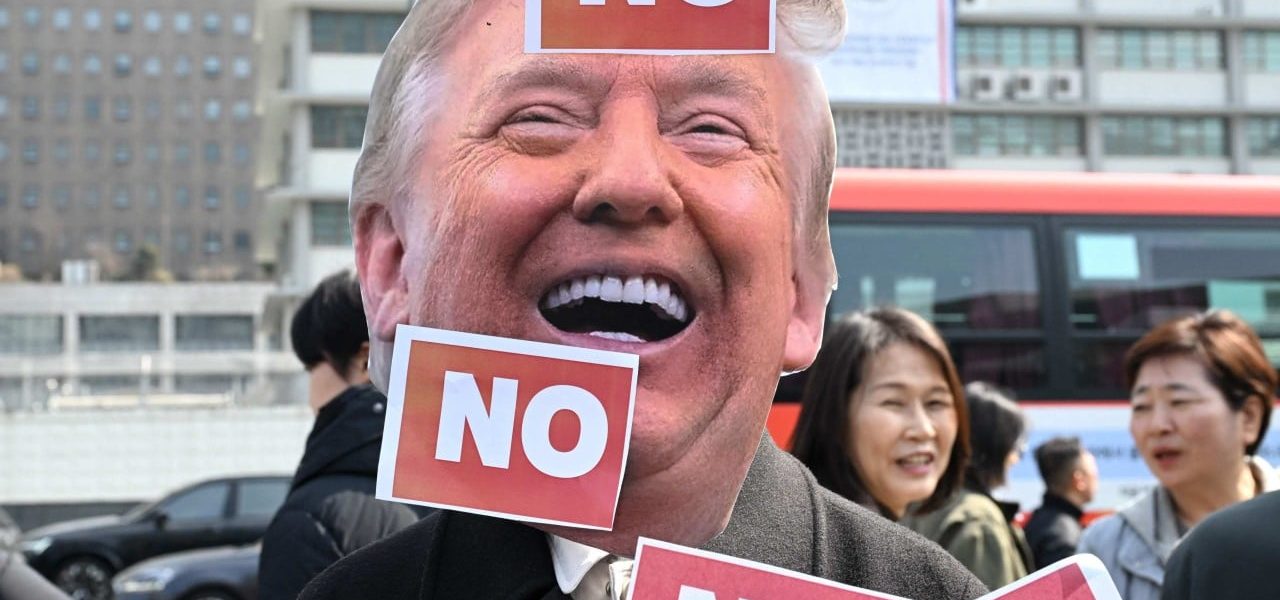
The previous administration in the United States — with its affinity for tariff brinkmanship, treaty withdrawals, and plain-speaking disdain for allies — certainly helped hammer a few nails into the coffin of whatever semblance of a structured global system remained. Forget gentle nudges toward multilateralism; President Trump’s foreign policy approach wasn’t subtle. Not in the least. His approach made sure that After US President Donald Trump’s erratic actions, the gloves are off.
This isn’t about mere policy disagreement anymore. It’s about a fundamental rupture in how nations relate, or don’t relate, to one another. Think about it: a former top-ranking diplomat once told me — off the record, naturally — that his job had transformed from intricate negotiation into constant damage control, day in and day out. It’s messy, often baffling. And yeah, it’s not just diplomats feeling the burn. American comedians and Iranian Lego cartoons tell us all we need to know about the demise of the old order. When satire — from vastly different cultural vantage points — converges on the same narrative of global chaos, you’ve gotta pay attention. That’s usually the tell, the early warning system kicking in.
Because let’s be honest: If the unipolar order is not viable, and America is abandoning the multilateral order and the rules of the game it created after World War II, what are nations — particularly those in sensitive geopolitical zones — supposed to do? For many in places like Pakistan, it’s like being caught in an international game of musical chairs, and the music has stopped, but half the chairs have just vanished. And nobody’s quite sure who’s still playing, or by what new, arbitrary rules.
This evolving dynamic presents unique challenges and, occasionally, bizarre opportunities for states like Pakistan. It means a more diversified foreign policy approach, sure, but it also translates into immense pressure. You’re talking about a nation with deep historical ties to the West, but one also increasingly entangled in Chinese economic initiatives, all while balancing complex relationships with neighbors and managing its own internal stability. It’s a tightrope walk without a net. Pakistan’s defense budget, for instance, reflects these anxieties: the government increased it by 15% for the fiscal year 2023-24, reaching PKR 1.8 trillion, as reported by The Economic Times in June 2023. That isn’t just about regional threats; it’s about navigating a world where traditional patrons might not always be there, or might demand different allegiances.
📄 POLICY WIRE WHITEPAPER PUBLISHED: PAKISTAN'S NATIONAL SECURITY POLICY PRIORITIES
👉 READ BY CLICKING HEREAnd where does this leave countries looking for a steady hand, or even just predictable patterns? The decline of predictable alliances and the rise of transactional diplomacy creates an environment of profound uncertainty. It’s not just Pakistan; it’s practically every mid-sized power on the globe figuring out its next move, constantly recalibrating, often hedging its bets. We’re witnessing a fracturing of consensus — on trade, on human rights, on even the most basic tenets of international cooperation. Supersonic sales pushes for advanced weaponry by regional powers, for instance, speak volumes about the shifting power balances. Nations aren’t waiting for a global directive anymore; they’re aggressively pursuing their own interests, consequences be damned.
One might even suggest that this current geopolitical wild west offers certain nations — those capable of rapid adaptation and unafraid of breaking old molds — a unique chance to redefine their roles. Or maybe that’s just wishful thinking on their part. History, it’s gotta be said, rarely rewards hubris in these kinds of transitional periods.
What This Means
The geopolitical ramifications are stark, to say the least. We’re entering, or perhaps already knee-deep in, a period characterized by heightened transactionalism and diminished multilateral institutions. For policy wonks — and those impacted by policy — this translates into more frequent bilateral engagements, less reliance on overarching global frameworks, and a scramble for new regional blocs or partnerships of convenience. Nations like Pakistan, once beneficiaries of a somewhat predictable alignment system, now face an imperative to diversify their strategic options beyond anything seen in decades. This global drift opens doors for new hegemons to assert influence, potentially leading to increased proxy competition and regional instability, especially where existing territorial or ideological disputes already fester. Economically, expect more targeted sanctions, fragmented trade relationships, and supply chain re-evaluations as states prioritize national security and self-reliance over global efficiency. Investment decisions will become intensely political. We’re past the honeymoon of interconnectedness; it’s an era where geopolitics routinely trumps economics — sometimes with dramatic effect, altering the course of a nation’s prosperity for generations.