


Grammar, Gravity, and Governance: When a Simple Misspelling Exposes Bureaucratic Blindspots
POLICY WIRE — City, Country — It began, as so many subtle betrayals of public trust do, with a word. A rather straightforward, universally understood word, etched in white paint on black asphalt,...

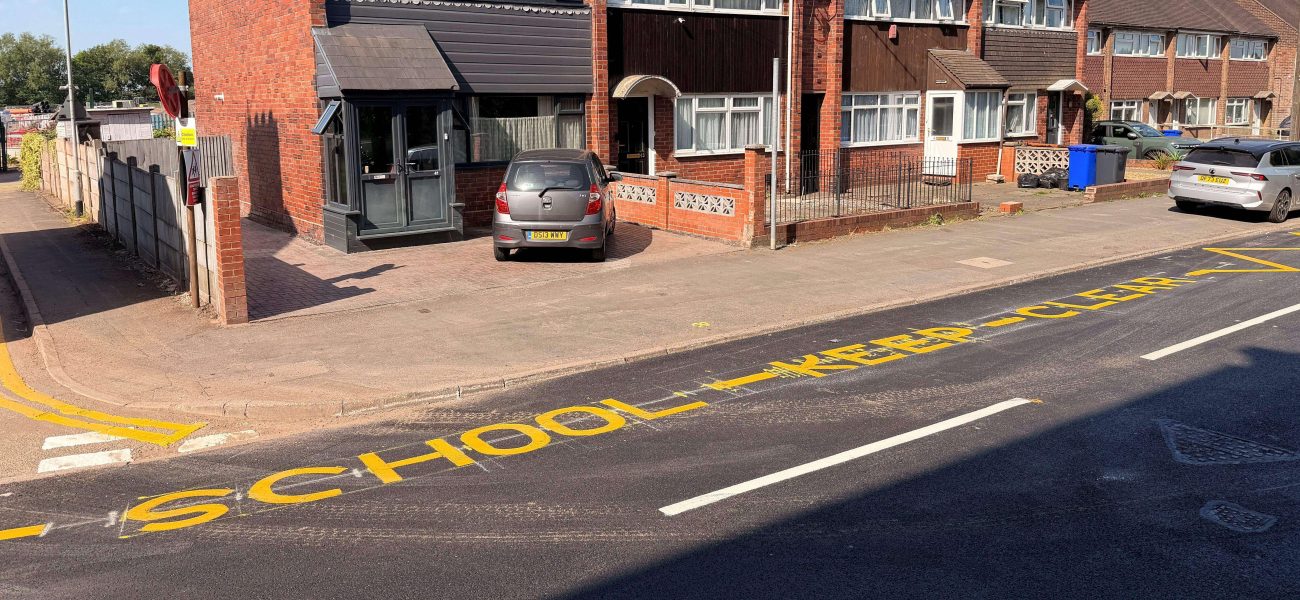
POLICY WIRE — City, Country — It began, as so many subtle betrayals of public trust do, with a word. A rather straightforward, universally understood word, etched in white paint on black asphalt, meant to signal caution and community. But it wasn’t quite right. Not fundamentally wrong, you understand—just a little off, like a slightly deflated tire on an otherwise well-oiled machine. A local council recently found itself in the rather unenviable position of having to ‘paint over’ an errant road marking, ostensibly intended to warn drivers about an adjacent ‘school’, as earlier reports noted.
You might think it’s just a gaffe, a momentary lapse, easily corrected. And sure, on its face, it was. Someone painted ‘socool’ instead of ‘school.’ It got spotted. It got fixed. End of story, right? Wrong. Because when you strip away the immediate absurdity of an alphabet mishap in public works, you’re left staring at something far more disquieting: a systemic flutter in the heartbeat of local governance. This isn’t about the cost of a few liters of white paint. It’s about what such tiny, public errors reveal about the sprawling, sometimes indifferent, beast of public administration that we, the taxpayers, bankroll. [QUOTE_PLACEHOLDER]
And it’s not a uniquely local phenomenon. While this particular episode might be amusing in its small-scale, almost provincial bluster, it echoes a deeper, global anxiety about institutional reliability. It makes you wonder how many layers of oversight (or the lack thereof) allowed a misspelled, single-word signpost to see the light of day. Wasn’t there a stencil? A quality control check? A person with a basic grasp of the English language — one would hope — supervising? We’ve all seen our tax dollars vanish into what feels like a bureaucratic Bermuda Triangle, and little hiccups like this only serve to confirm our worst suspicions. It’s a testament to the pervasive, slow-burn frustration many feel toward their civic caretakers.
But the ramifications, subtle as they’re, go beyond a chuckle — and an eye-roll. In an era where public trust in institutions is, shall we say, a rather brittle commodity, each small failure erodes another tiny granule of confidence. It makes it harder to believe that the folks at the helm are truly on top of things, managing the complex machinery of everyday life. This incident, minuscule as it’s, speaks to a broader issue of accountability and the efficiency (or lack thereof) of taxpayer-funded operations. When you consider the average annual cost of a civil servant salary, including benefits, for a local government employee in a Western nation, which can easily reach north of $70,000, as reported by the U.S. Bureau of Labor Statistics for state and local government workers, the sheer cumulative expense of potential human errors like this, scaled across an entire nation, becomes quite staggering. We’re talking millions, perhaps billions, in lost productivity or re-dos over time.
Consider, for a moment, the symbolism of the word ‘school.’ It represents education, progress, the future of a society. To misspell it on the very pavement children are meant to cross—that’s a potent visual, isn’t it? It suggests a carelessness, a lack of attention to fundamental details, precisely where those details matter most. It’s an easy, low-hanging fruit for critics who claim that government often fails at even the simplest tasks. Because if you can’t get ‘school’ right, what confidence should the public have in, say, managing national infrastructure projects or complex social programs? It’s a short hop from a typo on Tarmac to questioning the broader capabilities of officialdom.
📄 POLICY WIRE WHITEPAPER PUBLISHED: PAKISTAN'S NATIONAL SECURITY POLICY PRIORITIES
👉 READ BY CLICKING HEREThis particular narrative, minor as it’s, isn’t unfamiliar in contexts far more pressing than a local council’s road repairs. In many developing nations, the fight against bureaucratic inertia and oversight failures is a daily grind, with genuinely life-and-death stakes. Take Pakistan, for instance, a nation grappling with its own monumental challenges in public works and infrastructure development. While they might not be fixing ‘socool’ signs, they confront much more dire errors — bridges that collapse, roads that wash away with the first major rain, projects stalled by corruption or incompetence. The foundational problem isn’t about simple literacy; it’s about the deep-seated issues of institutional capacity, transparency, and accountability that can either propel a nation forward or anchor it in a perpetual struggle. In a country where basic literacy, let alone proper planning and execution, can be a national hurdle—with estimates showing a significant portion of the adult population lacking foundational reading and writing skills, particularly in rural areas—the idea of a governmental body making and then rectifying such a simple error on a road might seem like a luxury. It highlights the vast disparities in administrative capacity and public service delivery across the globe, from trivial road marking errors to essential infrastructure.
And this is precisely why Policy Wire gives an ear to such small, seemingly isolated events. They aren’t just amusing anecdotes; they’re vital, granular data points, revealing micro-failures that coalesce into macro-issues. They’re a stark reminder that even in highly developed, well-resourced environments, the simplest things can get messed up, often at our expense, and sometimes with a healthy dose of public ridicule.
What This Means
The ‘socool’ incident, while amusingly minor, points to a broader undercurrent of dissatisfaction with bureaucratic efficiency and public accountability. Politically, such errors, however small, chip away at citizen trust, creating fertile ground for anti-establishment sentiment and skepticism towards public spending. Economic implications, beyond the immediate cost of repainting, relate to the cumulative drain of inefficiencies across public services—money that could be better spent on genuine infrastructure improvements or social welfare programs. It suggests a comfort level within certain public sector tiers that allows such basic blunders to occur, and more importantly, go unnoticed through multiple checkpoints. The underlying question is whether oversight mechanisms are robust enough, or if the system simply absorbs these mistakes as the cost of doing business. It’s a subtle yet consistent pressure point for any political leadership. We’ve seen how crucial reliable infrastructure development is for national progress in developing nations, making this trivial blunder a stark contrast to where public resources are truly needed. Such missteps feed narratives that governments, both locally and internationally, aren’t effective stewards of taxpayer funds, regardless of the scale of the gaffe. It fosters an environment of low expectations—and that’s a dangerous place to be for any government hoping to build popular support or tackle genuinely hard problems.