


The Green Card Gauntlet: Trump’s Parting Rule Snarls Paths for Immigrants
WASHINGTON D.C. — For Sunita Devi, a skilled nursing aide from Mumbai, the path to American permanence was already a grueling marathon. A green card, promised after years of work permits and...

WASHINGTON D.C. — For Sunita Devi, a skilled nursing aide from Mumbai, the path to American permanence was already a grueling marathon. A green card, promised after years of work permits and patiently queuing, now feels less like a finish line and more like a bureaucratic cul-de-sac. This week, Ms. Devi—and untold hundreds of thousands like her—woke to a new, unsettling reality as the outgoing Trump administration delivered another seismic jolt to U.S. immigration policy.
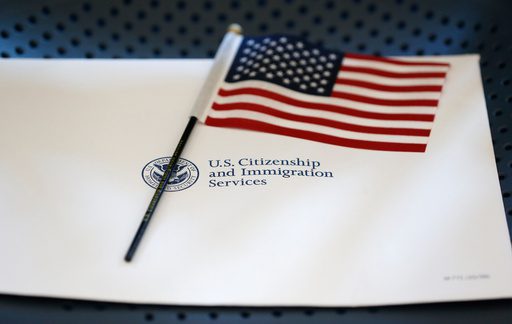
It’s not just a tweak; it’s a wholesale rewrite of a fifty-year-old expectation. Long-standing practice allowed certain temporary visa holders already residing in the United States to ‘adjust’ their status to permanent residents without having to abandon their American lives, their jobs, their families. But no more. Well, mostly no more. Because, — and this is where the bureaucratic brambles get truly thick, the directive from U.S. Citizenship and Immigration Services (USCIS) is riddled with murky ‘exceptions’ and caveats, leaving everyone from Fortune 500 HR departments to families in frantic, collective head-scratching.
The core change? Foreign nationals in the U.S. seeking a green card now ostensibly need to depart for their home countries to apply. Imagine uprooting your family, quitting your job, and flying halfway across the globe for a process that used to involve a simple trip to an office down the road. It’s an expensive, logistically nightmarish proposition, even for those with ample resources.
And you’d better believe the phones of immigration lawyers across the country are ringing off the hook. One attorney, Flavia Santos Lloyd, confessed her phone practically melted last week. ‘It’s had a chilling effect, frankly,’ Lloyd said, explaining how her current advice to many clients boils down to a bewildered ‘wait and see.’ This isn’t just about slowing things down; it’s about introducing a level of uncertainty designed, some argue, to deter. It’s hard to make long-term life decisions—say, buying a house, enrolling kids in school—when your status is effectively dangling by a thread over the Atlantic Ocean.
This isn’t an accident. This policy is the logical next step in an administration that’s spent its tenure turning up the dial on legal immigration restrictions, after initially focusing on illegal border crossings. ‘This latest directive represents a deliberate, almost punitive, attempt to complicate even the most straightforward paths to lawful residency,’ observed Senator Mark Warner, a Democrat from Virginia, in a recent press statement. ‘It strains credulity to suggest this is about streamlining efficiency when its most immediate impact will be chaos.’
But the White House views it differently. ‘Our administration has always prioritized American workers and ensured our immigration system serves national interests,’ stated Chad Wolf, former Acting Secretary of Homeland Security, during a past public address. ‘Requiring applicants to process their final stage abroad strengthens border integrity and verifies legitimate intentions, preventing queue jumping and potential public charges.’ He didn’t say it this time, of course, but it’s precisely the line of thinking that underpins this whole mess.
So, who’s actually hit by this? Immigration experts are playing tea-leaf readers. There’s some talk that ‘dual-intent’ visa holders, like many H-1B workers (tech, medical fields, etc.)—whose visas acknowledge they might seek permanent residency—might be exempt. But other categories, such as the parent of a U.S. citizen who perhaps overstayed their initial visit while applying for adjustment, or even those on humanitarian parole, now face a labyrinthine nightmare. USCIS themselves hinted that only those providing ‘economic benefit’ or serving the ‘national interest’ might catch a break.
The impact will echo globally, particularly in populous regions like South Asia. Consider Pakistan, for instance, a country whose diaspora contributes significantly to the U.S. economy, particularly in healthcare — and tech. Imagine a Pakistani doctor, having lived and worked in an underserved American community for years, now needing to return to Islamabad or Karachi to complete paperwork. This is a burden many can’t afford, physically or financially. Last year alone, nearly 1.2 million individuals received lawful permanent resident status in the U.S., a figure that, according to Department of Homeland Security statistics, reflects a deeply interwoven thread of immigration into the national fabric.
📄 POLICY WIRE WHITEPAPER PUBLISHED: PAKISTAN'S NATIONAL SECURITY POLICY PRIORITIES
👉 READ BY CLICKING HEREWhat This Means
The practical implications are immediately messy, but the political — and economic reverberations are deeper. This policy, a final act from the prior administration, isn’t just a technical adjustment; it’s a strategic move to complicate legal immigration pathways, even for those legally eligible. Economically, it introduces friction into labor markets already reliant on skilled foreign talent, especially when an economy like America’s needs every bit of it. Businesses, particularly those that sponsor high-skill workers, now face heightened uncertainty — and costs. Culturally, it’s a stark signal: even for those playing by the rules, America is making the door narrower, the path longer. This also injects more uncertainty into future administrations’ immigration efforts. Can this be easily reversed? And if so, what faith will people have in the next policy shift? It creates a disincentive for potential high-value immigrants to even consider the U.S. initially, tilting the scales towards countries perceived as more welcoming and stable.
New immigration interviews are already reflecting the change, with applicants asked probing questions about why they couldn’t just jet back home. One person, applying based on marriage to a U.S. citizen, was interrogated about factors preventing an overseas application—family ties abroad, potential ‘public charge’ status upon return. They’re asking for detailed financial proof, including future tax returns and employer letters—paperwork that’s either difficult or impossible to provide right now.
It’s all part of what seems to be a grand experiment in creating immigration deterrence through bureaucratic dread. And you know, for an attorney trying to guide people through this, Lloyd’s parting advice makes perfect, if frustrating, sense: ‘I don’t want everybody to panic,’ she tells clients. ‘My advice to them is wait and see.’
For some, that wait could stretch indefinitely. But the policy also sets a challenging precedent for managing legal immigration routes that a subsequent administration might grapple with for years to come. Other nations struggle with policy coherence, and the US isn’t immune.