


Automation Fears Loom as Massachusetts Drivers Forge Union, Shifting Gig Economy Ground
POLICY WIRE — BOSTON, US — The clatter of self-driving cars, once a distant Silicon Valley promise, has become a palpable thrum beneath the tires of Massachusetts’ ride-hailing drivers. It’s this...

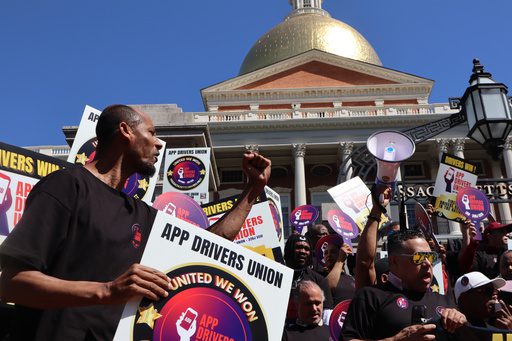
POLICY WIRE — BOSTON, US — The clatter of self-driving cars, once a distant Silicon Valley promise, has become a palpable thrum beneath the tires of Massachusetts’ ride-hailing drivers. It’s this background hum of impending technological disruption, perhaps more than mere wage disputes, that lends particular gravity to a recent, unassuming event in Boston: the certification of the state’s first unified labor voice for Uber and Lyft drivers.
You see, for Jean Fredo, seven years behind the wheel means something specific: an existence perched precariously on an algorithm’s whim. He’s seen how that gig-economy flexibility—the much-touted selling point—curdles into chronic anxiety. It isn’t just about the cash, though that’s certainly a big part of it. It’s the fear, the constant nagging worry, that today’s work might simply evaporate tomorrow, leaving families in the lurch. [QUOTE_PLACEHOLDER]I live with stress — always scared to lose my app. This is not a way to live, said Fredo, a sentiment no doubt echoed by countless app-based drivers globally, from London’s streets to Lahore’s bustling thoroughfares.
This week, Massachusetts delivered a powerful counter-narrative, establishing a framework allowing ride-hailing drivers to unionize and bargain collectively. It’s a first in the nation, a true shot across the bow of a business model built on categorizing workers as independent contractors. The victory could provide a model for similar campaigns gaining traction in states including California and Illinois, pushing back against the prevailing winds. After all, the labor landscape isn’t static, especially when autonomous vehicle technology lurks just around the corner. Uber, it seems, isn’t keen on many new regulations, recently warning that proposals could raise costs and reduce flexibility for drivers. Convenient, that.
For many drivers, the so-called flexibility always felt a bit like a raw deal anyway. Initially, the lure was genuine: Set your own hours, be your own boss. But as Fredo recounted, that early shine has worn thin. He found himself working longer hours while earning less as gas — and maintenance costs climbed. Drivers, like Fredo, typically use their own vehicles, pay for expenses such as gas and maintenance themselves and can choose when and how long they work through the apps. And that’s fine, in theory. But without proper bargaining power, the deck is stacked, isn’t it?
And it’s a big deck we’re talking about. Organizers say the new union will ultimately represent nearly 70,000 drivers statewide. That’s a significant number, by any metric. Victoria Acosta, a mother who navigates both Uber and Lyft platforms, hopes the victory inspires drivers in other states. Without the support of the drivers, we wouldn’t be here, she observed through a translator, a stark reminder of where real power often resides. It isn’t always in the boardrooms; sometimes, it’s in the streets.
The push for collective bargaining in the gig economy carries echoes for a much wider swath of the global workforce, including millions in South Asia. In countries like Pakistan, for instance, where ride-hailing services have expanded exponentially, informal labor is often the norm. Here, drivers operate with even fewer protections than their Western counterparts, grappling with fluctuating fares, steep commissions, and a complete absence of formalized grievance mechanisms. Their battle isn’t just for better wages; it’s often for basic respect, for some small semblance of job security in economies that rarely offer it. What happens in Massachusetts, even with its peculiar regulatory tweaks, doesn’t stay in Massachusetts. It transmits a signal—a challenge to the global corporate playbook that has sought to decouple work from traditional employment safeguards.
📄 POLICY WIRE WHITEPAPER PUBLISHED: PAKISTAN'S NATIONAL SECURITY POLICY PRIORITIES
👉 READ BY CLICKING HEREThis particular Massachusetts certification was made possible after state voters approved a 2024 ballot measure, creating a first-in-the-nation framework allowing ride-hailing drivers to unionize and bargain collectively while remaining independent contractors. It’s an interesting model, one that some business groups and legal scholars argue could face antitrust challenges under federal law. But what’s clear is that the old lines are blurring, and that’s making a lot of folks, both workers and bosses, pretty uncomfortable. But when Fredo declares, I’m fighting for a better life for them — just like everyone else is fighting for their families. My dream is to save and send my kids to college, and I believe we will get there, he’s speaking a universal language of aspiration and defiance.
What This Means
This union certification is more than just a local labor victory; it’s a profound strategic pivot in the ongoing redefinition of labor in the 21st century. Politically, it signals a growing willingness of states to innovate beyond federal labor law, challenging the long-standing independent contractor classification that has been central to the gig economy’s economic model. For progressives, it’s a blueprint; for industry, it’s a precedent they’ll undoubtedly fight tooth — and nail. Economically, this could mean upward pressure on gig economy operating costs, which could lead to higher consumer prices—or, more optimistically, to business models that genuinely share prosperity with those doing the actual work. It’s a bold gamble, testing the elasticity of public tolerance for higher ride costs against the imperative of worker dignity. The ramifications will reverberate far beyond American borders. Think of a taxi driver in Dhaka, or a food delivery worker in Mumbai; they’re watching this, feeling the implications. They know a fight for economic justice here can be a fight for economic justice anywhere. We cannot let billions of dollars leave Massachusetts and go to Silicon Valley, Julie Blust of the App Drivers Union recently put it, That money feeds people’s families, that money pays the rent. And that, in a nutshell, is the argument for more than just wages, but for a systemic rethink of who benefits when we click ‘confirm ride’.