

Cleveland’s Prodigal Son Returns: Kelce’s MLB Playbook and the New Economics of Fame
POLICY WIRE — Washington D.C. — America’s entertainment complex, already adept at weaving narratives of rags-to-riches, has found a fresh, highly marketable wrinkle: the return of the native...

POLICY WIRE — Washington D.C. — America’s entertainment complex, already adept at weaving narratives of rags-to-riches, has found a fresh, highly marketable wrinkle: the return of the native son, now wealthy and wise, to rescue or perhaps merely adorn the old stomping grounds. It isn’t just about athletic prowess anymore; it’s about personal brands transforming into capital investments. Think LeBron James, only with more football — and an equally omnipresent pop star partner. And so it goes with Travis Kelce, the Kansas City Chiefs tight end, whose recent move to acquire a minority ownership stake in the Cleveland Guardians isn’t just a sports footnote; it’s a telling symptom of our celebrity-driven market—a place where loyalty is both a sentiment and a surprisingly lucrative asset.
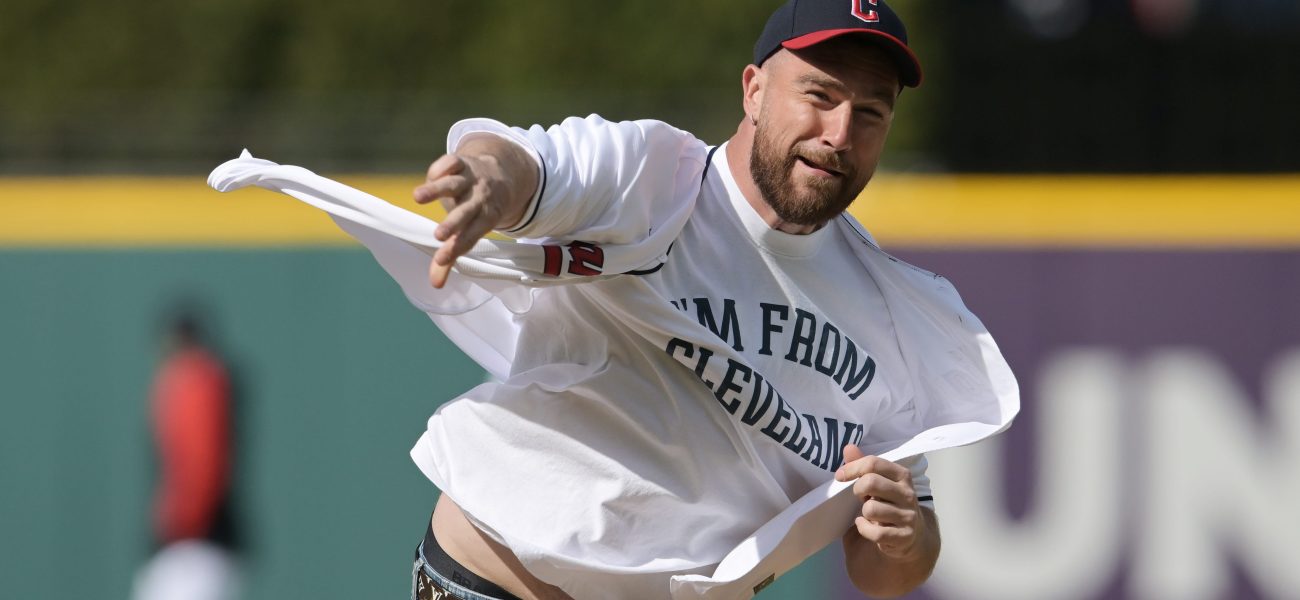
It was revealed recently, by way of an ESPN report on Wednesday, May 27, that the Cleveland Heights native, who’s also the fiance of music superstar Taylor Swift (yes, we know), is acquiring a sliver of the Major League Baseball team he followed as a boy. The exact financial terms of this venture weren’t included in that initial ESPN missive, and the Guardians themselves hadn’t formally announced anything yet, a minor detail when a name this big enters the room. This isn’t just an athlete spending money. It’s an exercise in brand extension and community optics, blurring the lines between fan devotion and corporate strategy. But that’s modern sports for ya. [QUOTE_PLACEHOLDER]
Kelce, now 36, has cultivated an image of the earnest, larger-than-life character. You get it. He talks about his roots with a gusto that’s almost endearing, saying, I have so much love for this city. That particular sentiment, spoken to ESPN Senior MLB Insider Jeff Passan, acts as the rhetorical foundation for this whole play. He isn’t shy about crediting his past either. I say it all the time: I’m just a kid from the Heights living the dream. What an American trope, honestly. I credit every good thing in my life to Cleveland and being raised here with the values and the people and the work ethic, he went on, sketching a Rockwellian image of his upbringing.
The NFL star waxes nostalgic, calling his hometown diverse — and dynamic. Cleveland Heights is such a diverse — and dynamic place. Every friend, neighbor, teacher and teammate — they all made me the man I am today. It just fueled such a deep appreciation for life and community and service. That mentality of Cleveland against the world runs deep. It’s a testament—or maybe just savvy public relations—to how profoundly athletes connect their origin story to their continued success, monetizing hometown allegiance. He also noted that he’d been lucky enough to have a front-row seat to good ownership in my career, and I know the best teams prioritize culture. Everyone is there to play their role, and right now, I’m here to observe and learn and really to support the team and the city when and where I can.
It’s not revolutionary for famous athletes to dip into team ownership, of course. Myles Garrett, the Browns defensive end, notably purchased a minority stake in the Cavaliers in 2023. These investments often fly under the radar for a general audience, though the Kelce acquisition garners an altogether different level of buzz, partly because, let’s be frank, the man is dating Taylor Swift, and that just amplifies everything. And so it becomes a national, almost global, story. For a club like the Guardians, perhaps suffering from regional fatigue, this celebrity shot-in-the-arm could re-energize the base. Maybe. Maybe not. Fans just want wins.
What This Means
This deal, while seemingly benign, signifies a growing trend where celebrity capital merges with local enterprise, creating complex new economic and cultural intersections. For regions like Cleveland, where economic headwinds often necessitate creative solutions, high-profile individual investments can act as informal public relations boosters, attracting attention and, theoretically, investment, which sometimes trickles down into local economies. But these optics-heavy moves carry their own weight; local politicians often leverage such celebrity ties to project an image of prosperity or cultural relevance, whether warranted or not. This becomes a question of narrative control. Will Kelce’s star power genuinely translate into sustained economic uplift for Cleveland, or is it more a performative act of nostalgia for a national audience?
📄 POLICY WIRE WHITEPAPER PUBLISHED: PAKISTAN'S NATIONAL SECURITY POLICY PRIORITIES
👉 READ BY CLICKING HEREInternationally, this pattern resonates too. Consider the burgeoning sports leagues and celebrity endorsements gaining traction across South Asia and the Muslim world. Pakistan, for instance, sees significant investment and interest in cricket leagues like the PSL, drawing on global diaspora communities and local celebrity power. Like Kelce’s deal, these initiatives often aren’t just about the sport. They’re about national branding, injecting fresh capital, and leveraging public figures to foster a sense of collective identity or, indeed, attract foreign direct investment. For example, the total brand value of the Pakistan Super League (PSL) reached an estimated USD 300 million in 2023, according to a report by Sports Value — showcasing how a celebrity-infused league can become a substantial economic entity.
It’s an interesting phenomenon, this marriage of hometown loyalty and calculated financial maneuver, particularly for wire services tracking the flow of money and influence. These high-visibility investments from individuals like Kelce signal a potential for renewed fan engagement, certainly. But more broadly, they underscore the expanding scope of athlete entrepreneurs beyond traditional endorsement deals. They’re becoming stakeholders, shaping—or at least appearing to shape—the economic landscapes they once only played on. And as for the implications? Well, that depends on whether the ‘kid from the Heights’ is really about supporting the team and the city, or if it’s more about cultivating a specific personal brand while diversifying his already considerable assets. You gotta wonder, sometimes.
He’s been watching from a good perch, cheering Cleveland’s MLB teams of the 1990s as a kid, he’d recall. I just had so many countless memories of screaming out my back door during those playoff runs and all the big-time home run moments, he said in 2023. This is pure, unadulterated Americana—but with a sophisticated twist. It’s a narrative many places would like to replicate, harnessing the immense power of celebrity for civic pride and economic revival. Or maybe, just maybe, it’s a future Pro Football Hall of Famer trying to make a few more bucks in a familiar city. That’s always a possibility.
The strategic deployment of a star’s persona to boost a struggling regional market is a sophisticated form of soft power. It’s got implications for national branding and identity, particularly in a fractured media landscape. This move reminds us that in the age of global brands and social media, even local sports franchises are not immune to the gravitational pull of superstardom. The personal becomes the public; the private investment, a public declaration. What does it really mean for the Guardians, or for Cleveland? That’s what we’ll be watching.
📖 GET YOUR FREE COPY NOW OF POLICY WIRE DIGITAL MAGAZINE JULY 2026 EDITION
👉 READ & DOWNLOAD FREE MAGAZINE