

The Ghost Courier: A Secret Deal Reshapes Regional Power, Skirting Sanctions
POLICY WIRE — Washington, D.C. — Not every grand geopolitical maneuver starts with a handshake in the gilded halls of diplomacy. Sometimes, it begins in the shadows, with couriers, hush-hush...

POLICY WIRE — Washington, D.C. — Not every grand geopolitical maneuver starts with a handshake in the gilded halls of diplomacy. Sometimes, it begins in the shadows, with couriers, hush-hush agreements, and the kind of characters straight out of a Cold War novel. That’s what seems to be happening right now between figures in Washington and Tehran, raising eyebrows and temperatures across the Persian Gulf and beyond.
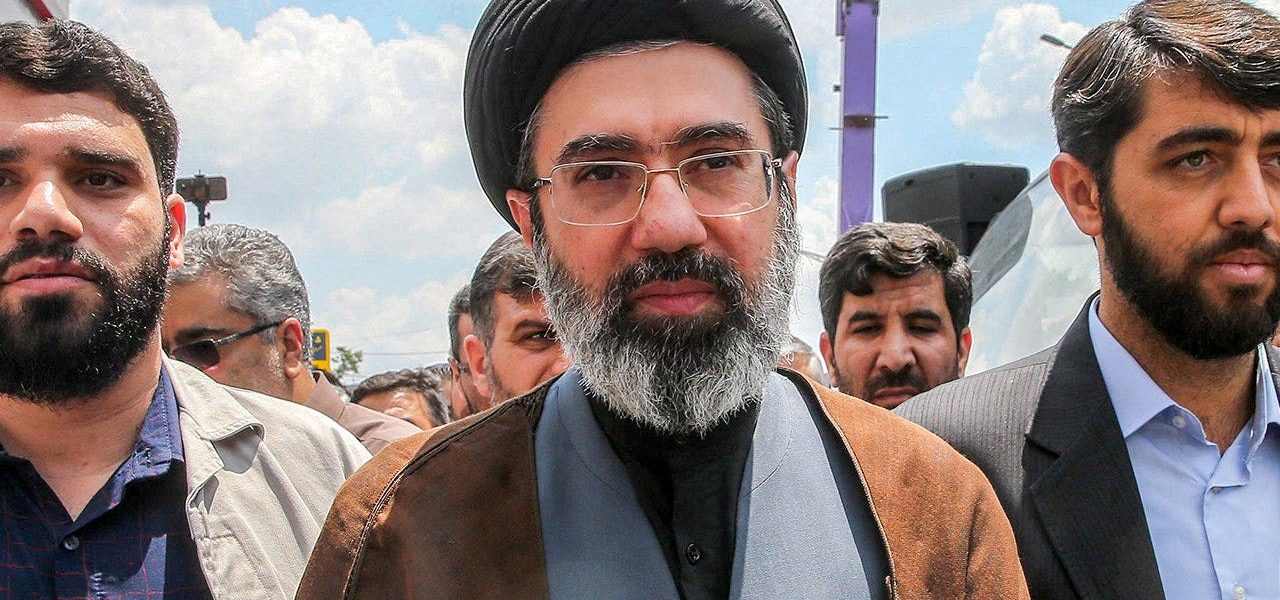
Word has trickled down — an extraordinary claim, if true — that Mojtaba Khamenei, the son of Iran’s Supreme Leader, Ayatollah Ali Khamenei, is poised to ink some kind of deal with former U.S. President Donald Trump. But not in person. Not even over a secure video link. It’s happening via what sources familiar with the matter have described as an [QUOTE_PLACEHOLDER] setup, one so opaque it beggars belief. They’re talking about a clandestine courier operation that manages to ferry sensitive documents between two individuals who couldn’t be further apart, geographically and ideologically, yet seemingly aligned on some peculiar tactical objective.
It’s a peculiar dance, you’ve got to admit. Here’s Mojtaba, long whispered to be a potential successor to his aged father—a powerful, conservative cleric with a grip on vast financial networks and the feared Basij paramilitary force. And there’s Trump, the former Oval Office occupant who walked away from the Iran nuclear deal (the Joint Comprehensive Plan of Action, or JCPOA) years ago, slamming it as the worst deal ever. And now, they’re supposedly on the verge of some rapprochement, facilitated by paper and trust, delivered by anonymous hands.
But how, exactly? Well, the reports say it involves an [QUOTE_PLACEHOLDER]. It’s an arrangement that dodges pretty much every established diplomatic norm you can think of. Think about the layers of security, the chain of command, the simple verification required for international agreements — all of it seems to be tossed out the window for this. It suggests either immense desperation on both sides to get something done, or a supremely audacious gambit designed to bypass scrutiny until it’s too late to stop. We’re talking about high stakes. Very high.
Consider Mojtaba’s role. He’s not a publicly elected official, he’s not the foreign minister, he’s not even an officially designated negotiator. He’s simply the son. Yet, he holds tremendous unofficial sway. Some have long pegged him a [QUOTE_PLACEHOLDER], which gives this entire affair a rather potent, perhaps even ominous, undertone. It’s a testament to the byzantine power structures within Iran, where unofficial channels often wield more weight than the official ones.
And what’s in it for Trump? Well, a deal with Iran, particularly one that perhaps addresses nuclear proliferation or regional stability without involving current Biden administration officials, would be an instant headline grabber. It’d play directly into his narrative of being a master dealmaker, a renegade who gets things done even when everyone else — supposedly — can’t. It’s certainly got the potential for a seismic shift, especially if it happens while the current White House occupies itself with other global headaches. Or perhaps, it’s a distraction. A colossal, geopolitical head-fake.
The mechanics alone are fascinating. The concept of a courier system so robust and trusted that it can transmit communications of this magnitude—and risk—across adversarial lines implies a deeply established backchannel. Or, a newly formed, deeply insecure one that no one outside of a select few knows about. Iran, after all, isn’t unfamiliar with such unconventional methods. From clandestine weapons acquisitions to black market oil sales (which, incidentally, surged to 1.3 million barrels per day in 2023, up from just 400,000 bpd in 2020, according to the Financial Times), they’ve perfected the art of the workaround when international sanctions pinch hard. This ‘courier setup’ fits their pattern perfectly.
📄 POLICY WIRE WHITEPAPER PUBLISHED: PAKISTAN'S NATIONAL SECURITY POLICY PRIORITIES
👉 READ BY CLICKING HEREThis whole situation — the proposed deal, the messenger strategy, the involvement of a ‘designated target’ like Mojtaba — is just another unsettling indication of how rapidly the global political chessboard can reconfigure itself, especially when non-traditional actors step onto the field. But for those watching from nearby, say, in Islamabad or Riyadh, it’s not just a fascinating news story. It’s a looming geopolitical earthquake.
What This Means
If this alleged arrangement proves real, it means everything. Literally. Politically, economically, regionally. Think about the impact on Iran’s already fraught relations with Saudi Arabia and other Gulf states—or its long-term strategic rivalries, like with Israel. If a back-door deal bypasses conventional diplomacy, it weakens established institutions and empowers an often-unpredictable freelance brand of statecraft. But it’s not just the Saudis or Israelis watching; neighboring Muslim-majority states, including Pakistan, would feel the ripples.
Pakistan, as a nuclear power bordering Iran and facing its own set of internal and external pressures, relies on a delicate regional balance. Any sudden, bilateral agreement that shifts the balance of power or introduces new security arrangements without multilateral consensus could destabilize an already tense subcontinent. Economically, a softening of sanctions or a change in US-Iran dynamics—even via unofficial channels—could re-open Iranian oil markets further, potentially influencing global energy prices and altering trade flows in a region where every barrel counts. But that doesn’t mean stability for everyone. And let’s not forget about Russia and China, both deeply invested in Tehran, whose positions would be immediately affected by a direct US-Iran dialogue, no matter how weirdly brokered.
It’s all about leverage, you see. If Trump or a Trump administration can claim a unilateral win on Iran, it gives them immense political capital back home and internationally. For Tehran, bypassing the Biden administration (and even their own foreign ministry, for that matter) allows them to strike a deal potentially more favorable, or at least one perceived as a win by their hardliners, further solidifying Mojtaba’s internal standing. The implication here is a move away from any semblance of multilateralism, pushing us towards an era where political theatrics and covert operations increasingly usurp traditional state-to-state negotiations. It’s messy. It’s dangerous. But it might just be the new normal. For another look at complex regional dynamics, consider how digital tactics sting India’s political elite.