


Sixty, Not Retired: When Juvenile Crimes Cast a Forty-Year Shadow
POLICY WIRE — Albuquerque, New Mexico — Sixty is an age most people eye retirement—maybe grandchildren, travel plans, or finally tackling that stack of dusty paperbacks. For Andres Herrera, it will...

POLICY WIRE — Albuquerque, New Mexico — Sixty is an age most people eye retirement—maybe grandchildren, travel plans, or finally tackling that stack of dusty paperbacks. For Andres Herrera, it will mark his first steps outside prison as a free man, a journey initiated by a judge’s gavel this week, sealing a fate shaped by events that unfolded when he was barely past childhood.
It’s a stark reflection on youth — and accountability. Herrera was a teenager, seventeen years old, when he committed the killings that landed him a four-decade stay in a correctional facility. The specifics, though grim, aren’t unusual in their broad strokes: violence, tragic loss, and a judicial system grappling with how to quantify regret versus retribution.
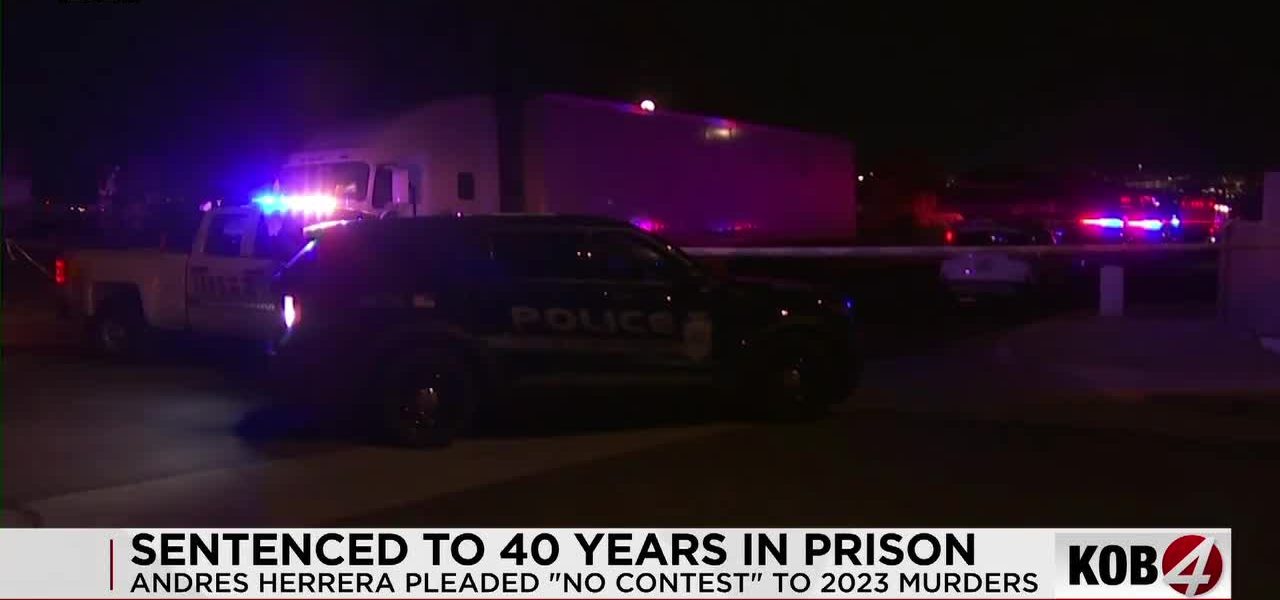
Andres Herrera appeared virtually for sentencing on Tuesday, a sterile, distant medium for such a weighty moment. He pleaded no contest in the 2023 killings of Phillip Apodaca — and Damion Alday. A technicality, perhaps, but one that legally skirted a full trial while still acknowledging guilt in the court of public opinion—and, more importantly, in the judicial ledger. The plea means he doesn’t officially admit guilt, but accepts punishment.
But how does one even begin to quantify such an offense? In court, Herrera apologized to the victims’ families — and others affected by the killings. His words, delivered presumably with some measure of conviction, echoed the sentiment of many who’ve stood before a judge after taking a life: [QUOTE_PLACEHOLDER]
Defense lawyers argued their client had turned a corner—a common refrain. He was getting an education, they insisted. He’d committed to reform. Such claims are designed to pull at judicial heartstrings, to remind the court that even a teenager can evolve. Judge Britt Baca, however, wasn’t buying all of it. Her skepticism, we might observe, wasn’t born of cynicism, but of legal gravity. Baca sentenced Herrera to 40 years in prison followed by 10 years of supervised probation.
Because, really, what’s the equation for a life stolen? It’s not just about what a convicted individual says, is it? It’s what they’ve done, — and the devastating ripple effect of that action. The judge’s concerns weren’t just theoretical; they were steeped in the practical reality of safeguarding society while also, arguably, upholding the sanctity of two lives prematurely ended.
And this isn’t just an American dilemma, folks. Questions surrounding juvenile culpability — and the capacity for reform resonate far beyond the American southwest. Look at Pakistan, for instance, where laws governing juvenile offenders—often influenced by Islamic jurisprudence and a different societal context—face their own complex debates. The concept of tazir, or discretionary punishment, in some Muslim legal frameworks allows for consideration of circumstances and rehabilitation potential, albeit within a distinct legal and social structure. It’s not always about an absolute age, but rather the understanding of intent — and the pathway to integration.
📄 POLICY WIRE WHITEPAPER PUBLISHED: PAKISTAN'S NATIONAL SECURITY POLICY PRIORITIES
👉 READ BY CLICKING HEREThere are stark differences, of course. For example, according to a 2018 report by Human Rights Watch, at least 15 juvenile offenders remained on death row in Pakistan, despite domestic laws prohibiting the execution of those under 18 at the time of their crime. Such figures starkly highlight the varied approaches to adolescent justice globally—from seeking rehabilitation in one nation to enforcing the ultimate penalty in another. It’s not a simple legal ledger anywhere, no matter what they tell you.
What This Means
Herrera’s sentencing underscores a persistent philosophical divide within criminal justice: whether the system prioritizes retribution, deterrence, or rehabilitation. Here, Judge Baca’s decision to impose a lengthy sentence—40 years is hardly a slap on the wrist—signals that accountability for capital crimes, even those committed by youth, remains a powerful driver. It’s a message that some acts carry consequences that cannot simply be outgrown, regardless of perceived reform. From an economic standpoint, lengthy incarcerations mean substantial taxpayer investment. The cost to house an inmate in federal prison averaged nearly $35,000 per year as of 2018, according to the Bureau of Justice Statistics, meaning Herrera’s four decades will accumulate well over a million dollars in societal expenditure just for housing. And that’s a conservative estimate. Policy wonks continually wrestle with whether that investment delivers sufficient societal return, especially when it comes to individuals who committed crimes as minors.
But let’s be real. It’s also about the victims’ families, who don’t often see justice served through budget lines or philosophical debates. Their wounds don’t heal by legislative amendments. For them, a 40-year sentence is perhaps a measure of acknowledgment, a tangible if imperfect response to irreparable loss. This verdict will inevitably fuel the ongoing discourse surrounding juvenile justice reform across the U.S. Should 17-year-olds be tried — and sentenced effectively as adults for certain heinous crimes? Many believe yes; others cite the developing brain — and capacity for change. (There’s an intriguing conversation on child custody and judicial philosophy taking place in Japan, for example, that highlights these cultural differences). What is truly rehabilitative and what’s simply punitive? These questions, perpetually on the legislative agenda, won’t find easy answers in New Mexico, or anywhere else. Because these things never do, not truly. This isn’t a neat ending to a chapter; it’s a grim punctuation mark on an enduring argument.