
Delhi Dispatch: Rubio’s Charm Offensive Hits Asia, With China in the Rearview?
POLICY WIRE — New Delhi, India — Forget the pomp and circumstance that usually follows American envoys in the region; the true diplomatic fireworks, it seems, happen after the flashbulbs have quieted...

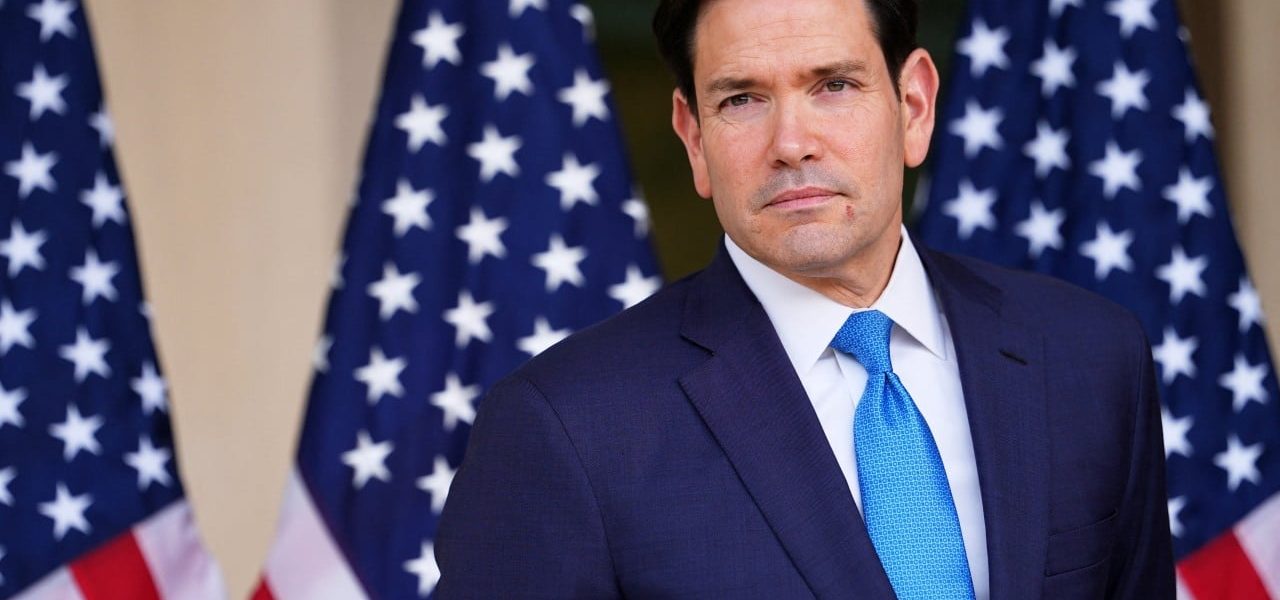
POLICY WIRE — New Delhi, India — Forget the pomp and circumstance that usually follows American envoys in the region; the true diplomatic fireworks, it seems, happen after the flashbulbs have quieted down. US Secretary of State Marco Rubio didn’t just land in New Delhi last Saturday; he quietly unfurled a fresh set of intentions, extending an invitation to Prime Minister Narendra Modi for a Washington powwow. This move, delivered after an hour-plus tête-à-tête with Modi, has effectively, and quite publicly, begun turning a new page in U.S.-India relations. And it’s all happening just a week after Rubio rode President Donald Trump’s coattails into Beijing for what was characterized as a decidedly warmer state visit.
It’s an interesting pivot, isn’t it? One could argue the choreography here suggests a calculated re-balancing act by Washington, a quick course correction, perhaps. Rubio, it’s worth noting, was touching down in both of these sprawling Asian powers for the first time in this capacity. His stop in India wasn’t merely a courtesy call; it carried the unmistakable weight of recalibrating alliances—or, at the very least, re-emphasizing existing ones—in the tumultuous landscape of global politics. The messaging couldn’t be clearer: America’s gaze, despite its recent flirtation with China, hasn’t drifted too far from Delhi’s doorstep. In fact, Rubio explicitly called India a natural partner, words that echo loudly after a period marked by subtle friction.
For New Delhi, this overture is hardly unwelcome. India, a democracy of nearly 1.4 billion people (that’s according to the World Bank’s 2022 demographic data), constantly navigates its position between great powers, often wary of being relegated to a lesser player in geopolitical games. A high-level White House invitation isn’t just an honor; it’s an affirmation. But it also presents a strategic tightrope walk. India values its autonomy—its non-alignment principles, though evolving, still inform much of its foreign policy calculus. Beijing’s economic gravitational pull is immense, you know? Balancing that with Washington’s security assurances requires a deft hand, a poker face, and sometimes, a whole lot of smiling for the cameras.
But how do you define natural partner? Does it extend beyond rhetoric? What does it truly mean when the U.S. offers one hand to China — and the other, almost simultaneously, to India? It suggests a recognition, belatedly perhaps, that while engaging China on specific fronts is unavoidable, cultivating a strong counterweight (or at least, a powerful ally) in the Indo-Pacific remains a strategic imperative. This isn’t just about trade deficits or regional stability; it’s about the very future of global influence. For years, observers—this journalist included—have watched India’s geopolitical rise with a mixture of awe and expectation. It’s got a massive, young population, a growing economy, — and an ambition that, frankly, can’t be ignored.
And let’s not forget the broader regional implications here, because they’re never truly absent. The complex dynamics of South Asia—India and Pakistan, for instance, sharing a fraught history and a deeply contested border—always factor into these equations. Washington’s engagement with India, while often framed through the lens of Indo-Pacific strategy, inevitably casts a long shadow over Islamabad. There’s an old truism in diplomatic circles that states how a friend of my enemy isn’t necessarily my enemy, but it certainly complicates things. For Pakistan, watching America’s robust embrace of India must prompt a fresh round of strategic assessment, particularly concerning its own relationships with China and other global players. This U.S.-India synergy isn’t just about two nations; it’s about redefining power matrices across the subcontinent and, by extension, parts of the Muslim world.
📄 POLICY WIRE WHITEPAPER PUBLISHED: PAKISTAN'S NATIONAL SECURITY POLICY PRIORITIES
👉 READ BY CLICKING HERERubio’s seemingly effortless hopscotch between Beijing and New Delhi—and his quickness to label India a [QUOTE_PLACEHOLDER]—hints at an America unwilling to place all its eggs in any single Asian basket. It’s a strategy born of pragmatism, yes, but also of necessity in a multi-polar world. One week, the hand of friendship is extended to China; the next, a pointed invitation arrives in India. That, friends, is the game of nations.
What This Means
This diplomatic whirlwind from Secretary Rubio isn’t just about polite bilateral exchanges; it’s a telling signal of American strategic thought adjusting on the fly. Politically, Washington is clearly communicating a dual-track approach: engage China on certain matters while simultaneously solidifying ties with other regional giants like India. This isn’t necessarily about choosing sides as much as it’s about hedging bets and building a diversified portfolio of influence. For India, it’s a moment to leverage its position, possibly securing greater technology transfers or defense cooperation, but also a call to manage expectations carefully, understanding that American interests can shift as swiftly as an evening monsoon storm.
Economically, stronger U.S.-India ties could accelerate trade deals and investment, potentially offering American firms an alternative to supply chain reliance on China. For countries like Pakistan, who have historically relied on U.S. aid — and influence, this moment necessitates a sharp re-evaluation of their own foreign policy alignments. We’re seeing a shift from simplistic Cold War binaries to a more nuanced, transactional, and at times, seemingly contradictory foreign policy. It means every handshake and every invite carries a subtext: America isn’t looking for exclusive partners anymore; it’s looking for beneficial ones, in a landscape where traditional allegiances are becoming as fluid as the global markets themselves. The game, it’s apparent, has gotten far more interesting—and a lot less predictable.