


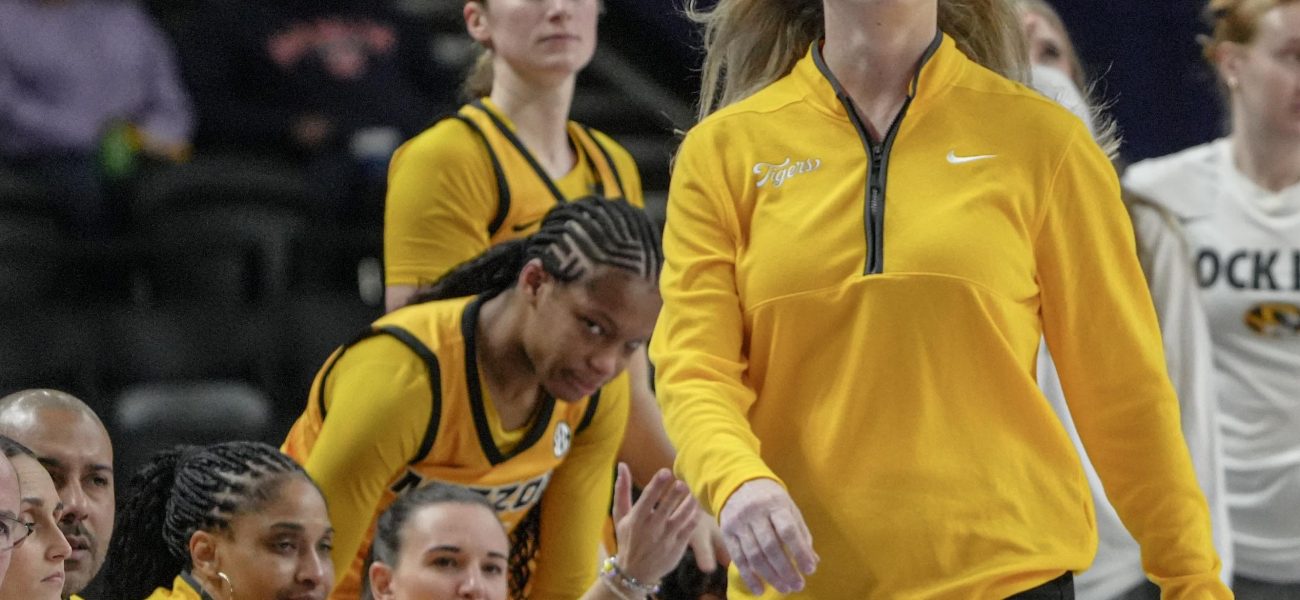
The Price of Bragging Rights: A Showdown for Midwest Collegiate Hoops
POLICY WIRE — Kansas City, USA — The rhythm of regional loyalties, often louder than any cheering crowd, dictates far more than mere sport. It shapes the small-town economy — and civic pride, quietly...

POLICY WIRE — Kansas City, USA — The rhythm of regional loyalties, often louder than any cheering crowd, dictates far more than mere sport. It shapes the small-town economy — and civic pride, quietly fueling contractual agreements made far from the spotlight. In a testament to this enduring Midwest phenomenon, Missouri and Kansas State’s women’s basketball squads are set to rekindle a familiar animosity—not on campus, but on neutral ground in Kansas City.
It’s not exactly geopolitical maneuvering, of course, but the skirmish between two former Big 12 conferencemates, set for Sunday, Nov. 22, during the 2026-27 season at the T-Mobile Center, carries its own localized gravitas. This isn’t just about dribbling and shooting; it’s about drawing crowds, cementing regional identities, and (let’s be honest) a little bit of transactional friction. The matchup is already the earliest known fixture on the University of Missouri’s calendar for what will be head coach Kellie Harper’s sophomore campaign, suggesting that some dates get etched into the ledger with particular intent. [QUOTE_PLACEHOLDER]
Harper’s initial run, a rather unremarkable 17-17 finish last season, including a less-than-stellar 4-12 in Southeastern Conference play, did manage to secure the program’s first postseason win in three years—a victory over Seton Hall in the Women’s Basketball Invitation Tournament. But winning a singular game, even a postseason one, doesn’t build empires, does it? Kansas State, led by coach Jeff Mittie, similarly stumbled out of the WBIT second round after a 19-18 season, marked by an 8-10 record within the Big 12. So, you’ve got two programs hungry, not just for wins, but for a solid hook to sell tickets — and generate buzz.
Because that’s the real game, isn’t it? Maintaining relevance. Ensuring the bleachers aren’t as empty as a politician’s promises on election eve. This isn’t just a friendly exhibition, you see. It’s a calculated gamble to keep old grudges simmering, ensuring that fans have a reason—any reason—to venture out. These are the kinds of matchups that keep athletic departments afloat, bringing in much-needed revenue streams and justifying their operational expanse.
And yes, Mizzou has some new faces to parade. Eight newcomers, actually. Five freshly signed from high schools, alongside a three-player transfer class. Coach Harper’s banking on these new talents to reinvigorate a program that hasn’t seen the NCAA Tournament since the 2018-19 season. A long drought, by any measure, made somewhat more palatable only by the NCAA’s decision to expand its March Madness field from 68 to 76 teams starting next season. It just means there are more slots for teams like Missouri to fill.
The teams haven’t met on the court since December 2023, when they squared off in St. Joseph. This new rendezvous, however, is being presented as the 28.5 Invitational, with the event cost amounting to $17,000 paid to Missouri Valley Youth Services—a local non-profit. It’s an arrangement that highlights how sports events, even at the collegiate level, are intertwined with community development efforts, or at least how they’re marketed to be. And that’s not exactly new territory for Mizzou; they played Kansas in the same invitational just last November, a loss then, another chance to perform now.
📄 POLICY WIRE WHITEPAPER PUBLISHED: PAKISTAN'S NATIONAL SECURITY POLICY PRIORITIES
👉 READ BY CLICKING HEREWhat This Means
The mechanics of securing a neutral-site collegiate athletic event like this—paying an event organizer, booking a major arena, arranging logistics for two substantial athletic programs—can seem mundane. But these small-scale transactions reveal much about the political economy of American higher education and, indeed, its often-unseen links to global trends. Look, collegiate athletics isn’t some pure amateur endeavor anymore; it’s a multi-billion-dollar industry, acting as both an advertising arm and a revenue generator for institutions.
The pursuit of a robust sports schedule, featuring historical rivals and prestigious tournaments (even minor ones like the ACC/SEC Challenge, where Missouri’s opponent remains a mystery for now), isn’t just for player development. It’s a carefully calibrated strategy to boost media exposure, cultivate alumni donations, — and lure fresh talent. Each game becomes a data point for a university’s public relations — and financial teams. It’s about selling a brand, frankly, not just a basketball game. Just like sovereign wealth funds in the Persian Gulf or Southeast Asia — think of nations like Pakistan or Saudi Arabia, increasingly investing in and hosting global sporting events — these local games aim to polish an image, foster national or regional pride, and stimulate an economic microclimate. The $17,000 agreement with a youth services nonprofit here might be small change compared to billions sunk into World Cups or Olympics by developing nations. But the underlying drive is precisely the same: leverage sports to achieve broader strategic goals, whether they be diplomatic goodwill, tourism, or simple civic identity.
Because ultimately, these universities aren’t just educating; they’re competing. For dollars. For attention. For a place in the cultural conversation. And often, these local battles for dominance become proxies for broader regional anxieties. The Missouri-Kansas rivalry isn’t just about a ball; it’s a centuries-old narrative rooted in antebellum border skirmishes, an ingrained historical tension that college sports now sublimates into ticket sales and television contracts. Just like an old border dispute between South Asian nations, the underlying tension never fully vanishes; it simply finds new, less bloody, arenas for expression.
The money, though modest here compared to the truly big leagues, ensures the machinery keeps turning. It supports facilities, scholarships, — and the employment of hundreds. So, while it’s women’s basketball that’s making headlines, what’s really at stake is the perpetual, nuanced negotiation of regional power, identity, and the surprising economic muscle packed into a rivalry game.