


Signatures Slip: Maine’s Sports Identity Initiative Stumbles on Bureaucracy
POLICY WIRE — PORTLAND, Maine — Turns out, the fight for a particular version of sporting purity can often hit a snag not in the public square, but deep in the administrative weeds. In Maine, a...

POLICY WIRE — PORTLAND, Maine — Turns out, the fight for a particular version of sporting purity can often hit a snag not in the public square, but deep in the administrative weeds. In Maine, a fiercely contested initiative aimed at codifying specific gender restrictions in student athletics and public facilities just died a quiet, procedural death. It wasn’t a rousing voter rejection or a judicial decree. Instead, the whole thing unraveled over invalid signatures, a mundane bureaucratic detail that highlights the surprisingly robust, if often overlooked, guardrails of direct democracy.
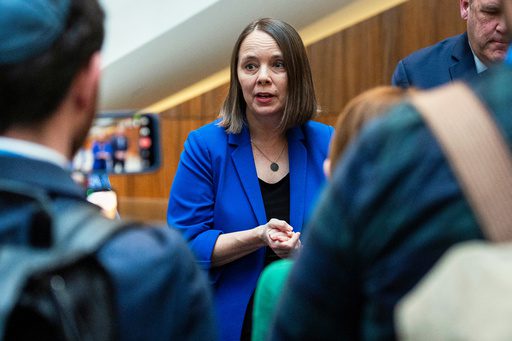
The ballot proposal, championed by a group known as Protect Girls Sports in Maine, was gearing up for a November showdown. Voters were going to be asked to weigh in on whether public schools ought to limit bathroom access and sports participation based on the gender noted on a child’s original birth certificate. But alas, the fine print mattered. Maine Secretary of State Shenna Bellows, currently on the campaign trail for governor as a Democrat, announced Tuesday that her team had discovered a staggering number of invalid signatures—more than 12,000, in fact. That left the entire petition drive a few hundred names short of the 67,682 required for ballot inclusion, she noted. [QUOTE_PLACEHOLDER]
It’s a real jolt for the nationwide effort that seeks to either limit or flat-out ban transgender students from sports. Maine, you see, popped up as a flashpoint on this particular issue just last year, following a very public squabble involving Democratic Governor Janet Mills (who’s in her last term, folks, due to limits) and then-President Donald Trump. You’d think an issue with that much national heft would transcend simple penmanship or correct address checks, but apparently, democracy has its paperwork. And that paperwork needs to be correct.
Bellows didn’t mince words on the matter. She stated, “We take the integrity of the petitions just as seriously as we take the security of voting. It’s really important that anyone seeking to place an initiative on the ballot follow the law.” Couldn’t be clearer, could it? It’s not about the issue itself, it’s about the rules of engagement. Petitioners have ten days to try — and appeal this decision, a sort of last-gasp effort to resurrect their cause. Representatives for Protect Girls Sports in Maine didn’t immediately comment, though they’d indicated recently they wouldn’t give up. They’ve still got the option, Bellows confirmed, to try and get their initiative onto a future ballot, you know, once they figure out how to collect legitimate signatures. What a thought!
And let’s not forget, the Secretary of State’s office had already issued a preliminary finding last week, recommending this very outcome. They’d noted that the petition “doesn’t meet the constitution threshold” of valid signatures. But Leyland Streiff, principal officer for the group, still sounded defiant in a statement, saying his organization was “continuing our defense of the Protect Girls Sports ballot measure.” Hope springs eternal, I suppose, even in the face of bureaucratic fact.
This whole drama in Maine is just one small battleground in a much larger, often nastier, culture war unfolding across America. At least 19 states have already put laws on the books banning transgender girls and women from using designated girls’ and women’s facilities in public schools. Some of these prohibitions even spill over into other government buildings or private schools. And about 30 states have either passed laws or adopted policies keeping transgender girls and women out of girls’ and women’s sports competitions. A few of these laws are tied up in court battles, like one in Montana that’s been put on hold.
📄 POLICY WIRE WHITEPAPER PUBLISHED: PAKISTAN'S NATIONAL SECURITY POLICY PRIORITIES
👉 READ BY CLICKING HEREInterestingly, none of these laws restricting bathrooms or sports participation arrived via ballot measure; they were legislative acts. This procedural defeat in Maine reminds us that even when the stakes feel high for cultural conservatives, basic democratic processes can sometimes be the most formidable obstacle. Just because an issue galvanizes a base doesn’t mean the footwork gets done properly. Opponents of the initiative, like David Farmer, campaign manager for the Campaign for Free and Fair Schools, wasted no time echoing Bellows: The petitioners “failed to follow the rules,” he observed.
What This Means
This particular episode in Maine, though locally decided on administrative grounds, casts a long shadow across the broader national discourse on gender identity and public policy. Its political implications are actually quite subtle, isn’t it? Firstly, it highlights the enduring, often underappreciated, role of state secretaries of state. These aren’t just paper-pushers; they’re vital gatekeepers of direct democracy. Bellows’ decision underscores the importance of a meticulous, non-partisan approach to verifying ballot initiatives, which can often make or break highly charged ideological crusades. Secondly, for national organizations pushing these types of restrictions, it serves as a rather rude awakening: passion alone won’t win you the ballot. Organizational rigor, precise legal compliance, and effective grassroots mobilization — not just fervent belief — are absolute must-haves.
it shows a momentary blunting of a political strategy that has, until now, gained significant traction. While President Trump continues to champion such restrictions (signing executive orders, terminating protections for trans students since his return to office last year, you know the drill), this kind of setback, particularly through procedural failure, injects a note of caution for those believing a straight line exists from popular sentiment to codified law. And look, the very concept of gender identity, and its intersection with traditional societal structures like competitive sports, isn’t some quaint American exceptionalism. Questions of who belongs where, based on identity markers — and societal norms, ripple across the globe. From the heated debates in European sporting bodies to quiet discussions about appropriate roles and spaces for women in sports in parts of South Asia or the Muslim world, cultures continually grapple with how to balance long-held traditions against evolving understandings of individual rights and public participation. It’s a worldwide conversation, but the method matters, don’t you think? In Maine, they’ve learned it the hard way: sometimes, the smallest details are the biggest hurdles. And that means a procedural win for those who want things left as they’re, for now anyway.