
Beyond the Grand Slam: Salt Lake’s Economic Playbook in Minor League Baseball’s Grand Theatre
POLICY WIRE — SALT LAKE CITY, UTAH — Forget the scores, if only for a moment. Forget the walk-offs — and the dizzying tally of runs. When the Salt Lake Bees capped a scorching homestand, seizing five...

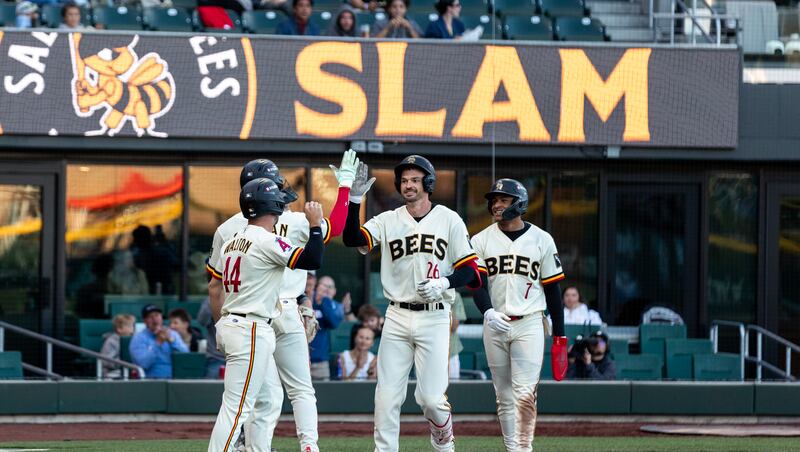
POLICY WIRE — SALT LAKE CITY, UTAH — Forget the scores, if only for a moment. Forget the walk-offs — and the dizzying tally of runs. When the Salt Lake Bees capped a scorching homestand, seizing five of six games against the Tacoma Rainiers, the real spectacle wasn’t just on the diamond. No, what truly captured the flickering attention of Salt Lake City, and perhaps offered a grim object lesson to the wider baseball industrial complex, was the unapologetic, often brilliant, choreography of commerce.
It’s an uncomfortable truth: minor league baseball isn’t just about cultivating the next generation of Angels — or any big-league club’s — talent. It’s about selling an experience, an escape, a drone show to an audience that probably came more for the discounted sodas and Star Wars cosplayers than the nuanced pitching mechanics of a hopeful 23-year-old. The Bees’ recent nine-win, three-loss homestand, pushing their record back to a respectable .500 (25-25) for the first time since April 2025, underscores this. But it wasn’t raw talent alone that drew a season-high 7,720 fans—the fourth largest in ballpark history—for a Saturday night walk-off; it was a carefully curated carnival.
Because, let’s be frank, even the most devoted fan, deep down, knows the stakes. These players? They’re temporary residents, ambitious transients chasing a dream. “We’re always thrilled to see our prospects develop, to hit their stride before an enthusiastic crowd,” observed Jean-Luc Dubois, Vice President of Player Development for the Los Angeles Angels, his words laced with a certain practiced detachment. “But the larger narrative here is the viability of this pathway. These games, these promotions, they pay for the buses, they pay for the trainers. They keep the lights on for the next big star. It’s an ecosystem, a delicate one at that.”
The ‘ecosystem’ Dubois refers to relies heavily on non-baseball entertainment. Consider Friday night’s tribute to Disney’s High School Musical, complete with an appearance from an actor. Or the infamous ‘Dirty Sodas Night.’ These are the theatrical pillars propping up what might otherwise be just another exhibition in the purgatory of professional aspirations. One could argue this dilutes the purity of the sport, sure. But purity doesn’t often cover operating costs, does it? The marketing juggernaut behind these themed nights highlights the waning polish of professional sports as authenticity, or at least highly marketed simulacra of it, ascends.
Denzer Guzman, for instance, a 22-year-old infielder and the Angels’ seventh-rated prospect, hit two homers on Friday night, one famously dinging an inflatable Swig cup. This moment, providing free sodas for attendees, likely generated more buzz than the specific mechanics of his swing. He ended the series hitting an astounding .444 (12-for-27) with seven RBIs. And yes, while that’s great for Guzman’s big league hopes, it’s also great for Swig’s visibility. That’s the transaction here—development intersects with product placement.
Then there’s the harsh arithmetic of the pipeline. Nelson Rada, a 20-year-old outfielder pegged as the Angels’ top position player prospect, struggled, batting just .200 during the homestand. George Klassen, a highly touted pitching prospect, lasted a dismal 1.2 innings in one start. For every Guzman pushing for a call-up, there are a dozen Radas — and Klassens trying to find their footing. This isn’t a leisurely climb; it’s a grueling ascent, often ending with a sudden fall. And the crowds, to their credit, mostly show up for the show, understanding the underlying, often brutal, economics.
📄 POLICY WIRE WHITEPAPER PUBLISHED: PAKISTAN'S NATIONAL SECURITY POLICY PRIORITIES
👉 READ BY CLICKING HEREBut the numbers speak, loudly. Across minor league baseball, a staggering 87% of players who reach Double-A or Triple-A never play a single inning in MLB, according to a 2023 report by the Baseball America Prospect Handbook. It’s a ruthless culling, a process disguised by hot dogs — and family entertainment. “What you’re seeing in Salt Lake isn’t just good baseball; it’s an exemplar of modern minor league enterprise,” mused Clara Albright, PCL’s Senior Director of Operations. “Teams like the Bees aren’t just affiliates anymore; they’re economic engines, driving tourism, fostering community ties, and providing a platform for not only athletic but commercial innovation.” Albright’s analysis rings true, even if ‘commercial innovation’ sounds a touch sterile.
What This Means
This Bees’ successful homestand offers more than just a snapshot of nascent baseball careers; it’s a study in market adaptation. In an increasingly globalized and digitally fragmented world, where attention is the scarcest commodity, organizations like the Bees aren’t just selling sport; they’re selling multi-sensory experiences designed to keep consumers — and their disposable income — engaged. This model has global echoes, particularly in emerging sports markets like those in South Asia or parts of the Muslim world. For instance, the rise of domestic cricket leagues in Pakistan, like the PSL, similarly leverage national pride, celebrity appearances, and high-impact event marketing to captivate an audience that seeks both athletic prowess and pure entertainment. American minor league teams, despite their distinctly local flavor, share that fundamental DNA with those rapidly expanding global sporting enterprises: innovate or die.
The Bees’ ability to turn what could be a dull mid-season grind into a series of themed extravaganzas isn’t just shrewd marketing. It’s a pragmatic response to shifting consumer behavior and the inherent challenges of being a ‘development league.’ Local governments, keenly aware of the soft power and tangible economic boosts these teams provide, often grant favorable land deals or infrastructure investments, transforming public dollars into private profit-making spectacles. So, while Salt Lake celebrates its victorious baseball team, it’s also celebrating its savvy—its calculated embrace of entertainment as an essential pillar of sport. And who wouldn’t raise a toast—or perhaps a complimentary Swig—to that?