


The Perilous Charms of a Wild Dolphin: A French Coastal Enigma
POLICY WIRE — Crozon, France — The summer air on the Brittany coast is thick with the scent of salt and sun, a picture of idyllic European repose. But nestled within this postcard, a strange little...

POLICY WIRE — Crozon, France — The summer air on the Brittany coast is thick with the scent of salt and sun, a picture of idyllic European repose. But nestled within this postcard, a strange little drama unfolds—one that pits visceral human delight against the unyielding logic of nature, with all the clumsy good intentions that often preface ecological missteps. It’s not a conflict you’d typically find plastered across policy papers or economic forecasts, yet its understated absurdity speaks volumes about our relationship with the wild. Because sometimes, the loudest policy statements aren’t issued from parliamentary halls, but from the frolic of a fin in a sun-dappled cove.
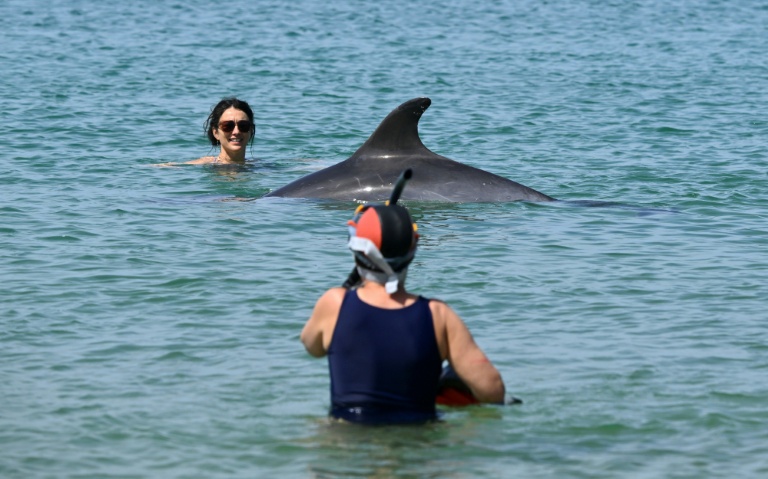
Meet ‘Dalliance,’ as locals have dubbed him (they’re optimists, these coastal types), a bottlenose dolphin who has decided the tranquil waters off Crozon, France, are his personal playground. He’s playful, curious, — and utterly disarming. Children shriek with delight. Tourists book boat tours, cameras poised. The town, it seems, has found its unexpected mascot, a living, breathing, aquatic influencer drawing crowds and cash—or so it appears. Don’t underestimate the magnetic pull of the bizarre.
But beyond the immediate smiles and the gentle economic bump for seaside cafés, a growing undercurrent of unease swirls. Marine ethologists—people who spend their lives trying to understand what dolphins are *really* doing, not what we project onto them—aren’t cheering. Not one bit. This isn’t a Lassie tale. Dr. Sylvie Dupont, a veteran marine biologist with the French National Center for Scientific Research (CNRS), didn’t mince words when Policy Wire pressed her on the matter. “People mistake interaction for connection. They forget these aren’t pets, aren’t actors in some Disney feature. They’re wild creatures. Their apparent sociability is often a cry for help, a deviation from natural behavior. It’s a tragic dynamic, truly, for the animal’s long-term well-being.” She’s seen it before.
Her concerns aren’t theoretical. Dolphins habituated to human interaction often become less wary, making them vulnerable to boat propellers, deliberate harassment, or even accidental injury during overly enthusiastic human encounters. The boundary, you see, isn’t just physical. It’s behavioral, too. And when that boundary blurs, things can go sideways, fast. “We’ve documented an alarming trend globally,” Dr. Dupont added, “with over 70% of cetacean strandings worldwide showing signs of human interaction, from vessel collisions to pollution-induced illnesses, according to a 2022 report by the World Wildlife Fund (WWF). This isn’t just an anecdotal quirk; it’s a symptom.”
For Mayor Henri Leclerc of Crozon, though, the optics are, admittedly, a bit more complicated. His constituents, many of them reliant on summer tourism, aren’t exactly eager to turn away a natural wonder. “He brings people, he brings smiles, yes, that’s true,” Mayor Leclerc conceded, his voice betraying a hint of PR savvy honed from years of balancing civic interests with environmental directives. “Of course, we instruct caution, we ask everyone to respect the regulations. We tell them: admire from a distance. But you can’t deny the joy he sparks, especially after… well, after everything. After two years of curtailed travel, it’s a breath of fresh air.” That’s one way to frame it.
📄 POLICY WIRE WHITEPAPER PUBLISHED: PAKISTAN'S NATIONAL SECURITY POLICY PRIORITIES
👉 READ BY CLICKING HEREBut the ‘everything’ Mayor Leclerc gestures at – global instability, economic wobbles, and environmental degradation – presents a stark juxtaposition. In wealthy nations, we grapple with how to responsibly enjoy a lone, playful dolphin. Meanwhile, in vast swathes of the world, like the coastal communities stretching along the Arabian Sea and the Indian Ocean, human-wildlife interaction is a matter of brutal necessity, not leisure. Fishermen in Balochistan, for instance, are less concerned with a dolphin’s psychological state than with depleting fish stocks driven by climate change and, frankly, by vast industrial fishing fleets that operate with less oversight than a street hawker. Their ‘interaction’ with marine life is about survival, about feeding their families—a stark, almost brutal arbitrage of resources.
The policies crafted for Crozon, for all their nuanced regulations about proximity and feeding, belong to a very particular kind of economic reality. They can afford to be precious. It’s a luxury that coastal villages along the Makran coast or even the bustling fishing hubs in Bangladesh often don’t have, where geopolitical currents, like the expanding influence captured in “Beijing’s Iron Grip, Islamabad’s Deep Pockets,” often dictate environmental and economic priorities, frequently overriding ecological sensitivities.
What This Means
The Crozon dolphin isn’t just a quirky news item; it’s a living Rorschach test for our collective priorities. Economically, a sudden, charming animal presence provides an immediate, albeit volatile, boost to local tourism. Mayors won’t quibble with that, even if their environmental advisors are having nightmares. The long-term implications, however, are grim. Habituation means higher risk of injury to the dolphin and, conversely, potential safety issues for humans if the wild animal, under stress or misunderstanding, behaves aggressively. Politically, governments find themselves in an awkward spot: balancing public sentiment, which adores such narratives, with scientific consensus, which often warns of peril. They don’t want to be the killjoys. But ultimately, their inaction – or clumsy, under-resourced intervention – reinforces a problematic paradigm where immediate human gratification often trumps long-term ecological well-being. It’s a classic tragedy of the commons, writ small in the sparkling waters of a French bay. We’re drawn to the spectacular, even when the spectacular signals deeper disquiet.