

Shadow of the Caliphate: German Charges Expose Enduring Extremist Threat
POLICY WIRE — Berlin, Germany — It’s the kind of news item that slides quietly across the wires, a mere ripple in the day’s deluge, yet it hums with a persistent, low-frequency...

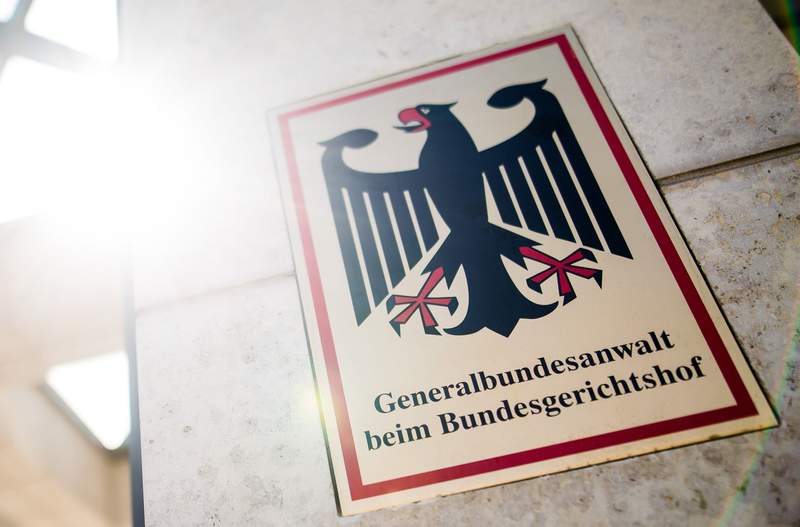
POLICY WIRE — Berlin, Germany — It’s the kind of news item that slides quietly across the wires, a mere ripple in the day’s deluge, yet it hums with a persistent, low-frequency dread. Two individuals — a man and a woman — have been formally charged in Germany with membership in the Islamic State (IS) terror organization. No dramatic raid, no sensational disclosures; just the stark, unvarnished business of the federal prosecutor’s office moving forward. It’s a somber reminder that for all the pronouncements of its territorial defeat, the so-called Caliphate continues its ideological skirmish, right in Europe’s economic heartland.
The details emerging are, typically, sparse. Authorities aren’t exactly publishing play-by-plays. But what we know — what the charges themselves represent — is a system grinding on, slowly, meticulously, to dismantle cells before they fester into something truly monstrous. This isn’t about lone wolves acting out some spontaneous fury; it’s about networks, about adherence to a nihilistic creed that seeks to overturn the very foundations of Western society. It’s an inconvenient truth, don’t you think?
“We’re not merely fighting individuals in these courtrooms; we’re confronting a corrosive ideology that twists faith into a weapon,” Christian Schmitt, a spokesperson for Germany’s Federal Public Prosecutor General, observed in a characteristically measured tone. “These charges reflect our unwavering commitment to protecting our democracy from its declared enemies, both overt and clandestine.” His words, often understated, carry the weight of years spent grappling with an invisible foe.
The individuals, whose identities remain undisclosed due to ongoing proceedings, are alleged to have joined IS at different points, participating in various capacities, though the specific activities aren’t detailed in the initial federal communication. One wonders about the trajectory that leads a person to pledge allegiance to such an entity while living in one of the world’s most stable democracies. But that’s a story told too often, isn’t it? A story of alienation, propaganda, — and a particularly dangerous form of idealism.
And these arrests aren’t just isolated incidents. Germany, like much of Europe, remains a battleground in this persistent struggle against extremism. The Federal Criminal Police Office (BKA) reports that since 2013, over 1,100 individuals have departed Germany for Syria or Iraq to join militant groups, including IS. That number, however sobering, doesn’t even account for those who stay home, radicalized yet lurking, or those who return with dangerous skills and shattered loyalties. Because the physical war might be over, but the war for hearts and minds — fueled by digital channels and cynical recruiters — absolutely isn’t.
But the problem, like so many global problems, doesn’t exist in a vacuum. German security officials often monitor transnational networks that extend well beyond Europe’s borders. And, no surprise, a significant portion of IS recruitment and propaganda historically originated or found resonance in communities with ties to the Middle East and parts of South Asia — places like Pakistan, for instance, where social disenfranchisement can sometimes unfortunately create fertile ground for extremist narratives, even for those in diaspora communities.
📄 POLICY WIRE WHITEPAPER PUBLISHED: PAKISTAN'S NATIONAL SECURITY POLICY PRIORITIES
👉 READ BY CLICKING HERE“The hydra still breathes, you see,” remarked Klaus Richter, a seasoned veteran who now heads a counter-terrorism unit within the German Federal Police, speaking off the record during a recent security briefing. “Their network might be decentralized now, its territorial ambitions checked, but the intent remains — the digital whispers, the covert recruitment, the quiet logistics. We track their digital fingerprints — and their physical movements tirelessly. It’s a marathon, not a sprint.” He sounded tired, but resolute. That’s the mood in security circles right now; grim realism.
What This Means
This latest round of charges signals not a surge in the IS threat, but rather the quiet, grinding persistence of its embers, and Berlin’s relentless, if often understated, efforts to contain them. Politically, it complicates ongoing debates about migration and integration, especially for a government that’s taken a generally welcoming stance but faces persistent criticism from the political right. Every arrest, every charge, provides ammunition for those who argue for tighter borders and more aggressive surveillance.
Economically, the implications are more subtle, but present. Resources diverted to counter-terrorism — whether for surveillance technology, judicial proceedings, or de-radicalization programs — represent funds not spent elsewhere. There’s a constant cost associated with vigilance in an open society, a fiscal burden that never quite gets paid off. It’s a national security expenditure that’s increasingly baked into the budget, a silent tax on the illusion of complete safety. It also casts a longer shadow over Europe’s cultural integration efforts. A fear that, for all the success stories, the narrative of home-grown radicalism continues to chip away at social cohesion. Just look at the broader discourse across Europe, particularly regarding nations like Afghanistan and Pakistan, whose internal stability issues frequently ripple outward to affect German foreign policy and domestic security calculus. The world, it seems, is far too interconnected for comfort.
The message these charges send is twofold: one, Germany’s security apparatus isn’t resting on its laurels, and two, the fight against IS isn’t over — it’s merely morphed into a more insidious, decentralized, and persistent problem that requires eternal vigilance, a particularly vexing problem for an open, democratic society. It makes one think about the quiet sacrifices made daily to uphold order in a tumultuous world, often unnoticed until a headline like this briefly breaks through. For Germany, and frankly, for much of the continent, the bureaucracy of dealing with global instability and its domestic consequences has become a permanent feature of governance. It’s a tightrope walk — always has been, likely always will be.