

The End of an Unfinished Symphony: Sonny Rollins, Jazz’s Restless Sage, Goes Quiet at 95
POLICY WIRE — NEW YORK CITY, NY — The sound of the urban prophet has finally fallen silent. For decades, the jazz world expected Sonny Rollins to resurface, even from the deepest, most introspective...

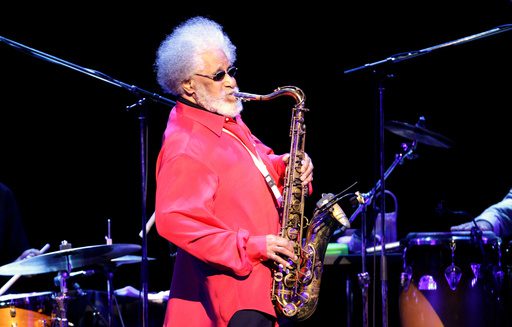
POLICY WIRE — NEW YORK CITY, NY — The sound of the urban prophet has finally fallen silent. For decades, the jazz world expected Sonny Rollins to resurface, even from the deepest, most introspective silences, his tenor saxophone once again cutting through the noise. But this time, it’s different. Theodore Walter Rollins, the architect of a sound that refused to sit still, passed away Monday at 95.
It wasn’t a sudden, jarring halt to a melody. His spokesperson, Terri Hinte, relayed that Rollins died peacefully at his Woodstock, New York, home, having been largely housebound for some years—frail, perhaps, but certainly not muted in spirit. No grand crescendo, just a quiet diminuendo from a man who spent his life chasing the next impossible note. He lived it on his own terms. Always did. His solos? Pure improvisation. His life? A sprawling, unexpected journey.
Many folks only got a taste of his genius through a rock ‘n’ roll detour, like his haunting sax on the Rolling Stones’ 1981 track, “Waiting on a Friend.” But that was just a sliver. A tiny, well-placed footnote in a career that spanned more than five decades. Rollins wasn’t one of those guys who settled into a groove. Not him. He’d walk away, practice alone on the Williamsburg Bridge, sometimes for years, only to re-emerge, sharper, wilder, entirely new.
He’d often tell reporters, — and anyone who’d listen, that he wasn’t really a finished product. “I don’t consider myself a musician that has learned as much as I want to learn,” he’d declared to The Associated Press way back in 2007. It’s that relentless pursuit of something beyond the familiar, that refusal to bask in past glories, which defined him. You couldn’t pin him down, — and God knows, critics tried. He saw flaws where others heard masterpieces, calling older recordings “excruciating” to revisit.
And he started early, a Harlem kid, getting his hands on an alto sax at 11. Eventually, he’d be jamming with titans like Thelonious Monk — and Miles Davis before he’d even finished high school. But that rocket trajectory wasn’t without turbulence. Like so many jazz greats of his era, Rollins grappled with heroin addiction, an affliction that sent him to jail twice in the early 1950s—brief, ugly stints, reports confirm. Yet, from those depths, he rose. He got clean. He had, as he put it, a “spiritual awakening,” charting a path toward clarity that echoed in every subsequent improvisation. Because for him, the music was a mirror.
After treatment in Kentucky, he came back swinging, joining Max Roach and Clifford Brown, then dropping iconic solo works like “Saxophone Colossus.” Then came the famous self-imposed exiles, the solitary bridge practices, the dive into Zen Buddhism after a tour in Japan. But, whether playing with a pianoless trio or experimenting with free jazz, he always evolved. He’d never stay the same, not for anybody. But he kept playing, kept touring into his 80s, until pulmonary fibrosis—a thickening of the lungs—finally made him put down his horn in 2014.
Even then, he wasn’t dwelling on crowds. “I was able to look up in the sky, — and I felt a communication; I felt that I was part of something. Not the crowd. Something bigger,” he told the New York Times in 2020, recalling an open-air concert. That sense of connection, of being part of something immense, shaped his sound. It transcended notes on a page; it was raw, spontaneous energy.
📄 POLICY WIRE WHITEPAPER PUBLISHED: PAKISTAN'S NATIONAL SECURITY POLICY PRIORITIES
👉 READ BY CLICKING HEREWhat This Means
The passing of Sonny Rollins isn’t just a farewell to a jazz legend; it’s a moment to ponder the global reach and inherent resilience of culture, especially in forms born from adversity. Rollins, a titan whose life mirrored the very improvisation at the heart of his art, showed the world what radical self-reworking looked like. This restless spirit, this commitment to progress over stagnation, holds a quiet but profound lesson for policymakers. You see it, don’t you? It’s about adapting. It’s about evolving.
His story resonates beyond music. Think of how nations, particularly those in the throes of seismic shifts—from Pakistan to the bustling metropolises of Southeast Asia—grapple with identity and change. His work wasn’t just American; it was universal. And it traveled. His influence didn’t require a State Department cultural envoy, though it probably helped spread goodwill anyway. And that’s soft power. Pure and simple. This organic, deeply personal exploration became a global language, speaking volumes in concert halls from Karachi to Tokyo.
“He personified the pursuit of perfection that defines truly enduring art,” mused Dr. Hamid Rahman, a cultural analyst specializing in global music dissemination, speaking to Policy Wire from Islamabad this afternoon. “It’s a reminder that genuine innovation, even from within established forms, can captivate hearts worldwide and act as an unsung diplomat.” Rollins’s refusal to be limited, to stick to a genre’s early successes, reflects a broader philosophy about development—continual reassessment, even when the familiar feels comfortable. We can’t stay where we’re. We just can’t.
It’s an object lesson in creative economy too. The spontaneous, sometimes chaotic, nature of jazz improvisation demands immediate problem-solving, much like the dynamic challenges facing emerging markets. His journey, marked by personal struggles and triumphant rebirths, teaches us that art, at its highest, offers more than mere entertainment; it offers a blueprint for navigating a messy, unpredictable world. We’d do well to listen closer.