


Twilight of Titans: Dhoni Saga Exposes Cricket’s Carefully Constructed Illusions
POLICY WIRE — Chennai, India — In the high-stakes theater of modern sports, truth isn’t always the prime directive. Sometimes, the show — the shimmering, profitable illusion — must go on. Even if it...

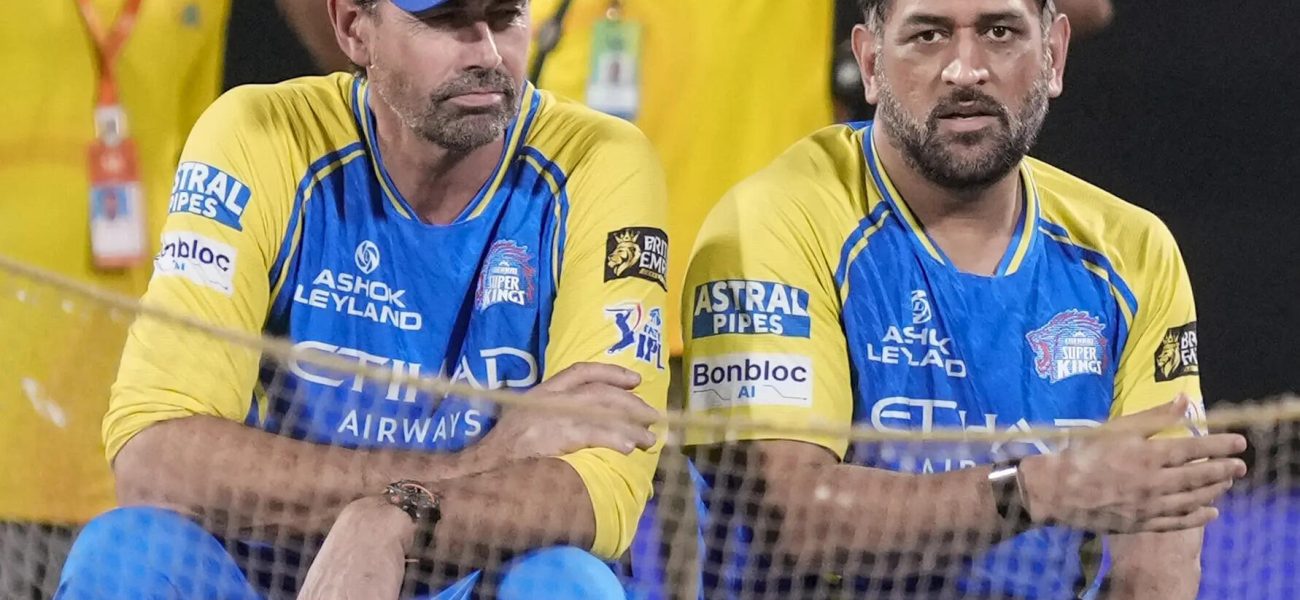
POLICY WIRE — Chennai, India — In the high-stakes theater of modern sports, truth isn’t always the prime directive. Sometimes, the show — the shimmering, profitable illusion — must go on. Even if it means suspending inconvenient realities, or, as one former India captain charges, outright deception. This year, the Indian Premier League’s glittering spectacle, specifically the campaign of the Chennai Super Kings (CSK), offered a masterclass in how powerful franchises orchestrate public perception, especially when managing the twilight of a legendary figure like Mahendra Singh Dhoni.
It wasn’t merely a cricketer’s injury that fueled the season’s disquiet. It was the strategic opacity surrounding it. Fans, glued to every utterance from the CSK camp, were led on a bewildering chase. “Before the season started,” a visibly agitated Krishnamachari Srikkanth, a former India captain and chief selector, lamented on his YouTube channel, “they said he has got a leg injury and that they’re hoping to have him soon.” And then? “Fleming also sang the same song, Ruturaj Gaikwad also sang the same: ‘He might be ready for the next match.’” The narrative wasn’t just misleading; it was a carefully curated drip-feed of false hope, sustained by pre-match videos showing Dhoni limping heroically through practice, just to tantalize the devoted.
But the ‘King’ never arrived. A calf injury morphed into a thigh strain. Team balance concerns somehow superseded initial medical prognoses. Dhoni, conspicuous by his absence from away fixtures, made only a ceremonial appearance at the final home game – a phantom in a parade. Even then, after the team’s ultimate failure, captain Ruturaj Gaikwad kept the speculative engine running, teasing broadcasters with a coy “You will know next year” when pressed about Dhoni’s future. It’s almost a cynical art form, really.
Srikkanth, blunt as ever, didn’t hold back. “Stop this deception. You should make it clear.” He emphasized that had the franchise been forthright from the get-go about Dhoni sitting out the entire season, the hyper-passionate fan base – not just in India, but across cricket-obsessed South Asia – would have absorbed the blow. But no. The management chose another path, perhaps believing the persistent glimmer of Dhoni’s return was essential for viewership numbers or maintaining the myth. This isn’t just about sports; it’s about the brutal calculus of muscle and markets, the monetized romance between icon and follower. [Read more on how athlete management echoes global stakes].
The entire debacle — because that’s what it was, a season-long PR misfire culminating in CSK’s third consecutive playoff miss — speaks volumes about information control in modern entertainment. The franchise banked on enduring loyalty. But there are limits. “Nobody is missing Dhoni,” Srikkanth observed, a cutting remark given Dhoni’s near-deity status. “Nobody is asking for Dhoni in the matches… The Dhoni era is over.” It’s a statement that would’ve been heresy mere years ago, now echoing the sentiment of many who feel patronized rather than indulged.
📄 POLICY WIRE WHITEPAPER PUBLISHED: PAKISTAN'S NATIONAL SECURITY POLICY PRIORITIES
👉 READ BY CLICKING HEREOf course, a different perspective emerges from the institutional side. A source close to the BCCI, who preferred not to be named discussing internal franchise dealings, suggested the predicament was a tightrope walk. “Managing expectations around a beloved figure like MS is incredibly complex. The intent was always to prioritize his health while maintaining a competitive spirit. It’s a balancing act that’s rarely perfect.” A nice, tidy bit of PR speak that skirts the very core of Srikkanth’s outrage.
The Indian Premier League is an economic behemoth, after all. Brand Finance estimated its brand value at an astronomical US$8.4 billion in 2023. Protecting those assets, including the aura of its biggest stars, becomes paramount. But at what ethical cost? The irony is sharp: fans are supposedly the lifeblood, yet their informed consent is treated as negotiable.
Because, as this season starkly demonstrated, even titans eventually recede. The fans, they’re ready for a transition, for clarity. They aren’t living in a perpetual hero-worshipping stupor, certainly not like a decade ago. Maybe this era’s generation, plugged into endless streams of information (and misinformation), demands a little more straight talk, even if it hurts. The era of veiled truths, it seems, is struggling to survive the age of instant, often brutal, public scrutiny.
What This Means
This IPL drama isn’t just about cricket; it’s a potent parable for managing public sentiment in an age where information, even deliberately scarce information, is a currency. Politically, leaders in volatile regions like Pakistan and elsewhere in South Asia often learn from such templates, utilizing ambiguity and aspirational rhetoric to maintain a hold on their fervent bases. Economic implications are stark: preserving brand equity often involves PR maneuvers that blur ethical lines, risking long-term trust for short-term gain. When public figures are commodified to this extent, the responsibility for transparent communication grows exponentially. Yet, the playbook remains: cultivate hope, delay definitive news, — and let the public fill the narrative gaps. But as CSK learned, a sustained campaign of ‘maybe’ can eventually erode goodwill, showing that even the most devout fanbases have their limits for deliberate obfuscation. Eventually, the bill for manufactured mystique comes due.