
The Golden Handcuffs: European Football’s Reckoning Amidst Desert Gold & Boardroom Coups
POLICY WIRE — Madrid, Spain — The beautiful game, as it’s often dubbed, isn’t just about what happens between the touchlines anymore. It’s a bruising arena where billions flow,...

POLICY WIRE — Madrid, Spain — The beautiful game, as it’s often dubbed, isn’t just about what happens between the touchlines anymore. It’s a bruising arena where billions flow, empires rise and fall, and legends aren’t just made on the pitch but in lavish private jets crisscrossing continents. This week, Europe’s gilded football aristocracy found itself—yet again—caught in a vortex of power struggles, aging maestros, and audacious financial gambits, a scenario that speaks volumes about the shifting plates of global capital.
Down in Madrid, the usually sedate corridors of Real Madrid’s corporate HQ are anything but quiet. It’s not about an upcoming transfer target (not directly, anyway); it’s about control. A brazen challenge has been mounted for the club’s presidency, throwing a wrench into the carefully manicured continuity. Enrique Riquelme, a name increasingly whispered in powerful circles, isn’t just looking for a seat at the table. He wants to tear it down and rebuild. “This isn’t just an election; it’s a referendum on whether Real Madrid wants to stay in the 20th century or dominate the 21st,” Riquelme told Policy Wire. “We need a paradigm shift, commercially and structurally, or we risk becoming a relic, however glorious our past.” It’s a generational struggle for the soul—and balance sheet—of arguably the world’s most recognized club.
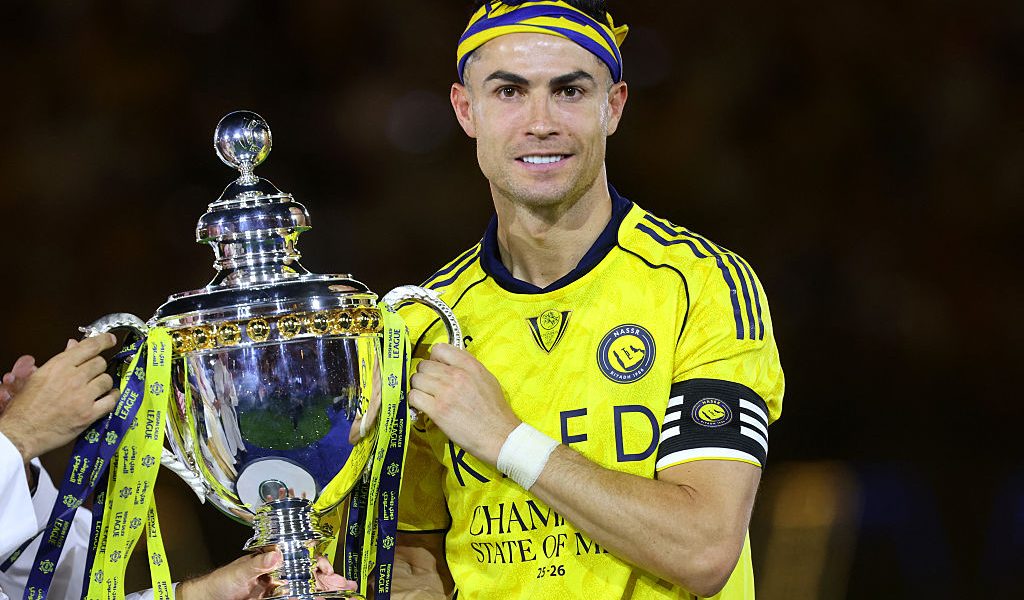
Meanwhile, across the Mediterranean, a different kind of drama unfolded, bathed in the desert sun and a torrent of petrodollars. Cristiano Ronaldo, at 41, didn’t just win a league title in Saudi Arabia; he cemented a burgeoning narrative that extends far beyond individual athletic prowess. His Al-Nassr triumph isn’t just another trophy; it’s a banner for the Kingdom’s broader, unapologetic push into global sports. For Ronaldo, it’s a golden, very lucrative, encore. But for Saudi Arabia, it’s a strategic play—a part of its Vision 2030, a soft power offensive that saw an estimated 80% increase in sports investment in the Gulf region over the past five years, according to data from Deloitte’s ‘Sports Business Group’.
And that’s where the global geopolitical chessboard gets messy. Ronaldo’s presence in the Kingdom, along with other high-profile signings, resonates deeply throughout the Muslim world and South Asia, a region boasting billions of football fans. Think about it: a player revered across continents, now showcasing the ambition — and rising stature of an Arab nation. It isn’t just about football, is it? It’s about optics, influence, — and alternative economic models post-oil. His move wasn’t merely a transfer; it was a grand statement.
But back in Europe, the financial pressures remain relentless. FC Barcelona, ever burdened by a mountain of debt, finds itself in an awkward hunt for a world-class No. 9 to replace Robert Lewandowski. Julian Alvarez, Joao Pedro, Harry Kane—the names are bandied about, each representing a different financial tightrope walk. It’s a desperate attempt to stay competitive while navigating a labyrinth of financial fair play rules and crippling historical spending. Because in this sport, reputation and performance are often directly proportional to the cash you can splash, no matter how much you claim to value heritage.
On the international front, Germany’s announcement of Manuel Neuer’s return to the World Cup squad at 40 adds another layer to this narrative of enduring legends. National team coach Julian Nagelsmann didn’t mince words about the grizzled goalkeeper’s re-inclusion: “You don’t just walk away from that kind of leadership. It’s not about age; it’s about having a general on the field who’s seen it all and done it all when the stakes are highest.” It signals a retreat to experience, perhaps a lack of faith in the youth system’s readiness, under intense tournament pressure.
📄 POLICY WIRE WHITEPAPER PUBLISHED: PAKISTAN'S NATIONAL SECURITY POLICY PRIORITIES
👉 READ BY CLICKING HEREAnd what about the fresh faces? Spain’s Ansu Fati, buoyed by strong domestic performances and a string of unfortunate injuries plaguing others, seems poised for a shot at glory in the 2026 World Cup squad. He’s the anti-Neuer, the vibrant future. It’s a gamble, no doubt, but sometimes you’ve got to throw the dice when talent announces itself this loudly. But the churn, the brutal demands—they grind everyone down eventually. For a stark parallel of similar sporting conundrums, one might look at how another young prodigy navigated the brutal realities of top-tier sports.
What This Means
These seemingly disparate headlines coalesce into a powerful economic — and political narrative. The Real Madrid boardroom squabble isn’t just about a club president; it’s a micro-drama reflecting larger questions of corporate governance, legacy preservation versus commercial innovation, and the battle for investor confidence in a hyper-globalized, celebrity-driven market. For FC Barcelona, their eternal search for a potent striker epitomizes the high-wire act many legacy institutions perform: desperately clinging to competitiveness without a clear, sustainable financial blueprint. Their struggles offer a sharp observation on how traditional models fracture under the weight of astronomical player salaries and the unforgiving gaze of European regulators.
Meanwhile, the Saudi Arabian spectacle with Ronaldo and others demonstrates the strategic weaponization of sport by nation-states—a ‘soft power’ play that bypasses traditional diplomacy to reach billions directly. It’s not just about football’s evolving landscape; it’s about an energy-rich region diversifying its assets and flexing its newfound geopolitical muscles on the global stage. These investments don’t just generate revenue; they buy influence — and reshape perceptions. The inclusion of veterans like Neuer, alongside the gamble on youth like Fati, also offers a microcosm of the global economy’s quandary: do you lean on battle-tested experience or embrace disruptive, yet unproven, innovation? In football, as in policy, the answer is rarely simple, often expensive, — and always scrutinized by a voracious public.