Cuba’s Gray Ghost: US Revives 1996 Shootdown Charges Against Raúl Castro, Decades Late
POLICY WIRE — Washington D.C. — They say justice grinds slow. But nearly three decades? That’s less grinding — and more calcifying, isn’t it? On Wednesday, federal prosecutors dusted off...

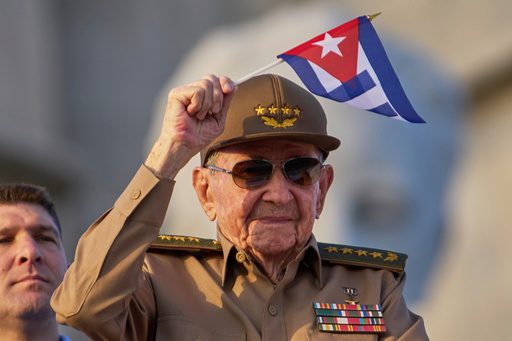
POLICY WIRE — Washington D.C. — They say justice grinds slow. But nearly three decades? That’s less grinding — and more calcifying, isn’t it? On Wednesday, federal prosecutors dusted off a cold case older than some of the bureaucrats handling it, announcing charges against Raúl Castro, the ancient patriarch of Cuba’s revolution, for his alleged role in the 1996 downing of two unarmed civilian planes.
It’s a bizarre tableau: a 94-year-old former leader, ostensibly retired but still very much pulling strings, now officially a wanted man in Uncle Sam’s eyes. This isn’t just about accountability for four lives lost back then. No, it’s a very loud, very public flex by the Trump administration—a pointed, geopolitical jab cloaked in the righteousness of belated justice.
For the families, like Marlene Alejandre-Triana, whose father Armando Alejandre Jr. was among the killed, this news registers differently. She’d been on this lonely crusade for what feels like forever. She spoke directly about how the charges felt, well, “long overdue.” One can only imagine the toll that takes, waiting almost 30 years for some acknowledgement. Because for them, it’s personal. For the Feds, it’s policy with teeth, — and a narrative.
Acting Attorney General Todd Blanche, sounding rather grim and determined in Miami, announced the indictment for murder and destruction of aircraft. “For nearly 30 years, the families of four murdered Americans have waited for justice,” Blanche intoned, adding that these were “unarmed civilians” on “humanitarian missions.” The immediate question, naturally, hovered in the air: So, what now? You’ve indicted a nonagenarian who probably hasn’t left Cuba in decades. “There was a warrant issued for his arrest,” Blanche countered, straight-faced. “So we expect that he will show up here, by his own will or by another way.” Right. Expect a man who hasn’t bowed to American pressure in sixty years to suddenly book a commercial flight to Miami.
Cuba’s response? Predictable, and rapid. Cuban President Miguel Díaz-Canel—the younger guard, but certainly not less defiant—wasted no time. He called the whole affair “a political action without any legal basis,” a calculated fiction cooked up by Washington. And frankly, who could disagree that politics drives this? He went on, via X, about “legitimate self-defense within its territorial waters,” alleging “repeated and dangerous violations of its airspace by notorious terrorists.” It’s the standard Cuban line, etched deep, reminding us all that both sides rarely agree on basic facts, let alone intent.
Let’s not forget the context: the planes, operated by the Miami-based Brothers to the Rescue, had, for months leading up to the February 24, 1996, incident, been buzzing Cuban airspace, dropping leaflets designed to stir up dissent. Havana, quite vociferously, complained to the U.S. about it. The FAA even had investigators leaning on the exiles to ground their flights. A telling email from a U.S. official in January 1996 warned of the “worst case scenario”—a Cuban shootdown. But those warnings? Unheeded. The cold, stark reality of that day: four men died, shot down by Russian-made MiG-29s, just north of Cuba’s internationally recognized airspace boundary.
This indictment feels less like a new legal action and more like an old grievance re-packaged for current political leverage. Former prosecutor Guy Lewis, who’d looked into these matters way back when, even tried to link senior Cuban officials to cocaine trafficking by the Medellin cartel—a rich history there. He knew that Raúl Castro, then Cuba’s defense minister, was deep in the mix. Back then, the Clinton administration ducked a high-profile indictment against Castro himself, concerned about diplomatic fallout. “Raúl was definitely one who slipped through the noose,” Lewis told a reporter years ago. So this latest move? It’s the tightening of a very, very old knot.
And because the wheels of government rarely turn without ulterior motives, it’s worth noting that President Donald Trump’s been on a Cuba tear for months now. This isn’t a standalone gesture. After effectively capturing Venezuela’s Nicolás Maduro (or so the White House boasts), the Trump playbook called for a chokehold on Cuba, leading to those brutal blackouts, empty shelves, and general misery on the island. Trump’s Secretary of State Marco Rubio, the son of Cuban immigrants, made his appeal in Spanish, practically calling for a popular uprising to demand a “free-market economy.” You’ve gotta wonder how much this indictment is a genuine quest for justice, and how much is just another brick in the wall of their ‘regime change’ ambitions.
What This Means
This sudden revival of old charges against Raúl Castro isn’t some spontaneous legal revelation; it’s a meticulously timed, brazen political play. It signals a ramping up of pressure on Havana, pure — and simple. The Trump administration is pulling out all the stops, weaponizing America’s legal machinery to push Cuba further into isolation. For one, it provides additional ammunition for sanctions — and travel restrictions. And it throws a huge wrench into any future, more diplomatic engagement between the two nations, effectively poisoning the well for any incoming administration that might favor a different tack. It also gives fodder to critics in places like Pakistan or Egypt, where the long arm of U.S. law, often perceived as selective, is viewed with suspicion. They’ve seen how often political objectives and legal maneuvers blur into one. Here, a mere four individuals lost their lives, the cost of justice sometimes astronomical, even decades later. But its strategic utility is unquestionable for those who wish to corner the Cuban leadership.
Economically, this moves sends a chill through any entity—government or private—considering trade or investment with Cuba. It’s an implicit threat: align with Havana, — and you might just find yourself on Washington’s bad side. Politically, it energizes the anti-Castro Cuban-American lobby in Florida, a state perpetually hanging in the balance come election season. But it doesn’t change the facts on the ground in Cuba, where Castro, even as a phantom leader, still exerts considerable influence, pulling strings through loyalists like his grandson. Expect continued defiance from Havana. They won’t hand him over. This is about message sending, not capture.