


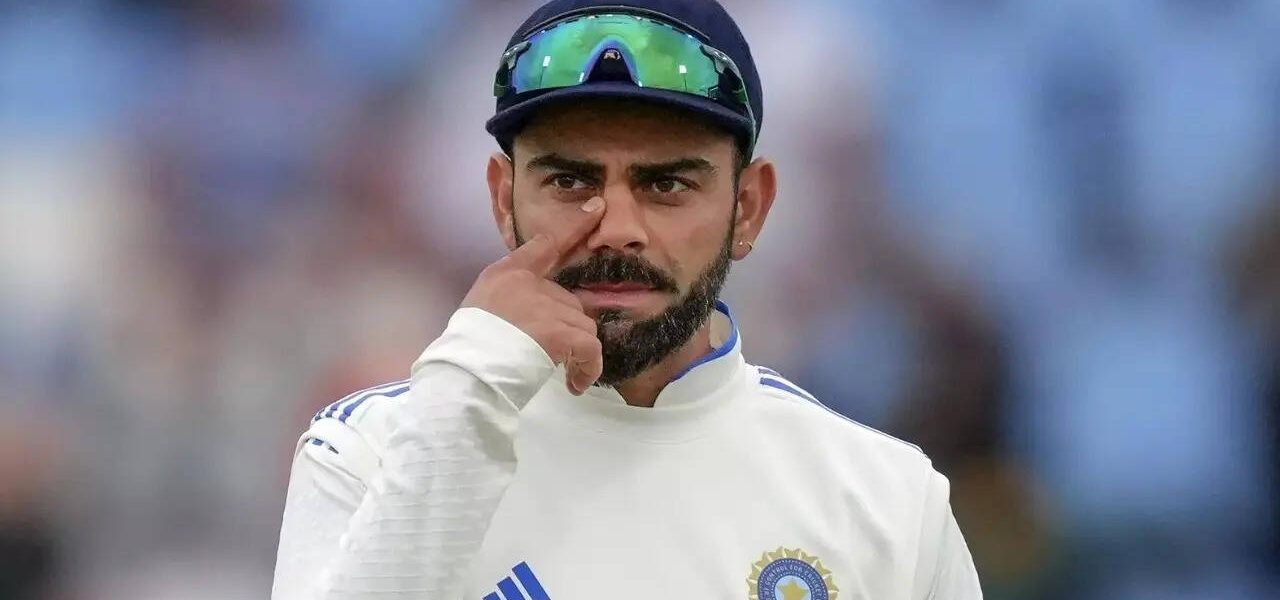
The Captain’s Cage: Cricket’s Demands Grind Down India’s Uncrowned King
POLICY WIRE — New Delhi, India — The stadium roar, they say, fuels the modern athlete. But for former India captain Virat Kohli, it appears that very cacophony became an insidious grind. It...

POLICY WIRE — New Delhi, India — The stadium roar, they say, fuels the modern athlete. But for former India captain Virat Kohli, it appears that very cacophony became an insidious grind. It wasn’t the opposition or the dizzying expectation of a billion fans that nearly broke him; it was the chilling, inescapable spotlight from his own team’s success—and his individual shortcomings. A peculiar bind, don’t you think? That to win meant facing fresh queries about your personal output, while failure despite personal brilliance would send the media hounds baying about the team’s abysmal run.
Kohli, for years the incandescent core of Indian cricket, recently pulled back the curtain on the crushing psychological burden he carried while leading the national side. It wasn’t just the sheer number of matches, mind you, or the relentless travel. It was the perpetual balancing act: master strategist, formidable batsman, stoic leader. If you win but don’t score runs, they grill you on performance,
he explained. And if you score, but don’t win, the results become the whip. You’re always in that vice.
That kind of psychological entanglement, a relentless duality, would wear down anyone.
He was, in his own words, completely spent
when he finally shed the captain’s mantle between 2021 — and 2022. Like a well-drilled machine that’s simply run out of steam, no spare parts in sight. You give everything for the cause—every ounce of talent, every sliver of mental fortitude—only to discover you’ve sacrificed yourself at the altar of performance. The absurdity of scrutiny, it seems, isn’t just for coaches.
This isn’t just about one man’s career, exceptional as it may be. It’s about a culture. A regional obsession. The pressure heaped upon cricketers across South Asia—from Lahore to Mumbai—is arguably unparalleled in global sports. They aren’t just players; they’re cultural envoys, economic engines, sometimes even inadvertent political symbols. And that’s heavy.
Brijesh Patel, a former cricketer and high-ranking official within the Board of Control for Cricket in India (BCCI) during Kohli’s tenure, perhaps inadvertently summed up the institution’s view. Our captains understand the responsibility
, he’s often noted. The nation looks to them not just for victory, but for inspiration. It’s a role not everyone can manage for long.
A statement both supportive and subtly telling about the sheer scale of the job, wouldn’t you say? Almost a caveat for the faint-hearted.
And then there’s the statistical marvel that was Kohli’s reign. As per official cricketing statistics, he remains India’s most successful Test captain, boasting an impressive 40 wins in 68 matches. But even that monumental success didn’t immunize him from the cyclical demand for more, for better, for perfect. He slumped, his batting average plummeting to 28.21 in 2021 — and 26.5 in 2022. It felt like a human system overload, a digital crash in analogue form. That’s why his eventual rebound to an average of 55.91 in 2023, after shedding the captaincy, speaks volumes about the liberation he found, the ability to simply hit a ball again, rather than carry a country.
Because the relentless pressure—that unique, fervent scrutiny applied to cricketers in India, or Pakistan for that matter—it doesn’t just evaporate. You see it play out similarly with captains and star players from Karachi to Colombo, who become larger-than-life figures burdened by nationalistic aspirations and relentless media cycles. Their personal lives, their form, their every gesture are dissected on a granular, sometimes unforgiving, public stage.
Kohli did, however, find allies. Former India head coach Rahul Dravid — and batting coach Vikram Rathour stepped in when he was at his nadir. He just needed to know someone had his back, understood the mental drain
, Dravid once commented on the general nature of elite sport, though often applied to Kohli’s situation. That support, a real empathy, can often revive a player more than any technical advice.
It’s an important insight—that even a sporting colossus needs someone to talk to, a mental pit crew for a damaged racing machine.
What This Means
Kohli’s candid admission isn’t just another sports headline; it’s a policy blip. The revelation should—but probably won’t—prompt deeper reflection within national cricketing boards across South Asia regarding player welfare. For too long, the ‘strong man’ image of the captain has overridden any real systemic checks for burnout. Economically, this relentless pressure machine is a double-edged sword: it generates astronomical revenues from fan engagement, but it also risks shortening careers and alienating talent struggling under immense emotional load. The economic sustainability of top-tier cricket, particularly in market-driven nations like India, relies on its stars. And if those stars keep burning out, well, you don’t need a degree in economics to see the eventual problem. the unspoken narrative here, common in many high-pressure professions across the region—politics, business, and yes, sports—is that showing any vulnerability is a weakness. This creates an echo chamber where ‘grit’ is confused with unhealthy endurance, where the system grinds individuals until nothing’s left. It’s a costly oversight, one that society eventually pays for in both human and, ultimately, economic terms. Maybe someone should start tallying those numbers, too.