


Portugal’s Digital Gambit: As Ronaldo Fades, The Data Game Takes Center Stage
POLICY WIRE — Lisbon, Portugal — The digital tentacles, it seems, spare no one. Not even the beautiful game. While the world fixes its gaze on the fading brilliance of sporting titans—and we’ve...

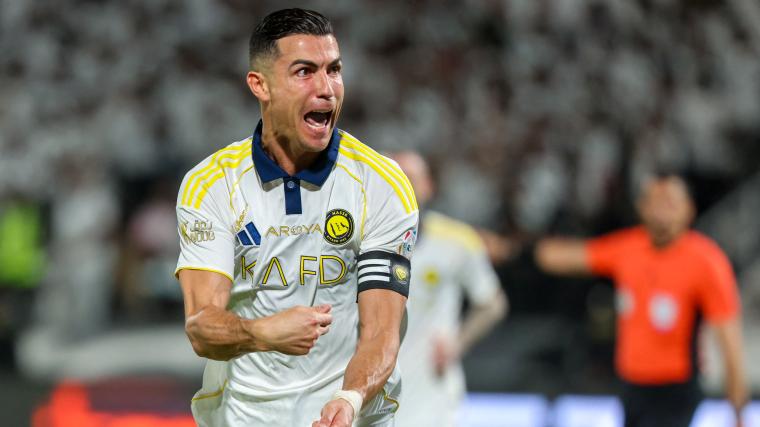
POLICY WIRE — Lisbon, Portugal — The digital tentacles, it seems, spare no one. Not even the beautiful game. While the world fixes its gaze on the fading brilliance of sporting titans—and we’ve got one right here in Cristiano Ronaldo, still kicking around at what seems like perpetually 30—the real strategic play is happening not on the pitch, but in the server farms and analytics suites. It’s a dry, cold truth: modern football, like modern geopolitics, runs on data, not just flair. And Portugal, for all its storied legacy of individual genius, is leaning hard into that uncomfortable reality.
No longer is it simply about a winger’s deft footwork or a striker’s clinical finish. Now, it’s about how that footwork was analyzed in 3D after practice, or the granular breakdown of decision-making under simulated pressure. The Portuguese national team, as if shrugging off a last vestige of romanticism, just formalized a partnership with TORRAS, a consumer tech firm pushing athlete performance analytics. This isn’t just some cozy branding exercise—it’s a declaration. Because even with a generationally talented squad eyeing the 2026 World Cup, they’re signaling that raw talent, by itself, won’t cut it anymore.
It’s an odd juxtaposition, isn’t it? The living legend, Ronaldo, often criticized for his lack of defensive graft in later years, now symbolically chaperoning an era where every minute movement is logged, quantified, and critiqued. He’s reportedly approaching what could be his final global tournament as a player, and the system around him is quietly transforming. It’s not a celebration of athleticism anymore; it’s an optimization strategy. Players like him might provide the narrative, but the algorithms are writing the tactics.
Roberto Martínez, the national team’s pragmatic coach, didn’t mince words when pressed on the shift. “In modern football, if you’re not dissecting every millisecond of performance, you’re already behind,” he stated matter-of-factly, his voice echoing a sort of weary acceptance of the inevitable. “This partnership—it’s essential, not an accessory. We can’t afford to guess anymore.” Indeed, the margins at the sport’s pinnacle are so vanishingly thin, the difference between glory and ignominy often boils down to fractions of an inch, microseconds of reaction time. The global sports technology market, to put things into perspective, is projected to hit an estimated $41.8 billion by 2027, according to a report by Research and Markets. Portugal isn’t just buying gadgets; it’s buying a slice of that future, — and perhaps, a few more championship banners.
But there’s a quiet disquiet, too. Fernando Gomes, President of the Portuguese Football Federation (FPF), perhaps feeling the pressure to frame this as more than just a cold transaction, offered a rosier spin. “This isn’t just about winning games; it’s about cementing our position as a forward-thinking sporting nation. The investment pays dividends far beyond the pitch, inspiring innovation.” He’s talking about national pride, but you can hear the faint jingle of marketing dollars behind the rhetoric. And let’s be frank, that’s just the reality. Football isn’t just a game; it’s an industry. A high-stakes one.
And then there’s the broader landscape, the geopolitical fault lines even within global sport. While affluent European federations—and Portugal certainly counts itself among them these days—splurge on bespoke tech, aspiring football nations in regions like South Asia often grapple with foundational issues. Take Pakistan, for instance, a nation passionate about cricket but perennially struggling to find its footing in international football. They’re facing perennial issues: inadequate grassroots funding, dilapidated infrastructure, chronic underinvestment in basic training, never mind advanced AI coaching aids. Their talent often goes unrefined, trapped by systemic neglect. So, while Portugal meticulously analyzes Ronaldo’s every breath, the dream of sophisticated data analysis for players in Peshawar or Lahore remains a distant, almost absurd, fantasy. It’s a chasm, not just a gap, between the global North — and South, amplified by the relentless march of sports science.
What This Means
This tech foray by Portugal marks a deeper philosophical shift in elite sport. It signifies the complete commodification of athletic performance, where every single data point from a player’s movement, fatigue levels, and decision-making becomes proprietary information—a competitive asset. Politically, this investment underscores a nation’s commitment to projecting an image of modernity and cutting-edge competitiveness on the global stage. It says, ‘We’re not just good at football; we’re good at everything that makes football successful.’ Economically, it funnels more money into the ever-expanding sports tech sector, creating new jobs and opportunities, but also exacerbating the already significant disparity between football’s elite and its developing nations. Those who can afford the most sophisticated systems gain an inherent, almost unfair, advantage. The consequence? A potentially even more stratified global game, where technological prowess, not just raw talent or national passion, becomes a prerequisite for success. It’s an absurdity of scrutiny, really, making the old debate about coach loyalty seem almost quaint. This isn’t just about winning a trophy; it’s about the future shape of football itself, increasingly carved by algorithms and data sets. And for nations outside the established order, like Pakistan striving to catch up, the entry barrier just got astronomically higher. We’re moving towards a game of cyborgs, almost, where human instinct is augmented, or perhaps even eclipsed, by predictive analytics.