


Concrete Artery Chokes: Albuquerque’s I-25 Grind Exposed by Rollover Chaos
POLICY WIRE — Albuquerque, NM — The sun wasn’t even properly settled above the rugged New Mexico horizon when the day’s carefully constructed rhythm dissolved into metallic chaos. Not...

POLICY WIRE — Albuquerque, NM — The sun wasn’t even properly settled above the rugged New Mexico horizon when the day’s carefully constructed rhythm dissolved into metallic chaos. Not with a bang, exactly, but with the groan of thousands of engines grinding to a halt. It wasn’t an act of God, or some intricate cybersecurity plot – just another Tuesday morning in America, until it wasn’t. Southbound Interstate 25, the very lifeblood of Albuquerque’s daily hustle, simply… stopped. Collapsed, effectively, under the weight of one single, unlucky vehicle.
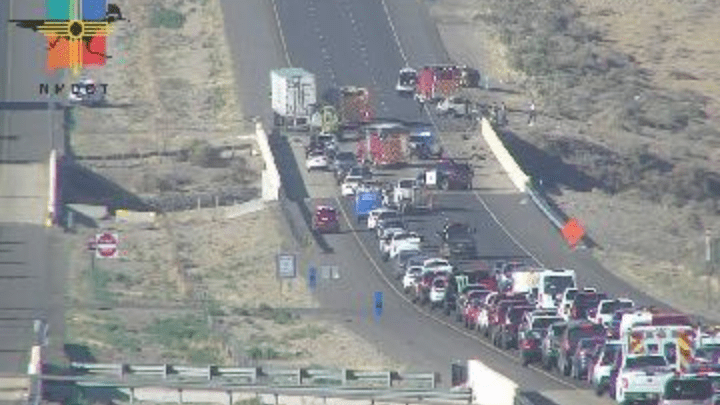
Reports trickling in from the New Mexico Department of Transportation (NMDOT) painted a picture both stark and frustratingly familiar: a rollover. Mile marker 219, south of Rio Bravo Boulevard, utterly impassable. For untold thousands, that stretch of highway isn’t just pavement; it’s the fragile tether between home and livelihood, school runs and emergency rooms. But suddenly, it was a parking lot. A scene out of some dystopian road-rage movie, only real. Very, very real.
Because for anyone trying to navigate modern urban sprawl, the calculus is unforgiving. One overturned sedan, one missed turn, one drowsy driver – that’s all it takes. Radio channels buzzed with frantic updates, dispatchers trying to unpick the spaghetti junction of redirected traffic, while photographs plastered across local news sites showed wreckage, scattered debris, and the eerie, impotent queue of vehicles stretching back into the haze.
“It’s a brutal reality of our sprawling infrastructure,” states Ramona Sanchez, a seasoned spokesperson for the New Mexico Department of Transportation, her voice etched with an exhaustion familiar to anyone battling concrete arteries. “One incident, just one, can bring tens of thousands of lives to a dead stop. We’re talking millions in lost productivity, let alone the environmental hit from idling engines.” She isn’t just quoting figures; she’s describing the daily attritional warfare waged against entropy, always on the losing side, it seems. And they don’t even need another crisis on their hands, not with how thin resources are already stretched.
This isn’t just about missed appointments, you know? It’s about supply chains for local businesses getting frayed. It’s about parents late picking up kids. Or worse, emergency services struggling through the gridlock. The entire economic heartbeat of a metropolitan area, reduced to a sputtering cough by an instant of misfortune. It underscores a brittle fragility most of us simply don’t consider until it smacks us right in the face. But when it does, it’s a rude awakening.
“People depend on this artery for everything—getting to work, school, vital appointments,” said Albuquerque City Councilor Mark Evans, who represents a district near the affected area, his exasperation clear even over the phone. “But funding for necessary upgrades — and expansion? It’s always a bare-bones debate, year after year. We’re patching gaping wounds with Band-Aids, and the public’s paying the price, one stalled commute at a time.” He paused, probably picturing the nightmare unfolding outside his window. It’s the sort of issue that truly hits home, literally — and figuratively.
And let’s be frank: this particular incident, while disruptive, is barely a blip on the radar for many parts of the world. While New Mexico struggles with an incident on I-25, countries like Pakistan grapple with infrastructure that often feels like it’s perpetually under siege. Karachi, for instance, a metropolis of over 16 million people, routinely experiences traffic bottlenecks that make Albuquerque’s rush hour look like a leisurely stroll through a park. They’ve got their own struggles, but the systemic causes? Sometimes they’re shockingly similar.
A 2023 report by the American Road & Transportation Builders Association (ARTBA) found that approximately 7% of U.S. bridges – over 43,000 structures – are considered “structurally deficient.” It’s not just a statistic; it’s an indictment, a flashing red light for the kind of daily vulnerability that I-25 experienced.
What This Means
This I-25 choke point isn’t an isolated freak incident; it’s a stark, public referendum on modern infrastructure. Economically, the daily paralysis of I-25 translates directly into tangible losses. We’re talking fuel waste, deferred commerce, late deliveries, and a significant dent in regional productivity – cumulatively costing millions. Imagine how that scales up to a country’s GDP when these aren’t just isolated incidents but routine occurrences, as is often the case in developing economies across South Asia, where inadequate roads and congested urban centers can act as perpetual brakes on economic growth. In places like Lahore or Dhaka, a multi-hour traffic jam isn’t a headline; it’s a way of life, draining untold wealth and human potential.
Politically, incidents like these are the gritty, unglamorous underbelly of governance. They’re not shiny ribbon-cutting ceremonies; they’re grim reminders of underinvestment and deferred maintenance, usually glossed over until a public outcry forces attention. For lawmakers in New Mexico, or anywhere else for that matter, dealing with an angry, gridlocked populace means facing the uncomfortable truth about infrastructure budgets, urban planning shortcomings, and the agonizing slowness of any real, lasting fixes. They’ve got to sell the idea of investment in the mundane, which is a harder sell than some flashy new public amenity. But this incident just proved, again, that neglecting the mundane makes the spectacular go awry with terrifying regularity.