


Arava’s Ancient Threads Weave a Silk Road Story in Digital Debut
POLICY WIRE — Tel Aviv, Israel — It’s often the small, dusty things that tell the biggest stories, isn’t it? While the Middle East remains a crucible of geopolitical tension,...

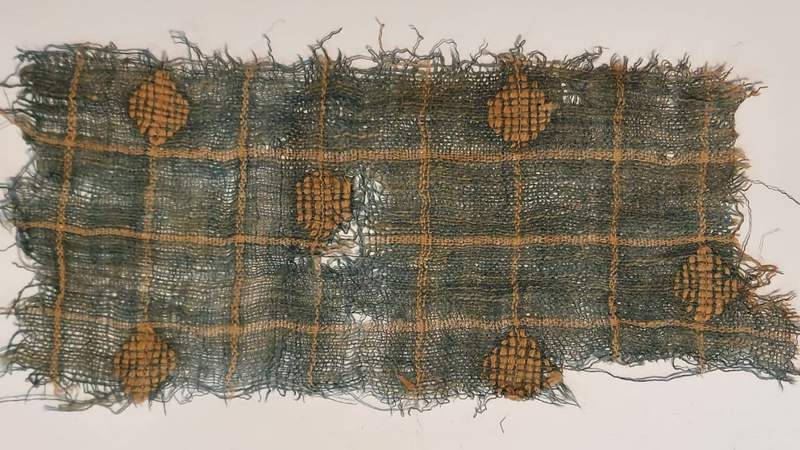
POLICY WIRE — Tel Aviv, Israel — It’s often the small, dusty things that tell the biggest stories, isn’t it? While the Middle East remains a crucible of geopolitical tension, an online museum—of all places—has quietly unfurled an exhibition that challenges easy narratives. The Silk Road Virtual Museum recently opened its digital doors to a collection of millennia-old textiles discovered in Israel’s Arava desert, remnants of a globalized past far more complex than any modern headline suggests.
No grand diplomatic overtures here, just cotton — and linen. But these fragments, salvaged from some arid Nabataean or Roman outpost, whisper of caravans, trade, and cultural cross-pollination. They’re not just old rags; they’re tiny ambassadors from a bygone era, speaking to a Silk Road network that stitched together the Mediterranean with distant China and, crucially, a good chunk of what we now call the Muslim world—including regions now part of Pakistan and Central Asia. They demonstrate a seamlessness in commerce that current borders can only dream of.
The collection itself is a silent marvel. Think about it: ordinary people, thousands of years ago, wrapped themselves in these fabrics. And they weren’t making local duds. Nope. Evidence suggests some materials came from as far as India, with dyes perhaps sourced from even more exotic locales. It’s a humbling thought, how our ancestors navigated supply chains many millennia before terms like ‘globalization’ or ‘just-in-time delivery’ ever crossed anyone’s mind. Carbon dating places some of these particular scraps firmly in the Nabataean period, roughly 2,000 years ago, giving a stark timeline to their enduring journey.
“These weren’t isolated communities, believe me,” explained Dr. Ilana Goldstein, head curator for the virtual exhibit — and a senior archaeologist with the Israel Antiquities Authority. Her voice, usually measured, carried a hint of fascination. “They were connected, intimately, through goods — and ideas. These textiles aren’t just proof; they’re physical manifestations of that ancient intercontinental dialogue. It’s hard for some to grasp, but history doesn’t conform to our current maps.” And she’s right, of course.
But the move to a ‘virtual’ museum isn’t just about accessibility; it’s a canny geopolitical play, whether intentional or not. It’s about reaching audiences who might never set foot in an Israeli physical museum. The online format sidesteps visa restrictions, political animosities, and the practical challenges of exhibiting delicate ancient materials in far-flung locales. It opens up these artifacts to, say, a curious historian in Karachi, or a textile student in Uzbekistan, offering a digital bridge where others have burned. The internet—sometimes it actually builds connections instead of tearing them down.
“We’ve always maintained that cultural heritage belongs to humanity, not just to its modern custodians,” stated Mr. Jamal Al-Din, Director of Outreach for the Silk Road Virtual Museum. He wasn’t wrong. “Digitizing these treasures isn’t a novelty; it’s an imperative for shared understanding. We’re putting ancient trade routes back on the global itinerary, without needing a single passport.”
It’s a peculiar kind of diplomacy, conducted not through state dinners or backroom deals, but through threads from the earth. And honestly, it’s probably more durable. The virtual showcase, developed with a surprisingly meager budget—roughly 40,000 USD according to the museum’s last annual report—demonstrates that big impact doesn’t always demand big money.
What This Means
This digital foray by the Silk Road Virtual Museum—with its decidedly apolitical exhibits featuring artifacts from one of the world’s most politically charged regions—serves as more than just a historical archive. It’s a subtle yet potent cultural intervention. By highlighting shared commercial histories and artistic exchanges across vast geographies, it implicitly argues against isolationism and the weaponization of heritage. Economically, while this particular initiative isn’t going to shift global markets, its method offers a template for how cultural institutions, even those on shoestring budgets, can engage international audiences and cultivate soft power.
The implications are broader, though. Consider how often historical narratives are manipulated for contemporary political gain. An exhibition like this—stark, factual, almost clinical in its presentation of ancient connections—pushes back. It reminds us that cultures have always mingled, traded, and influenced each other, regardless of modern borders or religious divides. This isn’t about rewriting history for modern sensibilities; it’s about revealing a forgotten chapter where a flourishing network connected continents, demonstrating a universal appetite for commerce and cultural goods. Such ventures, small as they might seem, lay groundwork for different dialogues, perhaps fostering an appreciation for collective historical endeavors over present-day squabbles. Or, at least, that’s the hope.