


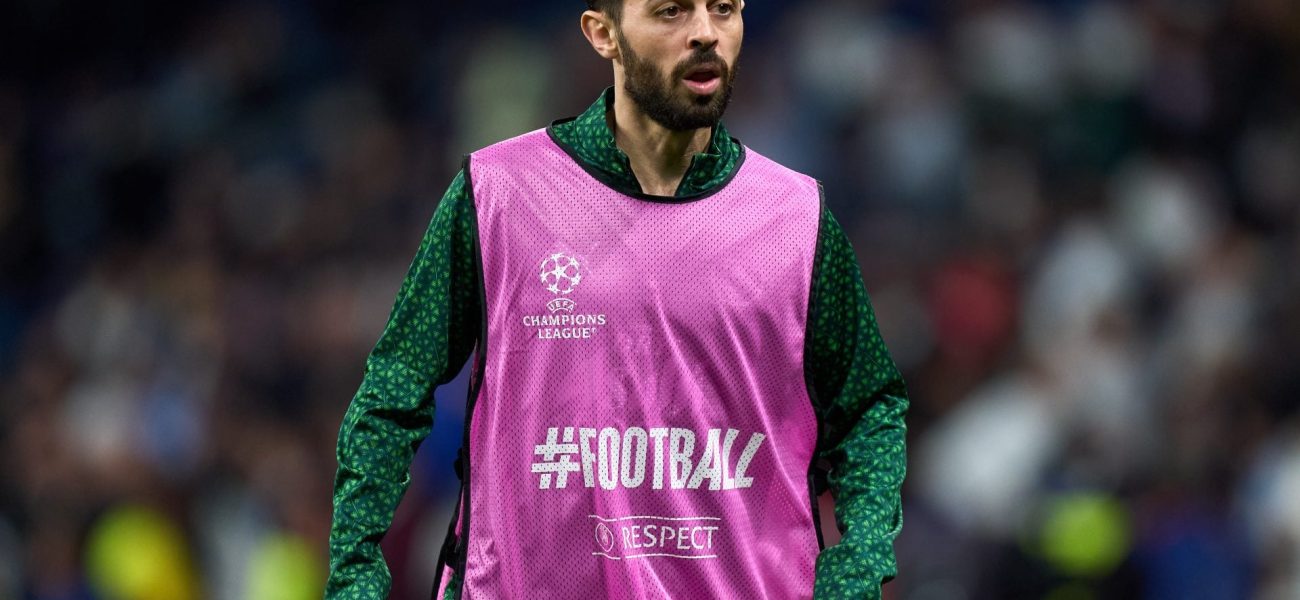
Europe’s Grand Football Saga: A Portuguese Maestro’s Barcelona ‘Dream’ Confronts Stark Fiscal Realities
POLICY WIRE — London, UK — Call it a footballer’s grand tour, or perhaps a meticulously orchestrated business maneuver. Either way, the perennial saga of Bernardo Silva, Manchester City’s cerebral...

POLICY WIRE — London, UK — Call it a footballer’s grand tour, or perhaps a meticulously orchestrated business maneuver. Either way, the perennial saga of Bernardo Silva, Manchester City’s cerebral midfielder, and his much-touted hankering for FC Barcelona isn’t just a sport headline. It’s a prime cut of high finance intersecting with deeply personal ambition, played out on the global stage. It shows us where money actually lives in modern sports.
See, the story isn’t just about a star player chasing sunshine. It’s a compelling look at the intricate dance between player power, agent influence, and clubs wrestling with balance sheets that, frankly, make national budgets look simple. Everyone’s talking about where Silva lands, but few dig into the sheer industrial effort — and hard cash — it takes to shift a top-tier athlete in today’s market. And make no mistake, it’s a market now, not just a game.
Silva, the kind of midfielder who thinks two passes ahead, has made his intentions less-than-subtly clear. His family’s comfort—a driving factor, he insists—is front and center. “I am looking for a team where I can continue competing, where I can play at the highest level, which is what I still want to do, and where my family is happy,” he stated recently. But isn’t every athlete? The wrinkle here? He’s basically pointed his finger at Catalonia without actually saying it. Barcelona, bless its storied history, remains an enduring magnet for Europe’s elite. Even for someone who’s won, well, everything in England.
But the Catalan giants aren’t exactly swimming in liquidity these days. Barcelona, still recovering from previous financial indiscretions, reportedly faces a transfer budget tighter than a new pair of football boots. This fiscal reality is where Silva’s dream hits the asphalt. Because even if a player is ostensibly a ‘free agent’ from the perspective of a transfer fee, their wages represent a titanic annual commitment. Jorge Mendes, Silva’s legendary agent, isn’t known for doing charity work. He sees value, pure and simple. “Bernardo’s talent isn’t a commodity; it’s a legacy,” Mendes reportedly confided to associates this week. “Any club that gets him isn’t just acquiring a player, they’re investing in an immediate future of championships. We’re talking value, not just wages. That’s the conversation we’re having.”
This situation — a top-tier talent desiring a move to a financially constrained club — encapsulates much of the contemporary football landscape. It’s less about loyalty these days, more about leverage — and spreadsheets. The global appeal of these European leagues, especially in emerging markets, keeps the money taps open, but even those have limits. According to KPMG’s Football Benchmark, average club revenues across the top five European leagues surpassed €4 billion for the first time in 2023, primarily driven by commercial growth and broadcast deals. That’s a lot of dough, but it also reflects stratospheric operating costs, especially player salaries. Silva’s expected salary package, if not covered by a clever exit from Manchester City’s books, could throw Barcelona’s budget into a tailspin.
The murmurs from Turin suggest Juventus are positioning themselves aggressively. They might not offer the same romantic allure as Barca, but sometimes, a fiscally pragmatic club gets the star. It’s not a fairy tale; it’s a negotiation.
📄 POLICY WIRE WHITEPAPER PUBLISHED: PAKISTAN'S NATIONAL SECURITY POLICY PRIORITIES
👉 READ BY CLICKING HEREWhat This Means
The Bernardo Silva saga, like so many high-profile transfers, is a microcosm of greater economic forces. It highlights the increasingly intertwined nature of global capital, talent migration, — and brand power. When a club like Barcelona, steeped in tradition and fan fervor, struggles to acquire a player whose preference is clear, it signals a recalibration of power. It’s no longer just about who can field the best team on Saturday, but who has the healthiest balance sheet on Tuesday. The sporting dream, even for an established pro, often gives way to hard-nosed financial calculus. Players like Silva, icons in their own right, also become human capital, assets to be traded, managed, and optimized for maximum return. It’s why clubs are scouring non-traditional markets like Asia—think Saudi Pro League’s rapid ascendancy—for revenue and fan engagement. Countries like Pakistan, with its enormous youth demographic and burgeoning interest in global football, represent a fertile, albeit often untapped, market for brand expansion and future revenue. But capturing that interest requires investment and shrewd economic strategy, reflecting precisely the sort of business machinations playing out with Silva’s fate. It’s not just a game anymore; it’s a global industry, with stakes far beyond the final score. And sometimes, even the most poetic ambitions have to bend to market reality.
This entire process, watching a player with an established track record weigh options, is becoming a template. You’ve got agents, lawyers, club executives, financial analysts—all playing a part. But ultimately, for the fan, it still comes down to what happens on the pitch. Though the journey there’s increasingly complex. Just look at the millions — and millions being discussed for players who don’t even command a transfer fee. It’s wild.