


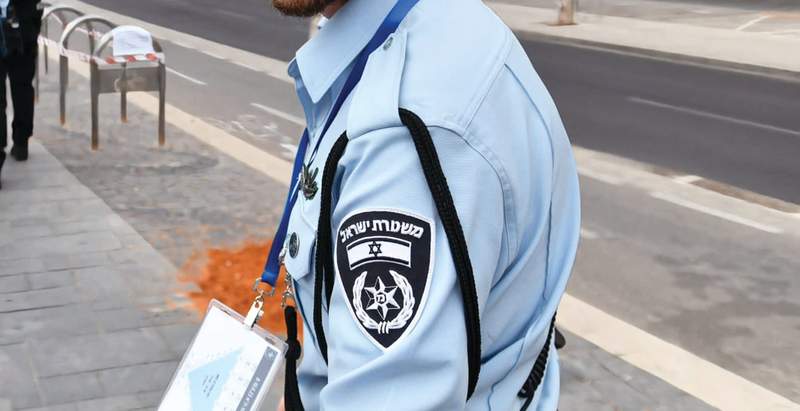
Shadow Economy: How Criminal Syndicates Are Corroding Israel’s Core Infrastructure
POLICY WIRE — Tel Aviv, Israel — It’s not the grand political skirmishes dominating the nightly news that are truly gnawing at Israel’s foundations. Nope. Instead, it’s the methodical,...

POLICY WIRE — Tel Aviv, Israel — It’s not the grand political skirmishes dominating the nightly news that are truly gnawing at Israel’s foundations. Nope. Instead, it’s the methodical, almost mundane creep of criminal networks, primarily rooted in the Negev desert and Galilee region, now exerting a choking grip on the nation’s economic arteries and public infrastructure. This isn’t just about drugs or petty theft; it’s about state functions—energy, transport, housing—being systematically hijacked from the shadows, making everyone a quiet victim.
For too long, authorities dismissed it as a localized policing challenge. A few extra patrols here, an arrest there. But the scale of infiltration? It’s astonishing. These outfits have morphed from street gangs into sophisticated, almost corporate entities. They’ve figured out how to extract massive profit by exploiting vulnerabilities in Israel’s rapidly expanding economy and—here’s the kicker—its democratic oversight. We’re talking protection rackets, illegal sand and quarrying operations, vast illicit construction projects, and outright theft of state-owned land, often with what some insiders call a disturbing level of passive acquiescence from official quarters.
And this slow bleed isn’t confined to Israel’s borders; governments across the Middle East and South Asia—from Karachi to Cairo—grapple with their own hydra-headed criminal enterprises eating away at state legitimacy and development. Pakistan, for instance, struggles mightily with illegal land grabs and extortion in its urban centers, echoes of similar dynamics, but perhaps with even greater corrosive effect on public trust. Because, you see, the erosion of state monopoly on force and regulation makes fertile ground for radical elements, creating instability across the entire regional security landscape.
“We’re fighting a shadow war for the very integrity of the state,” declared Israeli Public Security Minister Avi Ben-Shabbat during a recent, uncharacteristically frank Knesset committee hearing. “These aren’t just lawbreakers; they’re an economic cancer that drains billions, diverts resources, and fundamentally challenges our sovereignty in significant areas of the country. We can’t simply arrest our way out of this anymore; we must dismantle the financial infrastructure feeding these groups.” His words, usually steeped in political rhetoric, carried a raw edge—a hint of the exasperation permeating even the highest levels.
But the numbers are stark. According to a recent IMF report, illicit financial flows and shadow economic activities, common in countries facing significant internal criminal organizations, can siphon off up to 10% of a nation’s GDP. Imagine that: a tenth of Israel’s national output, gone, just vanished into thin air, fattening criminal coffers and starving public services. It’s a staggering sum that could otherwise fund schools, hospitals, or critical infrastructure upgrades.
The brazenness of these networks extends to things as basic as electrical grids — and water pipes. Farmers in the Negev have complained for years about irrigation systems being tampered with or even stolen. Construction sites find themselves paying ‘protection’ or facing arson. Even internet cables—fiber optics that power the Start-Up Nation—are vulnerable. It’s a systematic effort to privatize public services for private, criminal gain, pushing up costs for ordinary citizens and making legitimate business near impossible in certain locales.
📄 POLICY WIRE WHITEPAPER PUBLISHED: PAKISTAN'S NATIONAL SECURITY POLICY PRIORITIES
👉 READ BY CLICKING HERE“We’re seeing capital flight, diminished foreign investment confidence in impacted areas, and a serious degradation of rule of law,” explained Dr. Ilana Goldstein, a senior economist at the Herzliya Institute for Policy. “When the basic promise of the state—that it can protect property and ensure fair commerce—erodes, you create an environment where the honest suffer, and the crooked thrive. It’s a massive drag on productivity and an incentive for younger generations to leave, exacerbating an already fragile talent drain in periphery regions.” And that’s precisely what you’re seeing in many marginalized communities across the country, where young people face a choice between meagre legal work or lucrative, dangerous, and often destructive illicit trades.
The scale of the problem implies a deeper institutional paralysis, not just a lack of manpower. There’s bureaucratic inertia, maybe some local corruption, and certainly a broader societal reluctance to confront an issue perceived by some as politically sensitive. But the chickens, as they say, are coming home to roost. Because unchecked criminal expansion, no matter how politically uncomfortable to discuss, inevitably becomes a national security concern.
What This Means
This escalating threat from organized crime groups isn’t simply a matter for law enforcement; it’s a strategic national challenge for Israel. Politically, it undermines governmental authority, creates an urgent need for reforms within enforcement agencies, and presents a formidable test for the country’s social fabric, especially impacting marginalized communities often exploited by these syndicates. Economically, the rampant theft, extortion, and illicit trade distort markets, deter legitimate investment, and starve the public coffers of billions in potential revenue, slowing national development. This requires not just police action, but robust legislative intervention and a concerted cross-agency effort to rebuild trust and reassert state control.
Internationally, Israel’s struggle mirrors those of other nations grappling with similar criminal enterprises. The perception of an increasingly compromised internal security situation could complicate its regional standing and influence, even affecting strategic alliances. For neighbors, especially Muslim-majority nations in the broader region that are also battling their own internal criminal structures—some linked to terrorist financing or trafficking—Israel’s experience could offer insights, positive or negative, into effective countermeasures, or a stark warning of the consequences of inaction. It’s not just a battle for the Negev or Galilee; it’s a battle for the very soul of the state, with reverberations extending far beyond its immediate borders.