


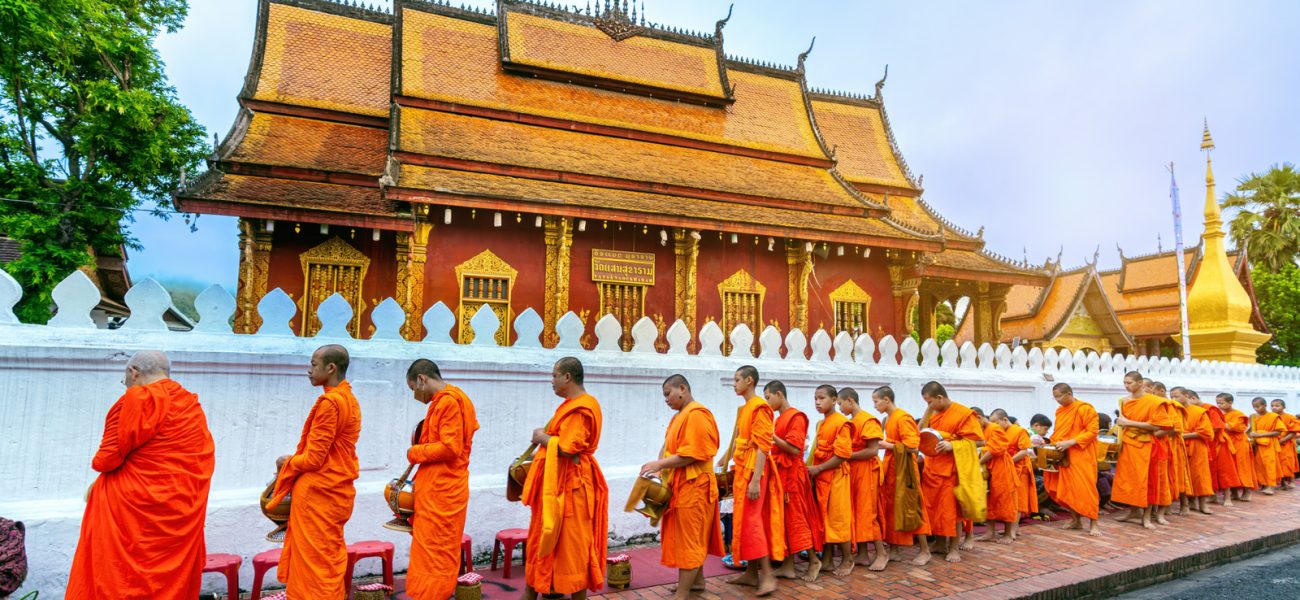
Mekong’s Quiet Ascent: Laos Emerges as Beijing’s Gateway, Tourists Follow the Capital
POLICY WIRE — Vientiane, Laos — For a nation long considered one of Southeast Asia’s landlocked backwaters, a quiet economic tectonic plate is shifting. It’s not just the thrum of newly laid...

POLICY WIRE — Vientiane, Laos — For a nation long considered one of Southeast Asia’s landlocked backwaters, a quiet economic tectonic plate is shifting. It’s not just the thrum of newly laid high-speed rail lines connecting its capital to China that signals change; it’s the peculiar murmur of foreign currency increasingly filling its coffers. Laos, often overlooked on the global stage, is subtly transforming itself—not just into a transit hub, but a destination in its own right. The sheer uptick in visitors expected in 2026 isn’t just about pretty temples or tubing down rivers anymore; it’s a telling barometer of Beijing’s expanding footprint, drawing travelers right along its economic lifeline.
And so, as other regional powers fuss over geopolitical grandstanding, Laos has been busy laying tracks—both literal and metaphorical. The China-Laos Railway, a flagship Belt and Road Initiative (BRI) project, didn’t just shorten travel times; it blew open a commercial and, yes, a tourist corridor. Folks are discovering this serene corner of the Mekong, often without quite grasping the colossal shift underwriting its newfound accessibility. This isn’t your grandma’s backpacker trail; it’s a meticulously planned economic pivot, disguised as an idyllic getaway.
“We’ve always believed in connecting with our neighbors, fostering peace — and prosperity across borders,” asserted Dr. Thongloun Sisoulith, President of Laos, in a recent, somewhat understated address. “Our strategic partnerships are designed to uplift our people, not to become beholden to any single influence. This surge in tourism—it’s organic; it’s the world discovering what we’ve always offered: authentic culture, pristine nature, and warm hospitality.” He’s not wrong, of course. But you’d have to be wilfully blind not to notice the color of the paint on those new train stations.
But the calculus is far more complex than just quaint cultural exchanges. “Laos is effectively a bellwether for what many smaller, developing nations face,” observed Dr. Zara Haider, an analyst with the Kuala Lumpur-based Asian Policy Institute, speaking via secure video call. “They’re threading a very fine needle, leveraging one powerful patron to jumpstart their economy, while ostensibly maintaining independence. The increased tourism is merely a highly visible byproduct of this larger geopolitical play—a public-facing dividend on deep structural investment that, ultimately, demands a measure of loyalty.” It’s not a free lunch, folks. Never is.
Because, make no mistake, similar narratives are playing out across the broader Asian landscape. From Pakistan’s bustling Gwadar Port, central to the China-Pakistan Economic Corridor (CPEC)—another tentacle of Beijing’s BRI—to myriad infrastructure projects dotting Muslim-majority nations in Central Asia, the story of economic opportunity intertwining with geopolitical realignment is becoming ubiquitous. Laos simply provides a rather picturesque, albeit subtly charged, case study. They’re all aiming for growth, searching for pathways out of perennial underdevelopment, and looking East seems to be the most promising option, Washington’s reservations notwithstanding.
📄 POLICY WIRE WHITEPAPER PUBLISHED: PAKISTAN'S NATIONAL SECURITY POLICY PRIORITIES
👉 READ BY CLICKING HEREThe numbers don’t lie. Laos, according to its Ministry of Information, Culture and Tourism, is eyeing an ambitious target of 4.9 million international visitors by 2025. That’s a staggering rebound from the pandemic slump and a clear indication that connectivity breeds curiosity—and capital. That’s more than just a blip; it’s a trajectory.
What This Means
The burgeoning interest in Laos as a tourist destination isn’t a mere travel trend; it’s a proxy for profound economic and geopolitical shifts. Politically, Laos’s deepening ties with China have effectively positioned it as a critical overland conduit, bypassing maritime chokepoints and enhancing Beijing’s strategic depth in Southeast Asia. This creates both opportunities — and vulnerabilities for Vientiane. Economically, while the new infrastructure and tourist dollars promise much-needed revenue, they also raise concerns about debt sustainability and the true ownership of critical assets. For example, some have questioned the economic viability of the massive railway without Chinese tourists filling seats, underscoring the deep integration and dependency at play. It’s an economic boon, sure, but one that comes with quiet, understated terms — and conditions.
the rise of Laos as a ‘new’ destination reflects a broader dynamic across developing Asia. Nations once seen as distant or inaccessible are becoming integral components of a new economic order, often driven by investments from rising powers. Western policy circles, often preoccupied with established alliances, would do well to scrutinize these nuanced shifts. Because, you know, overlooking these smaller players often leads to larger miscalculations down the road. They’re not just chasing vacationers; they’re rewriting their national stories, one tourist and one infrastructure deal at a time.