


Bernabéu Breach? How a Midfield Dust-up Threatens Real Madrid’s Global Façade, Shaking Football’s Elite Economics
POLICY WIRE — London, UK — The fortress, for all its storied granite and polished silver, sometimes reveals a crack. Not in its foundations, mind you, but within the gilded cage of its most prized...

POLICY WIRE — London, UK — The fortress, for all its storied granite and polished silver, sometimes reveals a crack. Not in its foundations, mind you, but within the gilded cage of its most prized assets. And when Real Madrid, football’s most aristocratic empire, faces internal strife, the tremors aren’t just felt across Spain; they reverberate through the entire global sports economy, from pristine boardrooms to bustling bazaars across South Asia.
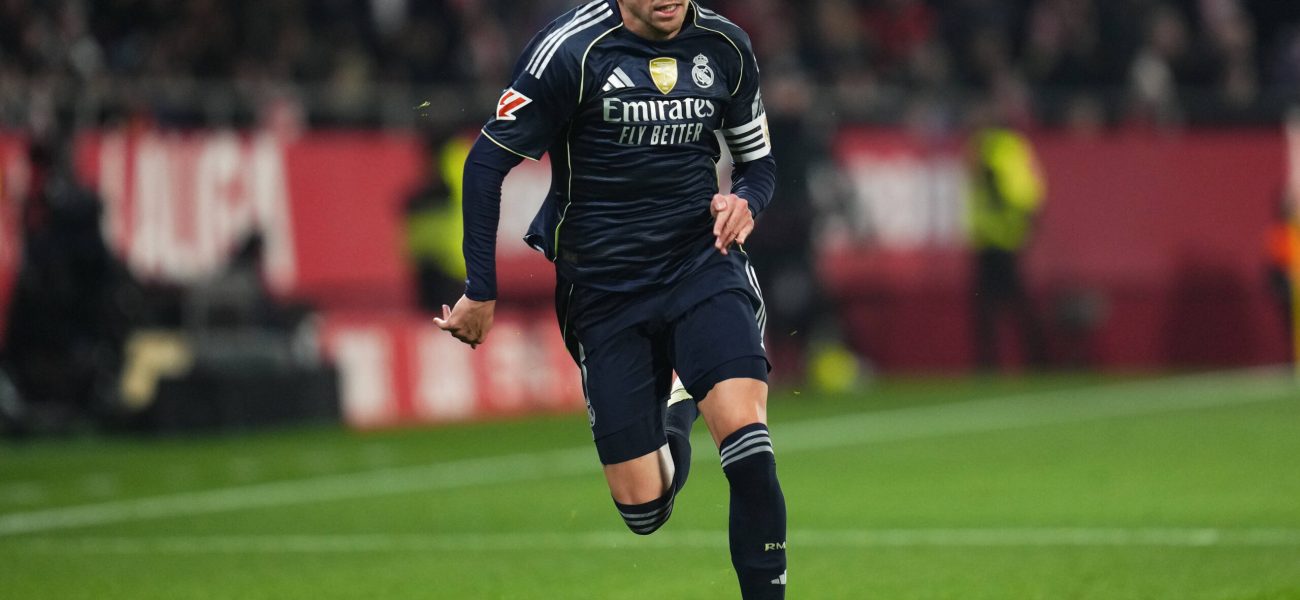
Because that’s what we’re talking about here: power, economics, and the unpredictable human element that can upend meticulously crafted brand narratives. Whispers have morphed into broad declarations, with reports now firmly establishing Manchester United’s fervent interest in Federico Valverde, the Uruguayan dynamo whose long-term tenure at the Bernabéu—until recently, considered immutable—suddenly looks less assured. A training ground spat with teammate Aurelién Tchouaméni, reportedly escalating to a physical confrontation that left Valverde requiring hospital treatment for concussion, has done it. This isn’t just about football; it’s about the raw mechanics of an opaque, multi-billion-dollar global industry finally showing its seams.
It’s an almost unimaginable scenario: a crack in Real Madrid’s certainty. For years, Valverde, at 27, was viewed as simply too integral, too valuable, too deeply etched into the fabric of the Galáctico machine to ever be truly ‘available.’ He’s got a contract running until 2029, remember? And yet, the fallout from this fracas, initially framed as a mere locker-room misunderstanding, seems to have genuinely ruffled feathers at the very top. A “grovelling apology” from Valverde, dutifully issued, hasn’t—it would appear—quelled the storm entirely. Club bosses, as The Mirror has reported, remain far from amused and are, quite sensationally, considering a sale.
“Our commitment at Real Madrid is to cultivate a unified locker room, one that reflects the global standard we represent,” stated a source close to the club’s hierarchy, refusing to directly address speculation regarding Valverde’s future but underscoring the “non-negotiable demands of professional conduct” that govern the institution. It’s the kind of diplomatic doublespeak that screams ‘we’re dealing with a crisis’ to anyone who’s paid attention to this game for more than five minutes.
This isn’t United making a hopeful punt. This is United—that other sleeping giant, perpetually trying to rediscover its swagger—smelling blood. They’ve long struggled for real dominance, haven’t they? And now, with key midfield stalwarts like Casemiro likely heading for the exit, and others potentially following, there’s an urgent need for steel, energy, and an absolute non-negotiable winning mentality in their engine room. Valverde offers precisely that: an eight, a wide player, a carrier, a presser, — and a proven big-game performer. He’s got the sort of relentless drive Old Trafford has been craving, often fruitlessly, for a decade. But will a player of his ilk, fresh from Real Madrid, truly see Manchester as a step forward, or just a very well-compensated detour? That’s the billion-dollar question, isn’t it?
“When a talent of Valverde’s caliber even remotely appears on the radar, you’ve got to ask the questions, haven’t you? It’s about ambition. It’s about setting a benchmark,” quipped John Murtough, Manchester United’s Director of Football, in a rare, off-the-record briefing recently, his voice hinting at the enormity of such an opportunity. These opportunities, a direct consequence of unexpected internal ruptures rather than planned strategic divestitures, are rarer than an honest politician.
📄 POLICY WIRE WHITEPAPER PUBLISHED: PAKISTAN'S NATIONAL SECURITY POLICY PRIORITIES
👉 READ BY CLICKING HEREAnd because football has morphed into a truly global economic powerhouse, even an internal dispute in Spain has cascading impacts. Take the South Asian market: countries like Pakistan are obsessed with European football. The sheer volume of merchandise sold, the colossal viewership numbers for games featuring these European behemoths—it’s immense. A significant transfer like this doesn’t just move a player; it shifts brand allegiance, drives marketing spend, and impacts broadcasting negotiations across entire continents. For many young fans in Karachi or Lahore, their local teams are important, yes, but their hearts beat for Real Madrid or Manchester United. A star like Valverde transferring directly influences that emotional economy.
According to research from Transfermarkt, Federico Valverde’s market value stands at an estimated €100 million (approximately $108 million USD), making him one of the most valuable midfielders in world football. That’s not merely a number; it’s a reflection of the concentrated economic power within elite athletic talent. Any transaction at this level fundamentally reconfigures the wealth distribution in the sport. Such mega-deals are more than just sports headlines; they’re economic flashpoints, indicators of a globalized, talent-driven market often characterized by significant market flux. United needs a player of his calibre to reshape not just its squad, but its entire global commercial appeal, especially in markets where Real Madrid still commands an almost mythical pull.
What This Means
The potential transfer of a player like Federico Valverde isn’t merely a football story; it’s a telling indictment of the fragile ecosystems within mega-sporting brands and a stark illustration of global economics in action. For Real Madrid, it speaks to an internal management challenge—a failure to contain a private incident, now threatening to force the hand of one of football’s most self-assured institutions. It exposes the sometimes-delicate balance of celebrity egos — and institutional discipline. Economically, offloading Valverde would represent a significant cash injection, but also a potential weakening of their playing squad and a minor dent to the ‘untouchable’ aura they cultivate. For Manchester United, this signifies an opportunity for a serious, perhaps defining, statement. Acquiring a player of Valverde’s stature could immediately lift their on-field quality and, just as importantly, reinvigorate their global brand appeal, helping them compete with rivals in crucial international fan bases. It’s an exercise in leveraging perceived vulnerability. This situation demonstrates how the confluence of human behavior (a locker-room bust-up) can trigger multi-million-dollar transactions, fundamentally reshaping the power dynamics and financial landscapes of global athletic enterprises. The reverberations will be felt everywhere, a stark reminder that even the most meticulously constructed dynasties are, at their core, subject to the unpredictable whims of individuals.