

Bernabeu Blight: The Ghost of Champions League Past Haunts Real Madrid, Whispering for its ‘Special’ Exorcist
POLICY WIRE — Lisbon, Portugal — The gleaming trophy cabinet at the Santiago Bernabeu, typically overflowing with silver, stares back with an uncharacteristic emptiness. This isn’t just another...

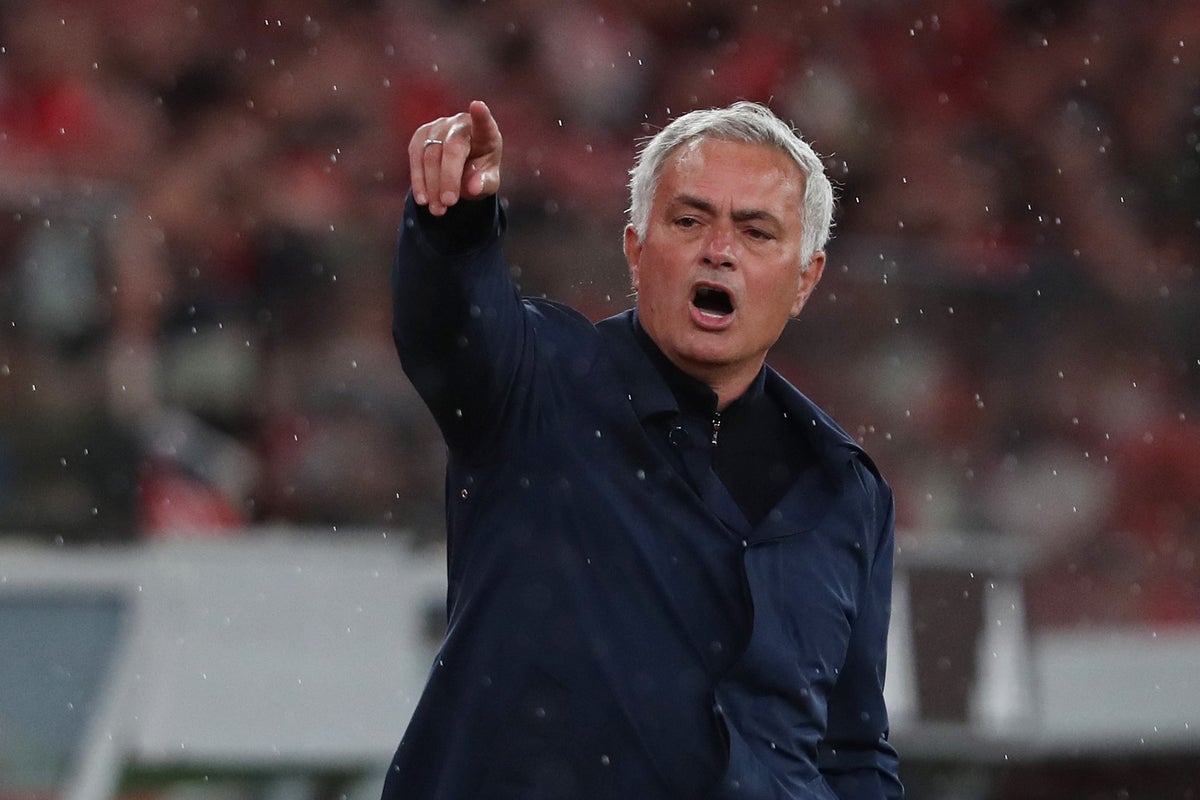
POLICY WIRE — Lisbon, Portugal — The gleaming trophy cabinet at the Santiago Bernabeu, typically overflowing with silver, stares back with an uncharacteristic emptiness. This isn’t just another bad run for Real Madrid; it’s a full-blown existential crisis in miniature. And because European football, particularly at the dizzying heights of Madrid, abhors a vacuum—or a trophyless season—the whispers inevitably turn into shouts for a familiar, and often divisive, name: Jose Mourinho.
It’s not about Champions League qualification for Benfica, the Portuguese outfit Mourinho currently helms. Not really. That’s a footnote, a minor distraction for the man who calls himself the ‘Special One,’ as Real Madrid’s colossal marketing machine hums behind closed doors. The institution itself has stumbled, finishing runner-up to arch-rivals Barcelona in La Liga, and then crashing out of Europe’s premier club competition, the Champions League, for a second consecutive year—this time to Bayern Munich with an aggregate 6-4 thumping.
Mourinho, a tactical lightning rod whose personality often eclipses the game itself, has, unsurprisingly, downplayed the frantic speculation. “You’re talking about Real Madrid, I’m not talking about Real Madrid,” he told reporters after Benfica’s recent draw against Braga. “I’m talking about Benfica, — and the work we’ve been doing won’t change because we’re second or third. That’s not what’s going to influence my future. Obviously, Benfica wants to play in the Champions League, and so do I as a coach, but it has no influence whatsoever.” It’s vintage Mourinho, isn’t it? Deflect, protect, posture—but never truly rule anything out.
This is a club, remember, that registered revenues of €831.4 million in 2023, making it one of the wealthiest globally, according to the Deloitte Football Money League. That kind of financial power—and the brand imperative to back it up—means mediocrity simply isn’t an option. Their brand extends far beyond Europe’s borders, pulling in billions from broadcast rights and merchandise, especially in booming markets from Karachi to Jakarta. Fans in Pakistan, for example, might not regularly watch the Portuguese league, but their attention — and disposable income — shifts directly to the white shirts of Madrid once their league season wraps. It’s an undeniable pressure cooker for managers.
But can a man once dubbed ‘The Translator’ return to a locker room reportedly rife with discontent? Real Madrid’s previous spell under Mourinho, from 2010 to 2013, was a period of intense drama, a solitary La Liga title, and a Copa del Rey. It wasn’t the glut of European trophies Florentino Perez, the club’s imperious president, craves. Yet, Perez, a man who built an empire on ambition and big names, clearly remembers a different era of Madrid — one where Mourinho, for all his controversies, injected a fierce, win-at-all-costs mentality that many felt has since dissipated.
“Real Madrid doesn’t buy projects; it buys results. Our fans demand nothing less than to be the best,” a source close to the club’s administration, often privy to Perez’s thinking, might confide. “A manager must embody that ambition, fiercely. We can’t afford another year without major silverware.” It’s the language of power, plain — and simple.
What This Means
The incessant churn in elite football management—exemplified by Real Madrid’s predicament—isn’t just about sporting results. It’s an intricate dance of economics, branding, — and political leverage for club owners. For a global superpower like Madrid, a trophyless season isn’t just an embarrassment; it’s a direct hit to its commercial value and future earnings. Sponsorships become harder to renew at premium rates. Fan engagement, particularly in burgeoning markets like those in the Muslim world — and South Asia, can soften. These fans, far removed from the Bernabeu, demand winners—they’ve bought into a dream, not just a club. The appointment of a manager like Mourinho isn’t just a football decision; it’s a corporate strategy. It’s about igniting an immediate buzz, guaranteeing eyeballs, and, ideally, securing the next round of blockbuster broadcast deals. His return, if it happens, represents a reversion to a highly-managed brand of aggressive dominance—a tacit admission that the current model, however aesthetically pleasing it tries to be, isn’t delivering the hard cash and cultural capital required to maintain their pole position in sports economics. It’s a high-stakes gamble on a familiar, volatile, but undeniably effective, commodity.
Real Madrid, after all, isn’t just a team; it’s an economic engine. And its engine just stalled. The hunt for a mechanic with a proven, albeit stormy, track record like Mourinho’s reflects a broader anxiety gripping European football’s elite—the unrelenting pressure to deliver trophies, year in, year out, or risk falling from their stratospheric perch. This is less about ‘the beautiful game’ — and more about the brutally competitive global entertainment business.