


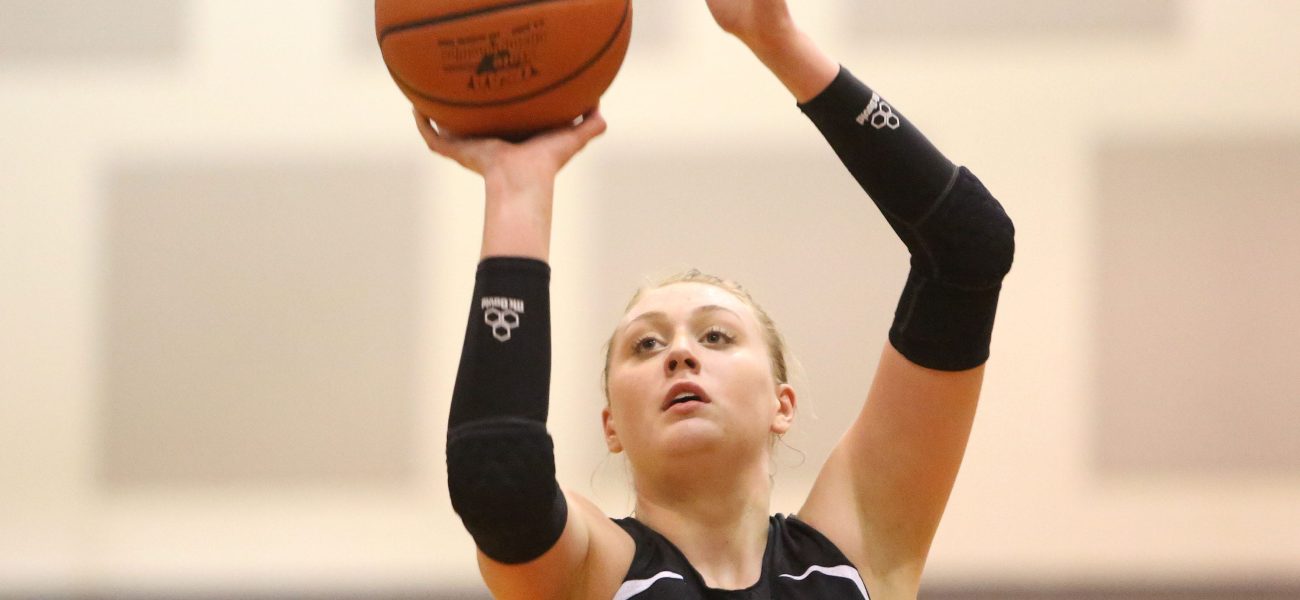
Beyond the Buzzer: Unpacking Salem’s Enduring Obsession with Hardwood Legends
POLICY WIRE — Salem, Oregon — Another spring, another local debate, it seems. And this time, it’s about who owned the court — not some municipal contract, but the very soul of...

POLICY WIRE — Salem, Oregon — Another spring, another local debate, it seems. And this time, it’s about who owned the court — not some municipal contract, but the very soul of girls’ basketball in the Salem-Keizer area. Folks are weighing in, parsing statistics and faded yearbook photos, trying to pinpoint the absolute best — a futile, glorious exercise that says more about community identity than hoops itself.
It isn’t about the scoreboard anymore, is it? These high school stars, now grown, their professional or collegiate careers often far behind them, they’ve become folklore. They’re names whispered on hometown streets, enshrined in gymnasium banners, proof positive that, yes, extraordinary things happen even in a quiet corner of the Willamette Valley. And that civic pride, that often-misplaced sense of local supremacy, well, it’s a powerful drug.
USA TODAY Sports, with its looming 250th-anniversary celebration, aims to rank the 250 greatest American sports figures. A grand, national spectacle, to be sure. But here, the conversation shrinks to the local court, the high school heroes who, for a time, made a sleepy town feel like the center of the universe. This isn’t just sports; it’s cultural anthropology — a look at the peculiar mechanics of hometown glory, an almost archaeological dig through collective memory.
Because, honestly, who really gets to decide ‘the greatest’? It’s an abstract notion, colored by nostalgia and rivalry, perpetually argued over coffee shop tables and now, naturally, online polls. Statesman Journal tossed ten names into the ring, a who’s who of local legend. Players like Lis Brenden, who was a freshman on Silverton’s first state championship team in ’89, then went on to Nebraska, turning her high school heroics into big-stage moments. And then there’s Casey Bunn, who racked up a staggering 1,831 career points at Stayton, later leading the Pac-10 in scoring — numbers that still make local fans swell with pride. What is it about these figures that capture the local imagination so fiercely?
Consider the raw, undeniable force of someone like Evina Westbrook, widely heralded as among Oregon’s most gifted players ever. She snagged back-to-back Gatorade Player of the Year awards, a McDonald’s All-American nod — the only one from the Salem area, mind you — and ultimately became a 21st overall pick in the WNBA Draft. That’s a serious career arc. Her talent transcended regional recognition; it put Salem on the national map.
“These athletes don’t just win games; they forge identities for entire communities,” says Mayor Carlee Williams of Salem, sounding rather earnest, we thought. “They give our kids heroes they can touch, can see in the grocery store — that connection is invaluable.” And she’s not wrong, you know? It’s not always about billion-dollar franchises. Sometimes it’s just about who delivered when it mattered most, under the flickering stadium lights.
Mandie Little, spearheading Central’s state championship in ’98. Deven Hunter, the backbone of some of Oregon State’s most successful teams — she was part of that historic 2016 Final Four run. Each name a chapter, a distinct echo in the high school hallways. Shelly Potter, for instance, holds the record for the Salem area’s highest-scoring girls basketball player, racking up 1,849 points between 1989 and 1992 (Statesman Journal data). That sort of statistic doesn’t just fade; it becomes part of the local narrative, a benchmark for all who follow.
But beyond the stats, it’s a global thing, this fascination with local prowess. From the bustling streets of Lahore, where cricket legends are debated with religious fervor, to the hushed halls of an Oregon high school, the stories of sporting heroes often transcend the game itself. They morph into narratives that communities tell themselves about their own resilience, aspirations, — and dreams. Even here, in the increasingly diverse corridors of Oregon, where families who’ve perhaps emigrated from Islamabad or Jakarta now cheer alongside generations of logging families, these athletic feats weave into a shared, evolving identity.
📄 POLICY WIRE WHITEPAPER PUBLISHED: PAKISTAN'S NATIONAL SECURITY POLICY PRIORITIES
👉 READ BY CLICKING HEREIt makes you wonder, doesn’t it? Are these polls simply a popularity contest cloaked in sports terminology? Or do they serve a deeper civic purpose, reinforcing local pride, reminding residents of shared triumphs and giving younger generations something concrete to shoot for? And that sense of shared experience, the collective breath held as a last-second shot goes up — that’s something that resonates across cultures, isn’t it? “We talk a lot about legacy in sports, but sometimes it’s more about how many people you inspire on a Tuesday night at the local gym,” mused Oregon High School Athletic Association President Marcus Thorne, who’s overseen more than his fair share of heated debates over rankings and records. “That’s the true measure of greatness, far beyond any poll.”
It’s about crafting a narrative, etching names into a town’s memory, providing touchstones for future generations — proof that even if you never play professionally, your local legend means something. Sometimes, a lot more.
What This Means
This endless debate over who’s ‘the best’ in a local sports context isn’t just harmless fun; it serves as a peculiar form of localized civic engagement, an organic public discourse that, in a subtle way, reflects underlying political and economic currents. On the political front, these polls and ‘best-of’ lists become cultural anchors, providing communities with shared reference points and reinforcing a collective identity that can be quite powerful. Local politicians often understand this intuitively, leveraging school sports for photo opportunities or invoking past athletic glories in speeches, knowing it resonates deeply with voters. It’s a low-cost, high-impact way to tap into community sentiment. Economically, these celebrations — the articles, the online voting, the community forums — generate engagement for local media, often boosting readership and web traffic. They also foster local businesses connected to sports, whether it’s memorabilia shops (however humble), sports camps led by former players, or increased foot traffic during current high school games. strong sports programs, built on legacies like these, can make a town more attractive, sometimes indirectly influencing property values and population growth, especially for families looking for strong extracurricular options. So, while it appears to be about basketball, it’s actually about investing in the town’s social capital, its sense of self-worth, and yes, its ongoing economic vibrancy — a very real phenomenon echoed in communities from Salem to Sana’a. Sometimes, the most resilient towns are the ones that never stop debating their local heroes, a perpetual state of agreeable contention that reinforces shared bonds. After all, the constant recalibration of legacy also mirrors broader power dynamics and societal hierarchies, albeit on a much smaller, friendlier scale.