


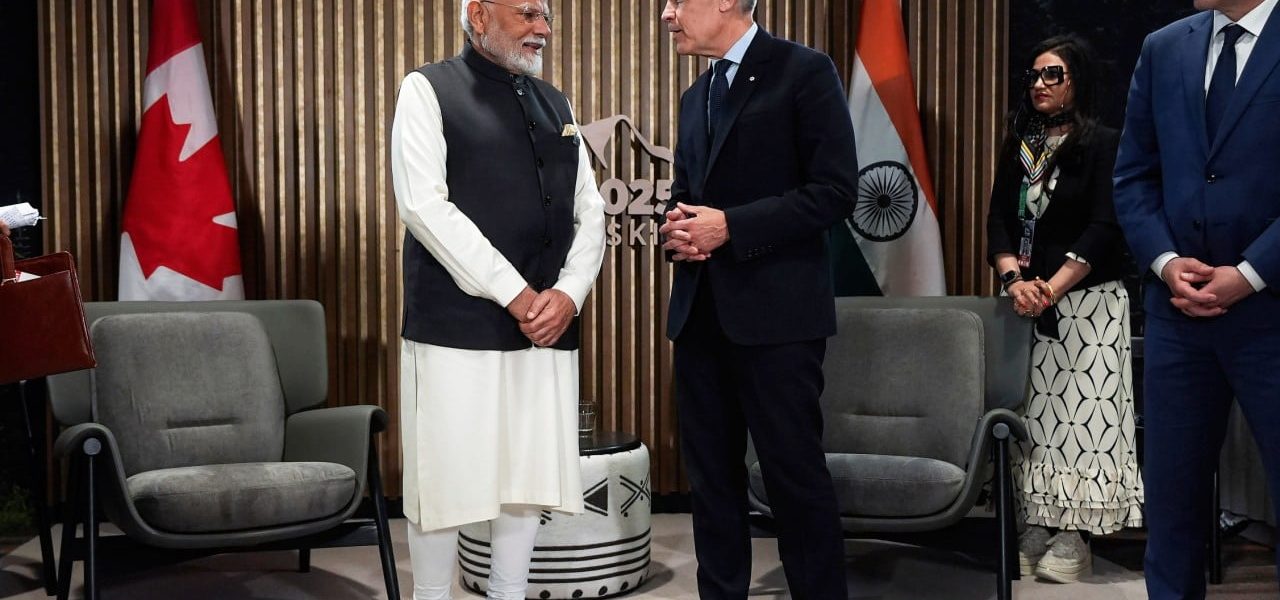
Mounting Pressures: Ottawa Shifts Stance, Cautiously Navigates Delhi’s Deep Frieze
POLICY WIRE — Ottawa, Canada — For months, diplomatic pleasantries between Ottawa and New Delhi felt like conversations whispered across a vast, icy expanse—a cold war of passive aggression and...

POLICY WIRE — Ottawa, Canada — For months, diplomatic pleasantries between Ottawa and New Delhi felt like conversations whispered across a vast, icy expanse—a cold war of passive aggression and public rebukes. Trade deals stalled. High-level visits ceased. And then, Canada’s domestic intelligence agency, CSIS, quietly dropped a report identifying Sikh extremism as a bona fide national security threat. Not exactly a blockbuster movie reveal, is it? But it’s got consequences. Big ones.
It’s less about newfound enlightenment on Parliament Hill, more about an undeniable gravitational pull toward pragmatism. Delhi’s complaints about certain separatist elements on Canadian soil—elements allegedly pushing for ‘Khalistan,’ an independent Sikh state in India’s Punjab—have been a broken record for decades. Canada, for its part, usually maintained a cool detachment, often framing these concerns as India’s internal squabbles. But that narrative? It just melted.
The CSIS assessment, though couched in the usual intelligence agency prose, marks a notable recalibration. Suddenly, what India has termed ‘state-sponsored terror’ (or, at the very least, state-condoned haven for extremists) is now recognized by Canada’s own spooks as a danger closer to home. You’d think this would be a high-five moment for New Delhi, a ‘we told you so’ victory lap. Not so fast. The shadow of Canadian Prime Minister Justin Trudeau’s dramatic parliamentary accusation—that India’s government agents were involved in the assassination of Sikh leader Hardeep Singh Nijjar last year—still stretches long across the negotiating table.
“We take all national security threats seriously, and this report reflects our unwavering commitment to safeguarding Canadians. It’s a pragmatic assessment, rooted in evidence, not political posturing,” declared Dominic LeBlanc, Canada’s Minister for Public Safety, in an official statement to Policy Wire. His tone was firm, yet carefully measured. You could almost feel the tightrope walk.
From India’s perspective, this acknowledgement, however belated, might open a crack in the door. Randhir Jaiswal, Spokesperson for the Ministry of External Affairs, didn’t shy away from reminding Ottawa of past inertia. “New Delhi has consistently voiced profound concerns about extremist elements exploiting safe havens and the free expression principles in certain nations to foment trouble,” Jaiswal stated, emphasizing, “This acknowledgment from Canadian authorities, while a necessary step, is long overdue in addressing mutual security interests and dismantling networks that destabilize our region.” He certainly didn’t sugarcoat it. They’ve been watching, and waiting.
And let’s not forget the broader regional picture. The spectre of ‘Khalistan’ is sometimes viewed by India as part of a larger pattern, where historical grievances—especially those tied to the trauma of Partition—are weaponized. Neighboring Pakistan, with its own complex history with Punjab, occasionally gets pulled into these narratives by India, accusing it of exploiting separatist sentiments for strategic advantage. These aren’t just local squabbles; they’re tangled threads in a much larger South Asian loom, where identity politics and historical animosities can easily bleed across borders. Remember, the regional stability that India craves—especially for its economic ascendancy—is always just a crisis away from unraveling. Delhi’s cautious calls for stability often ripple far beyond its immediate neighbors.
📄 POLICY WIRE WHITEPAPER PUBLISHED: PAKISTAN'S NATIONAL SECURITY POLICY PRIORITIES
👉 READ BY CLICKING HEREThis report lands precisely as Canada is grappling with an evolving security landscape and a growing, highly influential diaspora. Canada’s 2021 census reveals that over 770,000 people self-identified as Sikhs, representing one of the largest such communities outside of India. Their economic and political sway in Canada isn’t a secret, and neither is the complex loyalty some feel towards their ancestral land and its political future. For Ottawa, juggling the sensitivities of this influential group while confronting genuine security concerns—and appeasing a potentially vital Indo-Pacific partner—is a balancing act for the ages. It’s tough. They’ve gotta do it.
But how much good can this do for diplomatic relations when the wound of the Nijjar allegation is still so raw? That charge, let’s be frank, sent Canada-India ties into a deep freeze not seen in decades. The report might be a bridge, but there’s a chasm beneath it.
What This Means
This isn’t just a dry intelligence briefing; it’s a strategic concession wrapped in a national security blanket. For Canada, it potentially provides an off-ramp from the diplomatic impasse without fully capitulating on the Nijjar allegations. It allows them to say, ‘We’re serious about your concerns, too,’ opening a channel for intelligence sharing that’s been severely constricted. Economically, a warmer relationship could unlock trade and investment opportunities currently stuck in the diplomatic permafrost. India’s burgeoning economy and strategic position make it an irresistible partner in a shifting global order, and Ottawa desperately needs to be at that table. This move signals a willingness to engage, if cautiously, perhaps as a means to slowly rebuild trust. Don’t anticipate any swift hugs — and smiles, though. But it definitely moves the needle away from ‘deep freeze’ and towards ‘merely arctic cold.’ It allows India to save face and Canada to acknowledge a threat on its own terms. Both nations walk away with something—albeit small. The long game? It’s about containing regional instability while not ceding ground on matters of national sovereignty. Every little step counts, however glacial the pace. Otherwise, what’s the point?