


Shadow War’s Slow Burn: Israel’s North Bleeds as Hezbollah Tests Resolve
POLICY WIRE — Tel Aviv, Israel — The scent of pine and rocket smoke has replaced the usual hum of daily life across Israel’s northern frontier. Towns stand deserted, businesses shuttered, entire...

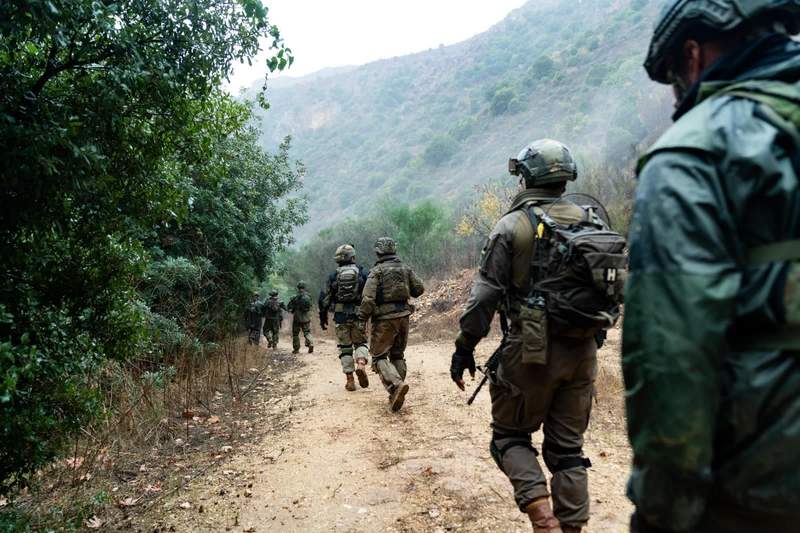
POLICY WIRE — Tel Aviv, Israel — The scent of pine and rocket smoke has replaced the usual hum of daily life across Israel’s northern frontier. Towns stand deserted, businesses shuttered, entire communities now exist in temporary housing far from the escalating skirmish. This isn’t a quick invasion or a surgical strike. It’s a grinding, relentless pressure game—a slow, agonizing bleed orchestrated by Hezbollah, aimed squarely at Israel’s societal resilience and its perceived military might. You can’t exactly call it peace, but it ain’t war, not in the traditional sense, at least not yet.
It’s psychological warfare, amplified by projectiles. Since the October 7th shockwave rippled through the region, Hezbollah has ratcheted up its operations, transforming a generally tense, but manageable, border into a desolate combat zone. Their strategy isn’t about territory; it’s about exhaustion. Small, consistent missile salvos. Drone incursions. A methodical whittling away of normalcy and, more importantly, a drain on Israel’s resources — and nerves. It’s costing ’em a bundle.
Defense Minister Yoav Gallant didn’t mince words recently, though he rarely does. “We aren’t in this for a quick win; we’re draining a swamp, brick by painful brick. Their rockets hit our homes, but our resolve? That’s what they can’t break,” Gallant was reported to have told Knesset members in a private briefing, his jaw set hard. But resolve, even Israeli resolve, has a price tag attached. And it’s climbing.
The human cost is undeniable. More than 90,000 Israelis have been internally displaced from northern communities since last fall, unable to return to their homes under persistent threat, according to a recent UN OCHA report. That’s a staggering figure for a relatively small nation. Meanwhile, Hezbollah, ever careful with its narrative, has framed its actions as an act of solidarity with Palestinians in Gaza. From their perspective, every rocket launch isn’t just a tactical move; it’s a message, not just to Tel Aviv, but to Tehran and Riyadh and, indeed, to millions across the Muslim world who view the conflict through a different lens. They say, this isn’t just about a border; it’s about a creed.
A senior Hezbollah official, speaking to Lebanese media, was quoted as saying, “Let them speak of attrition. We call it steadfastness. Our people, our land, our resistance. It’s their calculations that are proving hollow, isn’t it?” A chilling pronouncement, if you really stop and think about it, hinting at a strategic long game that many in Jerusalem are increasingly worried about. This isn’t just skirmishes; it’s a systematic depopulation effort playing out in real-time. For a country built on the idea of returning to—and defending—the land, that’s a bitter pill to swallow.
📄 POLICY WIRE WHITEPAPER PUBLISHED: PAKISTAN'S NATIONAL SECURITY POLICY PRIORITIES
👉 READ BY CLICKING HEREAnd what’s happening up north echoes far beyond its immediate boundaries. Pakistan, a staunch supporter of the Palestinian cause, watches with a close eye. Islamabad’s official statements consistently call for an immediate ceasefire, reflecting widespread public sentiment in a nation that feels a profound connection to the plight of Muslims globally. Many Pakistani commentators and religious leaders interpret the situation as part of a larger geopolitical chessboard, one where regional actors test Western patience and Israeli endurance. It isn’t just a distant quarrel for them; it’s a moral crisis unfolding. But it’s also a demonstration of Iranian-backed capabilities, which certainly can’t be lost on observers from Islamabad to Jakarta.
Because the Israelis find themselves in a bind, really. An all-out offensive into Lebanon could be devastating for both sides—think urban warfare on a massive scale—drawing the U.S. even deeper into another Middle Eastern quagmire. But pulling back? That legitimizes Hezbollah’s slow burn — and leaves their northern border utterly exposed. It’s a lose-lose proposition, making a full-blown invasion a constant, ominous shadow.
What This Means
The attritional warfare on Israel’s northern border presents a multifaceted dilemma that transcends immediate military tactics. Politically, the forced displacement of tens of thousands creates immense domestic pressure on the Israeli government. It erodes public trust — and fuels calls for decisive action, regardless of the potential consequences. Economically, the north, once a thriving agricultural — and tourist region, is now hemorrhaging money. Reconstruction and compensation efforts will be colossal, even if the conflict were to cease tomorrow. Investment has tanked; future prospects look bleak. For Lebanon, this isn’t just spillover; it’s another blow to an already fractured and struggling economy, pushing its already stressed civilian population to further hardship and precarity. A larger conflagration would obliterate what little stability remains, making regional commerce even more volatile. Militarily, Hezbollah’s approach demonstrates the effectiveness of asymmetric warfare against a conventional power, particularly when tied to a broader political and ideological struggle. It doesn’t need to win battlefield victories to achieve strategic aims. The goal is to make daily life unbearable, making the continued presence in disputed territories unsustainable for its opponent. The longer this simmers, the more likely a miscalculation by either side—or by proxy—could ignite a regional blaze that no one, frankly, wants to extinguish. It’s a war fought in millimeters, but its impact is measured in miles, in nations, and in futures.